Automatic bundling systems are industrial machines designed to group, align, secure, and prepare products into organized bundles with minimal manual handling. These systems are used in packaging, manufacturing, logistics, printing, construction materials, food processing, and distribution operations.
Depending on the application, automatic bundling equipment may use strapping, film wrapping, shrink wrapping, tying, or mechanical grouping technologies. These systems help maintain consistent bundle formation, improve material handling, and prepare products for storage, transportation, or subsequent production stages.
Context
What Are Automatic Bundling Systems?
An automatic bundling system is a mechanized arrangement that collects multiple products, organizes them into a predefined configuration, and secures them using an appropriate binding or packaging method. The products may include tubes, pipes, profiles, cartons, bottles, printed materials, boards, cables, or other manufactured items.
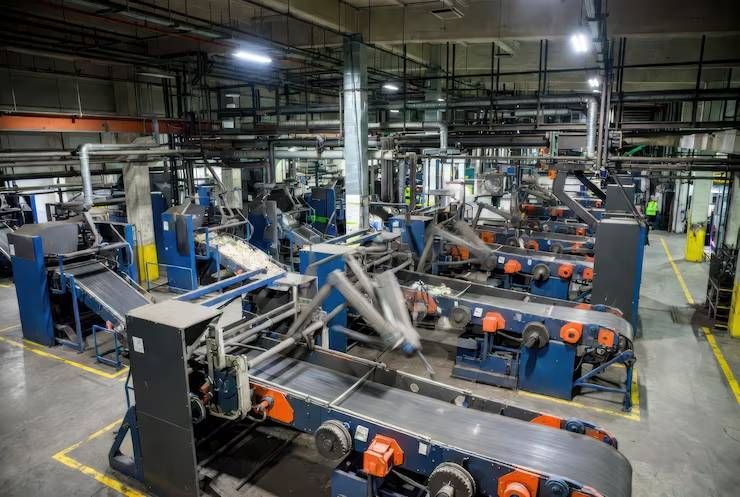
A typical system includes a product-feeding mechanism, grouping station, alignment guides, bundling unit, securing mechanism, discharge conveyor, and control system. Depending on the production line, additional components may include robotic handling equipment, sensors, weighing systems, label applicators, and automated inspection devices.
Automatic bundling systems can operate independently or as part of a larger production line. For example, a steel tube mill may use a bundling system after cutting and inspection, while a packaging facility may integrate bundling equipment with carton forming, wrapping, labeling, and palletizing operations.
The appropriate configuration depends on product dimensions, bundle weight, required output, handling characteristics, packaging requirements, and available production space.
Major Types of Automatic Bundling Systems
1. Automatic Strapping Systems
Automatic strapping systems secure grouped products using plastic or metal straps. The machine positions the strap around the bundle, tensions it, joins the strap ends, and releases the secured bundle. Plastic strapping is common for cartons, lightweight profiles, and many industrial packages, while steel strapping is used in selected heavy-duty applications.
2. Film Bundling Systems
Film bundling systems group products and wrap them with stretch film or another suitable packaging film. Depending on the design, film may hold products together, protect them from dust, or stabilize the bundle during handling. The film type and wrapping pattern depend on product shape and packaging requirements.
3. Shrink Bundling Systems
Shrink bundling machines wrap products in heat-shrinkable film and apply controlled heat to produce a close-fitting package. These systems are used for grouped bottles, cans, cartons, consumer products, and selected industrial packages. Suitable heat control and ventilation are important during operation.
4. Robotic Bundling Systems
Robotic bundling systems use industrial robots or collaborative robotic equipment to collect, arrange, and position products before securing them. They are useful when product formats vary or when bundling must be integrated with automated inspection, packing, and palletizing.
5. Pipe and Tube Bundling Systems
These systems collect long products such as steel tubes, pipes, rods, and structural profiles. They may include alignment tables, counting systems, transfer arms, bundle-forming mechanisms, and strapping heads. Their mechanical design must accommodate product length, weight, and cross-sectional geometry.
6. Cable and Wire Bundling Systems
Cable and wire bundling equipment groups flexible lengths into coils or organized packages. Depending on the application, the system may include measuring, cutting, coiling, tying, labeling, and discharge functions. Tension control is important to avoid deformation or damage to sensitive cables.
7. Carton and Product Bundling Systems
These machines group cartons, containers, printed products, or other packaged goods into multipacks. The bundling method may use film, adhesive, straps, or another securing mechanism suited to the product and distribution requirements.
8. Automated Bundle Formation and Handling Systems
These systems focus on collecting, counting, arranging, and transferring products into predefined bundles. They may be integrated with conveyors, lift tables, robotic arms, and automatic storage systems. The securing method can be incorporated into the same line or performed by separate equipment.
Bundling Technologies
Automatic Strapping: A strap is fed around the grouped products, tensioned, and joined to secure the bundle. Strap tension and joint quality must be suitable for the load and packaging requirements.
Stretch Film Wrapping: Film is stretched around a bundle to provide containment and improve handling stability. The wrapping pattern depends on product geometry, surface characteristics, and the required degree of restraint.
Shrink Film Packaging: Heat causes a suitable film to contract around grouped products. The process generally includes film application, sealing, and controlled heating.
Mechanical Grouping: Guides, stops, conveyors, pushers, and alignment devices collect products into predefined patterns. Sensors and programmed controls coordinate product counting and transfer.
Robotic Handling: Robots use suitable grippers or handling tools to arrange products and transfer bundles between stations. Vision systems may help locate products or verify their position.
Sensor-Based Control: Photoelectric sensors, proximity sensors, encoders, and load-monitoring devices detect products and track machine movements. These inputs help coordinate grouping, securing, and discharge.
Programmable Automation: Programmable logic controllers and human-machine interfaces manage machine sequences, production recipes, alarms, safety interlocks, and operating parameters.
Comparison of Automatic Bundling Systems
| System type | Main technology | Common applications |
|---|---|---|
| Automatic strapping system | Plastic or metal strap securing | Cartons, profiles, and industrial bundles |
| Film bundling system | Stretch film wrapping | Packaged products and grouped goods |
| Shrink bundling system | Heat-shrinkable film | Bottles, cans, and multipacks |
| Robotic bundling system | Automated picking and arranging | Mixed products and flexible production lines |
| Pipe and tube bundler | Mechanical grouping and strapping | Steel tubes, pipes, and profiles |
| Cable bundling system | Coiling, tying, and measuring | Wire and cable production |
| Carton bundling system | Film, straps, or other securing methods | Packaging and distribution |
| Bundle formation system | Conveyors and automated alignment | High-throughput industrial production |
Importance of Automatic Bundling Systems
Automatic bundling systems help manufacturers organize finished products into consistent, manageable units. This can reduce repetitive manual handling and support a more predictable flow between production, packaging, storage, and dispatch.
Consistent bundle formation is important when products must remain aligned during movement. Steel tubes, profiles, and long components may require carefully controlled arrangements to prevent shifting, while packaged consumer goods may need a defined grouping pattern for transport and retail handling.
Automation can also support product counting, traceability, and coordination with upstream equipment. For example, a tube production line can transfer a predetermined number of inspected tubes to a bundle-forming station before applying straps and moving the completed bundle to a storage area.
However, performance depends on the suitability of the machine for the product, the reliability of upstream feeding, and correct adjustment of securing parameters. Incorrect strap tension, unsuitable film, poor alignment, or inconsistent product dimensions can affect bundle stability.
Manufacturing Processes
Machine Design and Engineering
Manufacturing begins with defining product dimensions, bundle configuration, maximum load, required throughput, securing method, and production environment.
Engineers determine the frame structure, conveyor arrangement, grouping mechanism, strapping or wrapping unit, drive system, control architecture, and safety provisions. Long-product bundlers require appropriate support and transfer mechanisms, while carton bundlers may prioritize compact layouts and rapid product changeovers.
Frame and Mechanical Component Manufacturing
Frames and structural supports are produced using suitable metals and manufacturing processes such as cutting, machining, welding, and surface finishing. The frame must withstand operating loads, vibration, and repeated machine movements.
Conveyors, guides, pushers, transfer arms, rollers, and gripping components are manufactured according to the required dimensions and mechanical loads. Alignment and rigidity are important for maintaining predictable product movement.
Bundling Head and Securing Mechanism Assembly
For strapping systems, the bundling head contains components responsible for strap feeding, tensioning, joining, and cutting. The joining method may use heat sealing, friction welding, or another method appropriate to the strap material.
Film bundlers require suitable film-feeding, tensioning, cutting, and wrapping mechanisms. Shrink systems may also incorporate sealing assemblies, heaters, temperature controls, and ventilation provisions.
The design of the securing mechanism depends on bundle size, load characteristics, material type, and required restraint.
Drive Systems and Material Handling
Motors, gearboxes, pneumatic actuators, hydraulic components, or electric actuators drive the system's moving parts. The selected arrangement depends on the machine's speed, force requirements, and duty cycle.
Conveyors and transfer mechanisms move products through the grouping, securing, and discharge stations. For heavy industrial products, load-bearing structures and transfer equipment must be designed for the expected bundle mass and dimensions.
Electrical and Automation Integration
Electrical integration includes motors, drives, sensors, control panels, safety devices, and operator interfaces. Programmable logic controllers coordinate product counting, grouping, securing, and discharge.
More advanced systems may incorporate robotic controllers, machine vision, production data collection, and communication with manufacturing execution systems. These features can help manage multiple product formats and monitor production performance.
Testing and Quality Inspection
Completed machines undergo mechanical and electrical checks, including conveyor alignment, actuator operation, sensor accuracy, control sequencing, and safety-function verification.
Performance trials evaluate product grouping, bundle dimensions, strap or film application, cycle consistency, and discharge behavior. Testing should use representative products and loads so that the machine's suitability can be assessed under realistic operating conditions.
Global Manufacturers and Suppliers
The automatic bundling market includes manufacturers specializing in packaging machinery, strapping equipment, robotic material handling, and industrial steel bundling lines. Product ranges vary according to the material handled and the intended production environment.
Examples of recognized manufacturers and equipment providers include:
Mosca: Develops strapping machines and automated strapping systems for packaging and industrial applications.
Signode: Supplies industrial packaging systems, including strapping, wrapping, and load-securing technologies.
FROMM: Provides strapping, wrapping, and packaging equipment for industrial and distribution operations.
ATS-Tanner: Specializes in banding systems used to group products such as printed materials, cartons, and selected packaged goods.
Robopac: Develops packaging and wrapping equipment, including systems for stabilizing grouped products and pallet loads.
SIAT: Supplies packaging equipment and end-of-line systems for carton sealing, strapping, and related packaging operations.
Schneider Packaging Equipment: Develops automated packaging systems, including case packing and end-of-line automation.
CFT Group: Provides food and beverage processing and packaging technologies, including selected end-of-line equipment.
The companies listed operate across different equipment categories, and not every company manufactures all types of automatic bundling systems. Specialized tube, pipe, cable, and steel-profile bundlers may be supplied by manufacturers focused on those industries.
When evaluating manufacturers or suppliers, consider product dimensions, bundle weight, line speed, strap or film compatibility, bundle stability, changeover requirements, automation level, available floor space, and integration with existing production equipment.
Other considerations include commissioning, operator training, maintenance procedures, spare-component availability, technical documentation, and the ability to handle future product formats.
Industrial Applications
Steel and Metal Processing
Steel plants and metal processors use automatic bundling systems to group tubes, pipes, rods, bars, profiles, and other long products. Automated counting and alignment can help form consistent bundles before strapping and transfer to storage or dispatch.
Packaging and Distribution
Distribution centers use bundling systems to prepare cartons, multipacks, and grouped products for transport. Automated equipment can coordinate product grouping with labeling, palletizing, and conveyor-based material handling.
Food and Beverage Packaging
Selected packaging lines bundle bottles, cans, containers, and multipacks using shrink film, straps, or other suitable methods. Equipment must be compatible with the product's packaging requirements and applicable hygiene controls.
Printing and Paper Manufacturing
Printing plants and paper converters use banding and bundling equipment to group newspapers, books, printed sheets, labels, and paper products. Controlled bundling helps keep products organized during handling and distribution.
Cable and Wire Manufacturing
Cable production facilities use automated systems to measure, coil, tie, and bundle cables or wires. Proper handling helps maintain organized lengths while reducing tangling and unnecessary manual movement.
Construction Materials
Manufacturers of construction products use bundling systems for selected metal profiles, rods, panels, boards, and related materials. Bundle dimensions and securing methods must accommodate product weight, shape, and transportation requirements.
Plastics and Extrusion
Extrusion facilities can integrate bundling systems with production lines for pipes, profiles, rods, and other continuous products. Cutting, counting, alignment, and securing operations may be coordinated to maintain production flow.
Consumer Goods Manufacturing
Manufacturers of household products and packaged goods use automatic bundling equipment to create multipacks or organize products before case packing and palletizing. The machine configuration depends on product shape, packaging material, and output requirements.
Recent Developments
Automatic bundling systems are increasingly incorporating programmable recipes, servo-driven positioning, robotic handling, and sensor-based process monitoring. These technologies can support repeatable bundle configurations and reduce setup variation when production changes between product types.
Machine vision can help identify product position, orientation, and selected packaging defects. When combined with automated handling, it may support more flexible production lines, although performance depends on lighting, product appearance, sensor configuration, and system validation.
Manufacturers are also improving integration between bundling equipment, conveyors, case packers, palletizers, and production management software. Such integration can improve line coordination and provide better visibility into output, downtime, and recurring faults.
Developments in strapping and film-control technologies aim to improve load containment while managing packaging material use. The appropriate solution depends on product weight, transport conditions, packaging requirements, and environmental considerations.
Laws or Policies
Automatic bundling systems must comply with applicable machinery-safety, electrical, workplace, and environmental requirements in the country where they are installed.
Important hazards include moving conveyors, pinch points, robotic movement, powered strapping heads, cutting mechanisms, pneumatic systems, and heated sealing equipment. Suitable guarding, emergency-stop functions, safety interlocks, and operator training are essential.
Heavy bundles may require appropriate lifting equipment, load restraints, and documented handling procedures. Facilities using shrink film must consider heat exposure, ventilation, and fire safety. Compressed-air and hydraulic systems should be maintained according to manufacturer instructions.
Applicable machinery regulations and standards depend on the system's design and installation region. Employers should verify relevant requirements and ensure that installation, operation, inspection, and maintenance procedures are appropriate for the equipment.
Packaging material disposal and recycling requirements may also apply, particularly when plastic films, metal straps, or other packaging waste are generated.
Tools and Resources
Manufacturer documentation: Technical specifications, operating manuals, securing-head instructions, and maintenance schedules help determine machine capabilities and operating limits.
Bundle measurement equipment: Measuring tools and dimension sensors can verify bundle length, width, height, and configuration.
Strap and film testing: Appropriate testing methods help assess strap integrity, film performance, and the stability of secured bundles.
Load-handling equipment: Conveyors, transfer tables, lifting devices, and bundle supports must be suitable for the dimensions and weight of the products being handled.
Automation software: Programmable controllers, operator interfaces, and production monitoring systems manage cycle sequences, product counts, alarms, and selected production records.
Machine safety assessments: Risk assessments and safety documentation help identify hazards associated with moving machinery, securing mechanisms, robotics, and material handling.
Packaging specifications: Product and transport requirements help determine suitable bundle dimensions, securing patterns, and packaging materials.
FAQs
1. What is an automatic bundling system?
An automatic bundling system groups products into predefined arrangements and secures or prepares them for handling with minimal manual intervention. It may use strapping, film wrapping, tying, shrink packaging, or robotic handling.
2. What is the difference between strapping and shrink bundling?
Strapping uses a plastic or metal band to hold products together, while shrink bundling wraps products in heat-shrinkable film that contracts when heated. The appropriate method depends on the product, required restraint, packaging objectives, and handling conditions.
3. Which industries use automatic bundling systems?
These systems are used in metal processing, packaging, food and beverage production, printing, cable manufacturing, construction materials, plastics extrusion, and consumer goods manufacturing.
4. Can automatic bundling systems handle different product sizes?
Many systems can accommodate multiple product sizes through adjustable guides, programmable settings, interchangeable tooling, or robotic handling. The available range depends on the machine design and the amount of changeover required.
5. What factors should manufacturers consider when selecting a bundling system?
Important factors include product dimensions, bundle weight, required output, securing method, packaging material, bundle stability, automation requirements, floor space, safety features, and integration with existing equipment. Technical support and maintenance requirements should also be evaluated.
Conclusion
Automatic bundling systems support industrial production by grouping, aligning, securing, and preparing products for handling, storage, and transportation. Different technologies address the needs of metal processing, flexible packaging, food and beverage production, printing, cable manufacturing, and other industrial sectors.
Understanding machine types, bundling technologies, automation processes, manufacturing components, and safety requirements helps manufacturers select appropriate equipment. Continued developments in robotics, sensors, programmable controls, and production-line integration are expanding the capabilities of automated bundling operations.