
Automatic fabric packing machines are industrial systems designed to fold, compress, wrap, bundle, or package fabrics with limited manual handling. They are used in textile mills, garment manufacturing facilities, fabric processing plants, and textile distribution centers. These machines help prepare fabric rolls, folded cloth, textile bundles, and finished materials for storage, transportation, and further processing.
Fabric packaging has become an important part of textile production because fabrics are manufactured in different widths, thicknesses, lengths, and material compositions. Cotton, polyester, denim, knitted fabrics, woven textiles, and technical textiles may require different packaging methods depending on their intended use and handling requirements.
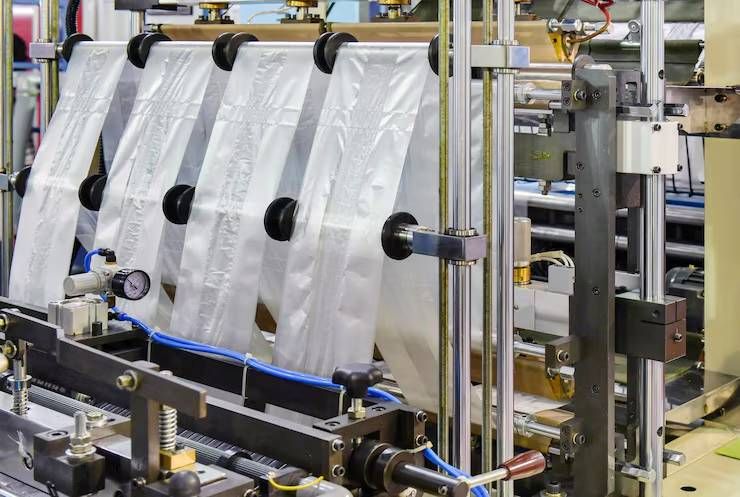
Traditional fabric packing often involves manual folding, measuring, wrapping, tying, and labeling. Automatic systems combine some or all of these operations through conveyors, sensors, programmable controls, wrapping units, and material-handling equipment. The level of automation depends on the machine design and the packaging requirements of the facility.
What Is an Automatic Fabric Packing Machine?
An automatic fabric packing machine is equipment that performs defined packaging operations according to preset parameters. Depending on the configuration, it may measure fabric, fold textile material, compress a bundle, apply protective wrapping, seal packaging, or print identification labels.
Some machines are designed specifically for fabric rolls, while others handle folded garments, flat textile pieces, or compressed textile bales. Integrated systems may connect several packaging stages into one production line.
Main Components of Fabric Packing Equipment
Automatic fabric packing equipment commonly includes the following components:
Feeding system: Moves fabric rolls, folded cloth, or textile bundles into the packaging area.
Folding or alignment unit: Positions the material and creates consistent folds where required.
Compression mechanism: Reduces the volume of suitable textile bundles for storage or transportation.
Wrapping unit: Applies plastic film, paper, woven wrapping material, or other protective packaging.
Sealing mechanism: Closes packaging using heat sealing, adhesive systems, strapping, or other suitable methods.
Control panel: Allows operators to configure operating parameters and monitor machine functions.
Sensors and safety devices: Detect material positions, monitor operating conditions, and help protect workers.
Not every machine contains all these components. Equipment selection depends on the fabric format, packaging material, required output, and factory layout.
Importance
Automatic fabric packing machines help textile manufacturers manage repetitive packaging activities and maintain consistent product presentation. In facilities that process large quantities of fabric, manual packaging can require substantial handling and coordination. Automation can reduce repetitive tasks and make packaging operations easier to standardize.
Packaging also protects textile materials during storage and transportation. Fabric may be exposed to dust, moisture, abrasion, compression, or handling damage if it is not packaged appropriately. The packaging method therefore needs to match the material's properties and the conditions expected during distribution.
Common Applications in the Textile Industry
Automatic fabric packing equipment is used in several textile production environments.
Textile mills: Packaging woven and knitted fabrics after inspection and finishing.
Denim manufacturing: Wrapping denim rolls or preparing folded denim materials for dispatch.
Garment factories: Packaging fabric pieces, cut components, and selected finished textile products.
Home textile production: Preparing curtains, bedsheets, towels, and other textile items for distribution.
Technical textile facilities: Packaging industrial fabrics and specialized textile materials according to their handling requirements.
Textile warehouses: Preparing rolls and bundles for identification, storage, and shipment.
Each application has different requirements. For example, delicate fabrics may need protective wrapping that avoids excessive pressure, while certain dense textiles can be compressed into compact bundles when their material characteristics permit it.
Benefits and Operational Considerations
Automation can improve packaging consistency and reduce the amount of repetitive manual work. It may also help standardize package dimensions, integrate product identification, and coordinate packaging with upstream production equipment.
However, automatic systems require appropriate setup, maintenance, operator training, and quality checks. Fabric thickness, elasticity, surface texture, and moisture sensitivity can affect machine performance. Incorrect tension or compression may cause wrinkles, deformation, or damage to some materials.
Packaging material selection is another important consideration. Plastic film can provide protection against dust and moisture, depending on its properties and sealing quality, while paper-based packaging may be suitable for applications with different protection requirements. The final choice depends on product specifications, transportation conditions, and environmental considerations.
Recent Updates
Automatic textile packaging technology continues to develop through improvements in machine controls, sensor integration, production monitoring, and material handling. Recent industry developments emphasize greater process visibility, flexible packaging configurations, and the integration of packaging equipment with wider manufacturing systems.
Smart Controls and Industrial Automation
Modern fabric packing machines may use programmable logic controllers (PLCs), human-machine interfaces (HMIs), and electronic sensors to coordinate different packaging stages. Operators can adjust settings such as folding dimensions, conveyor speed, wrapping cycles, and package counts, depending on the machine's capabilities.
Some connected systems can share operating information with manufacturing execution systems or factory monitoring platforms. This can help production teams track packaging activity and identify interruptions. The usefulness of these functions depends on system compatibility and the quality of the recorded data.
Flexible Packaging and Material Efficiency
Textile producers handle a wide range of products, making adjustable machine configurations increasingly relevant. Equipment designed for multiple fabric dimensions can support different production requirements without requiring an entirely separate packaging line for each product.
Manufacturers are also examining ways to reduce packaging waste through material optimization, accurate film cutting, and more consistent package formation. Recyclable or reduced-material packaging may be suitable for certain applications, although protection, durability, and local waste-management infrastructure must also be considered.
Integration With Digital Manufacturing
Digital manufacturing systems can connect packaging operations with fabric inspection, inventory management, and dispatch preparation. Product labels may include batch numbers, fabric specifications, production references, or barcodes to support identification and traceability.
Robotic handling may also be used in selected facilities to move heavy fabric rolls or transfer packaged bundles between workstations. These systems require suitable safety controls, space planning, and integration with the existing production process.
Laws or Policies
Automatic fabric packing machines are affected by regulations and standards relating to machinery safety, electrical systems, worker protection, packaging materials, and environmental management. Applicable requirements depend on the country where the equipment is installed, the location where it is manufactured, and the nature of the packaged textile product.
Machinery Safety and Workplace Requirements in India
In India, textile factories must consider applicable occupational safety, factory, electrical safety, and environmental requirements. The Occupational Safety, Health and Working Conditions Code, 2020, is part of the country's labour-law framework, with applicable obligations depending on its commencement, implementing rules, and the relevant establishment.
Factories operating automatic packaging equipment should assess risks associated with moving conveyors, rotating components, compression units, hot sealing elements, and electrical controls. Appropriate machine guarding, emergency stops, operating procedures, and employee training can help reduce workplace hazards.
Electrical installations and control systems must also be designed and maintained according to applicable requirements. Manufacturers and facility operators should verify relevant standards and regulatory obligations for their specific equipment and location.
Packaging and Environmental Considerations
Packaging materials may be subject to applicable rules covering plastic waste, recycling, labeling, and environmental management. In India, the Plastic Waste Management Rules, 2016, as amended, establish requirements relevant to plastic waste management, with particular obligations depending on the entity and activity involved.
Export-oriented textile businesses may also need to consider destination-country requirements concerning packaging materials, product identification, and shipment documentation. These requirements can differ by market and product category.
International machinery and management standards may provide additional guidance. For example, ISO 12100 addresses machinery safety risk assessment, while ISO 9001 covers quality management systems. The relevance of a standard depends on the machine design, application, contractual requirements, and applicable regulations.
Tools and Resources
Selecting fabric packing equipment requires an understanding of the material being packaged, production volumes, packaging format, and available factory space. Technical specifications and process assessments help determine whether a standalone machine or an integrated packaging line is appropriate.
Types of Automatic Fabric Packing Machines
Machine type | Primary function | Typical application |
|---|---|---|
Fabric roll wrapping machine | Wraps fabric rolls with protective material | Woven fabrics, knitted fabrics, and denim |
Automatic fabric folding machine | Folds fabric into specified dimensions | Flat textiles and fabric lengths |
Textile bale packing machine | Compresses and packages suitable textile materials | Textile bundles and selected bulk materials |
Fabric roll strapping machine | Secures packaged rolls with straps | Roll handling and dispatch preparation |
Automatic bagging machine | Places compatible textile products into bags | Folded cloth and textile packages |
Automatic labeling system | Applies identification labels to packages | Traceability and inventory handling |
Integrated textile packing line | Coordinates multiple packaging stages | High-volume textile production |
Machine names and capabilities can vary between manufacturers. A folding machine, for example, may operate independently or form part of a larger packaging line.
Factors to Evaluate When Selecting Equipment
Several technical factors influence the suitability of an automatic fabric packing machine.
Fabric specifications: Width, roll diameter, weight, thickness, elasticity, and surface sensitivity.
Packaging format: Roll wrapping, folding, bagging, strapping, or compression.
Production capacity: Required packages per hour and expected operating schedule.
Automation level: Manual loading, semi-automatic handling, or fully integrated operation.
Control and monitoring: Available sensors, operating records, fault detection, and connectivity.
Packaging materials: Compatibility with film, paper, bags, straps, and sealing methods.
Maintenance requirements: Access to replacement components, technical documentation, and routine inspection procedures.
Safety features: Guarding, emergency stops, safe access, and appropriate operator controls.
Manufacturers and Technical Resources
Industrial packaging equipment is produced by specialized machinery manufacturers, textile machinery companies, and packaging automation suppliers in different countries. Their product ranges can include fabric roll wrappers, textile folding equipment, bale presses, bagging systems, and integrated material-handling lines.
Technical datasheets, operating manuals, installation requirements, and machine demonstrations can help clarify equipment capabilities. Comparing specifications is particularly important because advertised production capacity may depend on fabric dimensions, packaging material, operator involvement, and the configuration of the complete production line.
FAQs
What is an automatic fabric packing machine used for?
It prepares textile materials for storage, handling, and transportation by performing operations such as folding, wrapping, compression, bagging, strapping, or labeling.
Which types of fabric can automatic packing machines handle?
Depending on their design, these machines can handle cotton, polyester, denim, knitted fabrics, woven textiles, and selected technical fabrics. Material dimensions and sensitivity determine equipment compatibility.
How does an automatic fabric roll packing machine work?
The machine receives a fabric roll, positions it, and applies the selected packaging material. Depending on its configuration, it may then seal, secure, label, or transfer the packaged roll.
What factors affect the selection of textile packing equipment?
Important factors include fabric dimensions, package format, required throughput, packaging materials, automation level, maintenance needs, factory space, and safety requirements.
Can fabric packing machines connect to smart factory systems?
Some machines support connections with factory monitoring platforms, inventory systems, or manufacturing execution systems. Connectivity depends on the available controls, communication protocols, and software integration.
Conclusion
Automatic fabric packing machines support textile production by standardizing folding, wrapping, compression, bagging, and other packaging activities. Different machine types serve different requirements, from individual fabric rolls to folded textiles and bulk bundles. Automation, digital monitoring, and improved packaging controls are shaping the development of textile packaging equipment. Appropriate machine selection depends on fabric characteristics, production needs, packaging materials, safety requirements, and the operating environment.