Cylinder seal rings are precision components used to control fluid or gas movement between connected surfaces in hydraulic cylinders, pneumatic cylinders, engines, pumps, compressors, and other mechanical systems. They help prevent leakage, maintain pressure, reduce contamination, and support reliable equipment operation.
The selection of a cylinder seal ring depends on operating pressure, temperature, movement, fluid compatibility, surface finish, and the dimensions of the sealing area. Understanding seal designs, material properties, manufacturing methods, and industrial applications helps engineers identify suitable components for different operating conditions.
Context
What Are Cylinder Seal Rings?
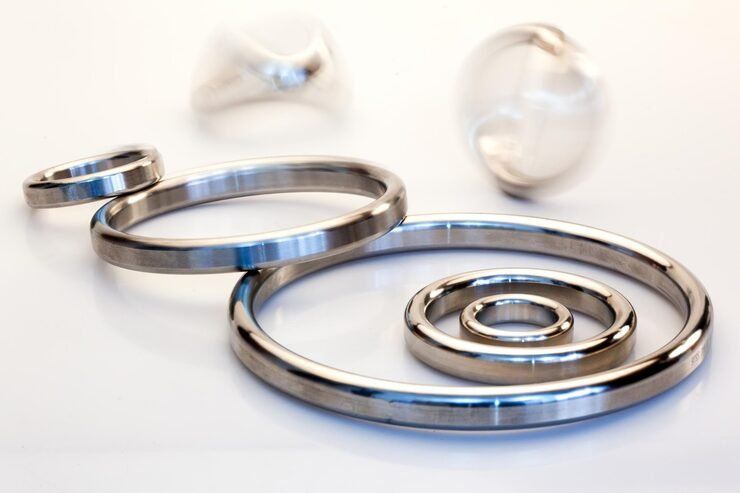
Cylinder seal rings are annular components designed to create a sealing barrier between two surfaces. Depending on the application, they may prevent fluid from escaping, stop external contaminants from entering a mechanism, or separate pressure zones within a cylinder assembly.
These rings are commonly installed in piston assemblies, cylinder heads, rods, shafts, and other components where controlled movement or pressure containment is necessary. Some designs operate under static conditions, while others maintain contact during continuous reciprocating or rotating movement.
Cylinder seal rings differ from ordinary mechanical rings because their geometry, elasticity, surface properties, and material composition are selected to meet specific sealing requirements. A correctly designed ring maintains contact with the mating surface while accommodating operating pressure, movement, and dimensional variations.
Major Types of Cylinder Seal Rings
Cylinder seal rings are available in several configurations. Each type serves a particular function based on the equipment design and operating environment.
1. O-Rings
O-rings have a circular cross-section and are widely used in static and selected dynamic sealing applications. They are installed in a groove, where compression creates contact with surrounding surfaces. Their compact design makes them suitable for hydraulic equipment, pneumatic assemblies, pumps, and industrial machinery.
2. Piston Seal Rings
Piston seals are fitted around a piston to prevent fluid or gas from passing between the piston and cylinder bore. They help maintain pressure differences across the piston, supporting controlled movement and force transmission.
3. Rod Seal Rings
Rod seals are installed around a moving cylinder rod. Their main purpose is to limit leakage from the pressurized chamber while allowing the rod to extend and retract. They are commonly used in hydraulic presses, mobile machinery, and automated production equipment.
4. Wiper and Scraper Rings
Wiper rings remove dust, moisture, metal particles, and other contaminants from a moving rod as it enters the cylinder. They help protect internal sealing components and reduce wear caused by abrasive particles.
5. Guide and Wear Rings
Guide rings support piston or rod alignment and prevent direct metal-to-metal contact between moving components. Although they are not always primary sealing elements, they help maintain the clearances required for reliable seal performance.
6. Backup Rings
Backup rings are positioned alongside elastomeric seals to reduce extrusion into clearances under pressure. They are particularly useful in applications involving elevated pressure, pressure fluctuations, or larger extrusion gaps.
7. Composite and Engine Seal Rings
Composite seal rings may combine polymer materials with reinforcing fillers or metal components. Engine-related cylinder sealing systems can also include specialized rings designed to manage combustion pressure, lubrication, and heat. These designs differ from conventional hydraulic rod and piston seals.
Materials Used in Cylinder Seal Rings
Material selection affects flexibility, wear resistance, chemical compatibility, temperature tolerance, and operating life.
Nitrile rubber (NBR): Commonly used with mineral oils and many hydraulic fluids. Its suitability depends on temperature and chemical exposure.
Fluoroelastomer (FKM): Used in applications requiring resistance to many oils, fuels, and elevated temperatures.
Ethylene propylene diene monomer (EPDM): Suitable for selected water-based fluids, hot water, steam, and weather-exposed applications. Compatibility with petroleum oils is generally limited.
Polyurethane (PU): Frequently used for hydraulic seals because of its abrasion resistance and mechanical strength.
Polytetrafluoroethylene (PTFE): Provides low friction and broad chemical resistance. It is often used in composite or energized sealing designs.
Polyoxymethylene (POM) and other engineering plastics: Used in guide rings, support components, and selected wear applications.
Metal alloys: Used in certain engine, high-temperature, or specialized mechanical sealing systems where rigidity and thermal properties are important.
The correct material depends on the complete operating environment rather than a single property. Fluid composition, pressure, speed, temperature, surface finish, and expected movement must be evaluated together.
Comparison of Cylinder Seal Ring Types
| Seal type | Main function | Common applications |
|---|---|---|
| O-ring | General static or selected dynamic sealing | Pumps, valves, cylinders |
| Piston seal | Maintains pressure across a piston | Hydraulic and pneumatic cylinders |
| Rod seal | Limits leakage around a moving rod | Hydraulic presses, mobile equipment |
| Wiper ring | Removes external contaminants | Actuators, construction machinery |
| Guide ring | Maintains alignment and limits contact wear | Cylinder pistons and rods |
| Backup ring | Supports seals under pressure | High-pressure hydraulic systems |
| Composite seal ring | Combines sealing and wear-related properties | Specialized machinery and fluid systems |
Importance of Cylinder Seal Rings
Cylinder seal rings are important because leakage can reduce system efficiency, affect motion control, contaminate surrounding equipment, and increase maintenance requirements. In hydraulic systems, internal leakage may reduce the force generated by a cylinder or cause unwanted movement. External leakage can create workplace hazards and environmental concerns.
In pneumatic systems, damaged seals can cause pressure losses and irregular actuator movement. In engines and specialized mechanical systems, sealing components help control gases, lubricants, and pressure within defined operating areas.
Reliable sealing also supports predictable equipment behavior. When seals maintain appropriate contact without excessive friction, machinery can operate more consistently and experience less unnecessary wear.
However, seal performance depends on more than the ring itself. Incorrect groove dimensions, poor surface finish, contamination, misalignment, unsuitable lubrication, and excessive pressure can all contribute to premature failure.
Manufacturing Processes
Cylinder seal ring manufacturing varies according to the selected material, geometry, precision requirements, and intended application. Elastomeric seals, polymer rings, and metallic components generally follow different production routes.
1. Material Preparation
Manufacturing begins with the preparation of rubber compounds, thermoplastic materials, PTFE-based compounds, engineering plastics, or metal stock. Elastomer compounds may include polymers, fillers, curing agents, pigments, and other additives selected for the required properties.
Incoming materials are checked for consistency, contamination, and relevant physical characteristics. Material traceability may be maintained for applications with strict quality requirements.
2. Molding and Forming
Elastomeric O-rings and shaped seals are commonly produced through compression molding, transfer molding, or injection molding. The selected method depends on geometry, material behavior, production volume, and dimensional requirements.
Thermoplastic and polymer seals may be injection molded, compression molded, extruded, or formed from semi-finished stock. Certain PTFE seals are machined from molded billets or rods because conventional elastomer molding techniques are not suitable for all PTFE designs.
Metallic sealing rings may be manufactured using stamping, forging, casting, rolling, or machining, depending on their shape and application.
3. Machining and Profile Formation
Precision machining is often required when a seal has a complex cross-section, tight dimensional tolerances, or a specialized contact profile. CNC lathes and other precision machines can produce polymer rings from semi-finished material.
Grinding, trimming, cutting, and finishing operations may be used to achieve the specified geometry. Tool selection and machining parameters must account for the material's elasticity, heat sensitivity, and tendency to deform.
4. Curing and Thermal Processing
Rubber seals commonly undergo vulcanization or another curing process that develops their intended mechanical properties. Time, temperature, and pressure must be controlled to reduce defects and ensure consistent material behavior.
Some polymers and metal components may require thermal conditioning or other material-specific treatments. These operations depend on the selected material and manufacturing method.
5. Surface Finishing and Cleaning
Finished rings may undergo trimming, deburring, edge finishing, or controlled surface treatment. Cleanliness is especially important for hydraulic and pneumatic components because particles trapped in a sealing area can damage contact surfaces or restrict system movement.
Components may be cleaned and packaged in a way that limits contamination before installation.
6. Quality Inspection and Testing
Inspection verifies that rings meet their specified dimensions and material requirements. Common checks include:
Inner and outer diameter measurements
Cross-sectional dimensions and profile geometry
Visual inspection for cuts, voids, flash, cracks, or surface defects
Hardness and selected mechanical property tests
Compression or deformation testing where applicable
Fluid compatibility and temperature evaluation
Leakage or pressure testing for representative assemblies
Testing methods depend on the seal design and its intended use. A seal that passes dimensional inspection may still fail in operation if its material is incompatible with the working fluid or if the installation groove is incorrectly designed.
Global Manufacturers and Suppliers
The cylinder seal ring sector includes specialist sealing manufacturers, polymer component producers, hydraulic equipment suppliers, and industrial distributors. Product portfolios vary by region and application, so engineers should confirm the precise product family and technical specifications before selecting a component.
Examples of established companies associated with industrial sealing and related technologies include:
Freudenberg Sealing Technologies: Develops sealing solutions for industrial equipment, automotive systems, and other technical applications.
Parker Hannifin: Produces motion-control technologies and sealing components used in hydraulic, pneumatic, and industrial systems.
Trelleborg Sealing Solutions: Manufactures engineered polymer seals and related components for industrial, automotive, aerospace, and fluid-power applications.
SKF: Known for bearings and rotating-equipment technologies, with related sealing products used in mechanical systems.
Hallite Seals: Specializes in sealing solutions for hydraulic cylinders and mobile hydraulic equipment.
Kastas Sealing Technologies: Produces hydraulic and pneumatic sealing components, including products for industrial cylinder applications.
NOK Corporation: Manufactures sealing products and other functional components for automotive and industrial applications.
James Walker: Supplies engineered sealing technologies for industrial equipment and demanding operating environments.
These companies do not necessarily manufacture every type of cylinder seal ring described in this article. Product availability, dimensions, materials, and regional distribution arrangements should be verified directly through current technical catalogs or authorized distribution channels.
When evaluating manufacturers and suppliers, engineering teams generally examine material specifications, dimensional tolerances, operating pressure limits, temperature ranges, fluid compatibility, documentation, production consistency, and availability of application-specific technical support.
Industrial Applications
Cylinder seal rings are used in many sectors where pressure containment, controlled movement, or contamination protection is required.
Hydraulic Cylinders
Hydraulic cylinders use piston seals, rod seals, wipers, guide rings, and backup rings to control leakage and support linear motion. Applications include presses, lifting systems, agricultural machinery, industrial handling equipment, and heavy mobile machinery.
Pneumatic Systems
Pneumatic cylinders use sealing components to maintain air pressure and support repeatable actuator movement. These systems are common in packaging equipment, assembly lines, material handling systems, and automated manufacturing cells.
Construction and Mining Equipment
Excavators, loaders, drilling equipment, cranes, and mining machinery operate under vibration, dust, changing loads, and sometimes extreme temperatures. Suitable rod seals and wiper rings help protect internal components from contamination and reduce fluid leakage.
Automotive and Transportation Systems
Sealing rings are used in selected engine assemblies, hydraulic actuators, transmission-related mechanisms, and other vehicle systems. Material requirements depend on exposure to heat, lubricants, fuels, pressure, and movement.
Industrial Pumps and Compressors
Pumps and compressors may contain static and dynamic seals that prevent fluid or gas leakage around pistons, rods, covers, and other interfaces. The exact ring design depends on the equipment architecture and the media being handled.
Manufacturing and Automation
Automated production lines use pneumatic and hydraulic cylinders for clamping, positioning, lifting, and repetitive motion. Reliable sealing helps maintain actuator performance and supports consistent production cycles.
Aerospace and Specialized Equipment
Certain aerospace and specialized mechanical systems require seals qualified for demanding pressure, temperature, vibration, and fluid conditions. Such applications may require documented material traceability, application-specific qualification, and strict inspection procedures.
Energy and Process Industries
Power generation, chemical processing, and industrial fluid-handling equipment may use sealing components in hydraulic control systems, actuators, and related machinery. Material compatibility and operating limits are particularly important when systems handle aggressive fluids or operate at elevated temperatures.
Recent Developments
Cylinder seal ring technology continues to evolve through material engineering, precision manufacturing, and improved design methods.
Advanced polyurethane compounds and engineered polymer blends can provide improved abrasion resistance or support operation in demanding environments. PTFE-based designs are used where low friction or chemical resistance is important, while specialized elastomer formulations address particular fluid and temperature requirements.
Computer-aided design and simulation help engineers evaluate seal deformation, contact pressure, friction, and potential extrusion. These methods can support profile development before physical testing.
Automated optical inspection, digital measurement systems, and improved process monitoring can also help manufacturers identify dimensional variations and surface defects. In some applications, condition-monitoring systems track leakage, actuator performance, pressure behavior, or maintenance indicators to help identify seal degradation.
These developments do not remove the need for application testing. Actual performance still depends on installation quality, operating conditions, component tolerances, and compatibility with the working environment.
Laws or Policies
Cylinder seal rings may be subject to different regulatory and technical requirements depending on the equipment, industry, and destination market.
In the European Union, machinery requirements and applicable product legislation may affect the overall equipment assembly. Pressure equipment may fall within the scope of the Pressure Equipment Directive when its defined criteria are met. The specific obligations depend on the product classification and intended use.
In the United States, workplace safety rules and sector-specific requirements may apply to machinery that uses hydraulic or pneumatic systems. Equipment used in food processing, medical applications, aerospace, or hazardous environments may also require additional material, cleanliness, documentation, or qualification controls.
ISO standards and other technical specifications may address dimensions, materials, testing, or quality management. Their applicability depends on the particular seal and assembly.
Manufacturers, system designers, and equipment operators should identify the regulations and standards that apply to the complete installation. A seal ring alone does not establish regulatory compliance for the equipment in which it is installed.
Tools and Resources
Engineers and procurement teams can use several resources to identify suitable cylinder seal rings and verify their specifications.
Manufacturer technical catalogs: Provide dimensions, material options, design profiles, and application limits.
Seal selection guides: Help narrow options based on pressure, temperature, movement, and fluid compatibility.
Engineering drawings: Define groove geometry, clearances, tolerances, and surface finish requirements.
Material compatibility charts: Indicate whether a polymer or elastomer is suitable for a particular fluid and temperature range.
Measurement instruments: Calipers, micrometers, optical measuring systems, and profile inspection equipment help verify dimensions.
Leakage and pressure test equipment: Supports assessment of sealing performance under defined test conditions.
Maintenance records: Help identify recurring leakage, wear patterns, contamination, and premature failure.
Before selecting a replacement ring, users should confirm the original part number where available, the required dimensions, the material, the seal profile, and the operating conditions. A visually similar ring may not have the same pressure rating or fluid compatibility.
FAQs
1. What is the main purpose of a cylinder seal ring?
Its main purpose is to prevent unwanted leakage between surfaces, maintain pressure separation, or protect an assembly from contaminants. The exact function depends on whether the ring is a piston seal, rod seal, wiper, guide ring, or another design.
2. Which materials are commonly used for cylinder seal rings?
Common materials include nitrile rubber, polyurethane, fluoroelastomers, EPDM, PTFE, and engineering plastics. Metallic materials are used in certain specialized sealing systems. Selection depends on fluid compatibility, temperature, pressure, friction, and wear requirements.
3. What causes cylinder seal rings to fail?
Common causes include excessive pressure, unsuitable material selection, contamination, incorrect installation, poor surface finish, misalignment, overheating, chemical incompatibility, and wear. Improper groove dimensions can also cause leakage or premature damage.
4. How can engineers select the correct cylinder seal ring?
Engineers should identify the equipment type, seal location, operating pressure, temperature range, working fluid, movement speed, dimensions, and surface conditions. Manufacturer specifications and application testing should be used to confirm suitability.
5. How often should cylinder seal rings be replaced?
There is no universal replacement interval. Inspection and replacement depend on operating conditions, manufacturer guidance, maintenance schedules, leakage, visible damage, and performance changes. Critical systems may require planned inspections based on operating hours or risk assessments.
Conclusion
Cylinder seal rings are important components in hydraulic cylinders, pneumatic actuators, engines, pumps, compressors, and industrial machinery. Their performance depends on the correct combination of seal geometry, material properties, manufacturing precision, installation practices, and operating conditions.
Understanding the differences between O-rings, piston seals, rod seals, wipers, guide rings, and backup rings helps engineers make informed component selections. Careful review of technical specifications, material compatibility, quality documentation, and applicable regulations can support reliable equipment operation and reduce avoidable sealing failures.