Hydraulic pumping systems use hydraulic pumps, fluid reservoirs, valves, actuators, filtration equipment, and control components to convert mechanical power into hydraulic energy. These systems transmit power through pressurized hydraulic fluid and are widely used in construction equipment, manufacturing machinery, material handling, agriculture, mining, marine equipment, and industrial automation.
Depending on the application, a hydraulic pumping system can be configured for high pressure, high flow, variable displacement, precise motion control, or continuous industrial operation. System design depends on pressure requirements, flow rate, fluid characteristics, operating temperature, duty cycle, and equipment configuration.
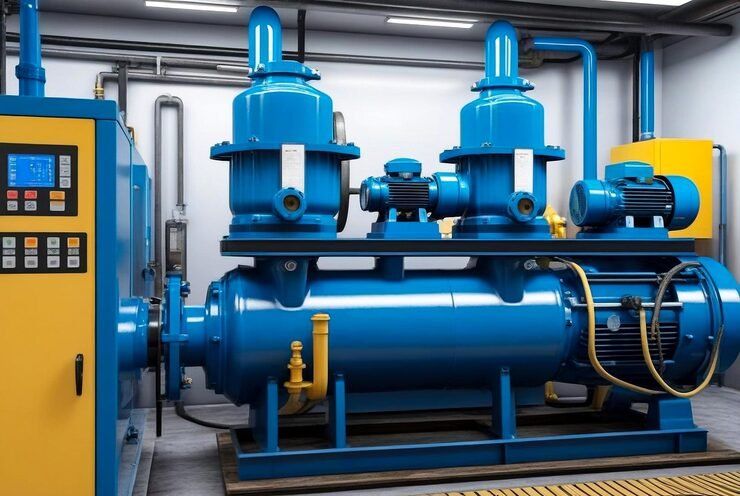
Why Hydraulic Pumping Systems Matter
Hydraulic systems can transmit substantial mechanical power through relatively compact components. They are particularly useful where controlled force, torque, speed, and movement are required.
Important advantages of hydraulic pumping systems include:
High power density
Controlled actuator movement
High force generation
Variable speed and pressure control
Compact power transmission
Compatibility with automated controls
Adaptability to demanding operating environments
A complete hydraulic system normally combines the pump with a reservoir, filters, valves, hoses or piping, actuators, instrumentation, and a hydraulic power unit.
Types of Hydraulic Pumps
Hydraulic pumps are categorized according to their operating principle, displacement characteristics, pressure capabilities, and intended application.
Hydraulic Gear Pumps
Gear pumps use rotating gears to move hydraulic fluid from the inlet to the outlet. They are relatively simple in construction and are frequently used in mobile machinery, industrial equipment, lubrication systems, and hydraulic power units.
Common configurations include external gear pumps and internal gear pumps.
Hydraulic Vane Pumps
Vane pumps use sliding vanes positioned within a rotating rotor. As the rotor turns, the vanes create changing chamber volumes that transport hydraulic fluid.
They are commonly used where relatively smooth flow and moderate-to-high operating pressures are required.
Hydraulic Piston Pumps
Piston pumps use reciprocating pistons to generate fluid flow. They can operate at high pressures and are widely used in demanding industrial and mobile hydraulic applications.
Major configurations include:
Axial piston pumps
Radial piston pumps
Swash-plate piston pumps
Bent-axis piston pumps
Fixed-Displacement Pumps
A fixed-displacement pump delivers a predetermined fluid volume per revolution. Gear pumps and some vane pumps commonly use fixed-displacement designs.
These systems can be suitable for applications with relatively consistent flow requirements.
Variable-Displacement Pumps
Variable-displacement pumps allow the delivered fluid volume to change according to system requirements. They are frequently used in systems requiring variable flow, energy management, and precise hydraulic control.
Hydraulic Pumping System Components
A complete hydraulic pumping system consists of more than the pump itself.
Hydraulic Reservoir
The reservoir stores hydraulic fluid and provides space for heat dissipation, air separation, and contaminant settling.
Hydraulic Valves
Valves control fluid direction, pressure, and flow. Common types include:
Directional control valves
Pressure relief valves
Check valves
Flow-control valves
Proportional valves
Servo valves
Hydraulic Filters
Filters remove contaminants from hydraulic fluid and help protect pumps, valves, and actuators from particle-related wear.
Hydraulic Actuators
Actuators convert hydraulic energy into mechanical movement.
Hydraulic cylinders generally produce linear movement, while hydraulic motors produce rotary movement.
Hoses and Piping
Hydraulic hoses, tubes, and pipes transport pressurized fluid between system components. Their specifications must correspond to pressure, temperature, fluid compatibility, and flow requirements.
Hydraulic Power Units
A hydraulic power unit combines components such as the reservoir, pump, motor, valves, filtration equipment, and control devices into an integrated assembly.
Hydraulic Technologies
Modern hydraulic pumping systems incorporate several technologies to improve control, efficiency, monitoring, and integration.
Variable Displacement Technology
Variable-displacement pumps adjust fluid delivery according to operating requirements. This can help reduce unnecessary fluid flow and improve system control.
Electro-Hydraulic Control
Electro-hydraulic systems combine hydraulic power with electronic control. Sensors, controllers, proportional valves, and servo valves can regulate pressure, flow, and actuator movement.
Proportional Hydraulic Systems
Proportional valves allow hydraulic parameters to be adjusted in response to electrical control signals. They are useful where more precise control is required than conventional on/off valves provide.
Servo Hydraulic Technology
Servo-hydraulic systems are designed for highly controlled movement and force. They are used in applications such as metal forming, testing equipment, injection molding, and precision industrial machinery.
Hydraulic IoT Monitoring
Connected sensors can monitor pressure, temperature, flow, vibration, fluid condition, and pump performance. Data can be transmitted to industrial monitoring platforms for equipment diagnostics and maintenance planning.
Manufacturing Process of Hydraulic Pumps
Hydraulic pump manufacturing combines precision machining, material processing, assembly, testing, and quality inspection.
1. Engineering and Design
Engineers establish pump displacement, pressure rating, flow requirements, operating speed, fluid compatibility, and mounting configuration.
CAD and engineering simulation tools can be used to develop pump components and evaluate mechanical behavior.
2. Material Selection
Common materials include:
Cast iron
Ductile iron
Aluminum alloys
Stainless steel
Hardened steel
Engineering alloys
Material selection depends on pressure, wear, corrosion, temperature, and application requirements.
3. Component Machining
Pump housings, gears, shafts, pistons, cylinders, bearing surfaces, and valve components can be produced using CNC machining, grinding, honing, drilling, and other precision manufacturing methods.
4. Surface Treatment
Selected components may undergo heat treatment, coating, plating, polishing, or other surface treatments to improve wear resistance and dimensional stability.
5. Assembly
Components are assembled with bearings, seals, shafts, pistons, gears, valves, and other internal parts. Assembly tolerances are particularly important because hydraulic leakage can affect system performance.
6. Testing
Finished pumps can undergo:
Pressure testing
Flow testing
Leakage testing
Efficiency testing
Noise testing
Temperature testing
Endurance testing
Testing verifies that the pump performs within its specified operating parameters.
Hydraulic Pumping System Automation
Automation allows hydraulic systems to respond to changing operating conditions.
A modern automated system may combine:
PLC controllers
Pressure sensors
Flow sensors
Temperature sensors
Proportional valves
Variable-frequency drives
Servo controls
Human-machine interfaces
Industrial communication networks
For example, a pressure sensor can provide feedback to a controller, which can adjust pump displacement or motor operation to maintain a specified pressure.
Hydraulic Pumping System Comparison
| Pump Type | Operating Principle | Typical Characteristics | Common Applications |
|---|---|---|---|
| Gear Pump | Rotating gears | Simple, compact | Mobile equipment, industrial machinery |
| Vane Pump | Sliding vanes | Smooth flow | Industrial hydraulic systems |
| Piston Pump | Reciprocating pistons | High-pressure capability | Heavy machinery, industrial systems |
| Axial Piston Pump | Axially arranged pistons | Variable displacement options | Construction, manufacturing |
| Radial Piston Pump | Radially arranged pistons | High pressure | Specialized industrial equipment |
| Fixed-Displacement Pump | Constant displacement | Consistent flow | Basic hydraulic circuits |
| Variable-Displacement Pump | Adjustable displacement | Flow control | Advanced hydraulic systems |
Factors Affecting Hydraulic Pumping System Cost
The overall cost of a hydraulic pumping system depends on its configuration and operating requirements.
Major factors include:
Pump type
Pump displacement
Pressure rating
Flow capacity
Motor power
Reservoir capacity
Valve configuration
Filtration requirements
Control technology
Sensors and instrumentation
Hydraulic hoses and piping
Custom engineering
Installation requirements
Environmental operating conditions
A simple fixed-displacement pump can have a significantly different configuration from a fully automated variable-displacement hydraulic power unit.
Global Manufacturers and Suppliers
The hydraulic equipment market includes pump manufacturers, hydraulic component manufacturers, system integrators, distributors, and specialized engineering companies.
When evaluating a hydraulic pumping system supplier, organizations can examine:
Pump specifications
Pressure and flow ratings
Hydraulic-fluid compatibility
Manufacturing capabilities
Testing procedures
Automation compatibility
Component availability
Technical documentation
Replacement-part availability
System integration capabilities
Suppliers may provide individual pumps, hydraulic power units, complete pumping skids, replacement components, or engineered hydraulic systems.
Industrial Applications
Construction Equipment
Hydraulic pumping systems are fundamental to excavators, loaders, cranes, drilling machines, concrete equipment, and other construction machinery.
Manufacturing Machinery
Industrial presses, injection molding machines, forming equipment, machine tools, and automated production systems use hydraulic power for controlled mechanical movement.
Mining Equipment
Mining machinery can use high-pressure hydraulic systems for drilling, excavation, material handling, crushing, and other demanding operations.
Agricultural Equipment
Tractors, harvesters, sprayers, loaders, and other agricultural machinery use hydraulic systems for implements, steering, lifting, and motion control.
Material Handling
Forklifts, lifting platforms, warehouse equipment, cranes, and other material-handling machines use hydraulic systems to generate controlled lifting and movement.
Marine and Offshore Equipment
Hydraulic systems are used in steering systems, winches, cranes, lifting equipment, and other marine machinery.
Energy and Industrial Plants
Hydraulic pumping systems can support industrial presses, actuator systems, process machinery, turbine-related equipment, and specialized plant operations.
How to Select a Hydraulic Pumping System
Choosing a hydraulic pumping system requires matching the pump and supporting components to the application.
1. Determine Pressure Requirements
Identify the continuous and peak operating pressure required by the hydraulic circuit.
2. Calculate Required Flow
Pump flow must correspond to actuator speed and system operating requirements.
3. Select Pump Type
Gear, vane, piston, and specialized pump designs have different pressure, efficiency, control, and application characteristics.
4. Check Fluid Compatibility
Hydraulic fluid type, viscosity, temperature range, and contamination sensitivity should be considered.
5. Evaluate Duty Cycle
Continuous-duty applications may require different pump and cooling configurations from intermittent systems.
6. Consider Automation
Applications requiring variable pressure, flow control, or precise motion may benefit from electronic and electro-hydraulic controls.
7. Review Maintenance Requirements
Pump accessibility, filtration, fluid cleanliness, seals, wear components, and inspection requirements should be considered during system selection.
Frequently Asked Questions
What is a hydraulic pumping system?
A hydraulic pumping system uses a pump and associated components to generate and control pressurized hydraulic fluid for transmitting mechanical power.
What are the main types of hydraulic pumps?
The major types include gear pumps, vane pumps, piston pumps, axial piston pumps, radial piston pumps, fixed-displacement pumps, and variable-displacement pumps.
What is the difference between fixed and variable displacement?
A fixed-displacement pump delivers a relatively fixed fluid volume per revolution, while a variable-displacement pump can adjust its fluid delivery according to system requirements.
Where are hydraulic pumping systems used?
They are widely used in construction machinery, manufacturing equipment, mining, agriculture, material handling, marine equipment, energy systems, and industrial automation.
What factors determine hydraulic pump selection?
Pressure, flow rate, displacement, operating speed, fluid type, temperature, duty cycle, efficiency requirements, control method, and application environment are important selection factors.
Conclusion
Hydraulic pumping systems provide a flexible method of transmitting and controlling mechanical power through pressurized fluid. Gear, vane, piston, axial piston, and radial piston pumps can be configured for different pressure, flow, control, and operating requirements.
Modern hydraulic technologies increasingly combine mechanical pumping components with electronic controls, sensors, proportional valves, servo systems, and connected monitoring technologies. Understanding pump characteristics, system components, manufacturing processes, operating conditions, and application requirements is essential when designing or selecting a hydraulic pumping system.