Lube oil centrifuges are centrifugal separation machines designed to remove contaminants, suspended solids, water, and other unwanted materials from lubricating oils. They are used in industrial machinery, marine engines, power-generation equipment, manufacturing plants, mining equipment, and other applications where hydraulic or lubricating fluids need controlled separation and purification.
By rotating contaminated oil at high speed, a centrifuge generates centrifugal force that separates components according to differences in density. Depending on the machine configuration, lube oil centrifuges can operate continuously or in batches and can be integrated with pumps, heaters, filtration equipment, sensors, and automated control systems.
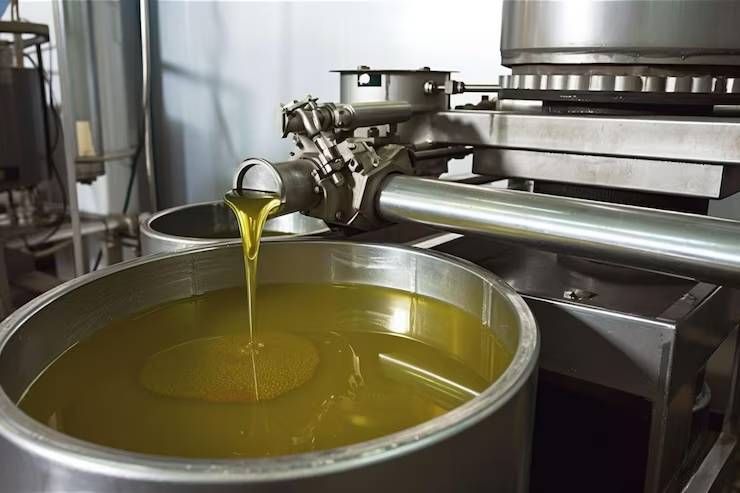
Why Lube Oil Centrifuges Matter
Lubricating oil can accumulate contaminants during equipment operation. These may include:
Metal particles
Dirt and dust
Carbon deposits
Water
Sludge
Oxidation products
Wear particles
Contaminated oil can affect lubrication performance and contribute to component wear. Centrifugal separation provides a mechanical method for separating contaminants from oil without relying solely on conventional filter media.
Lube oil centrifuges are particularly useful in applications involving continuous equipment operation, large oil volumes, or demanding contamination-control requirements.
How Lube Oil Centrifuges Work
A lube oil centrifuge uses a rotating bowl, rotor, or separation assembly to generate centrifugal force.
During operation, contaminated oil enters the centrifuge and is accelerated by the rotating assembly. Higher-density contaminants move outward while the lower-density oil remains closer to the rotational axis.
The separated material can then be removed while the treated oil exits the centrifuge.
The separation performance depends on several factors:
Centrifugal force
Rotor speed
Oil viscosity
Particle density
Particle size
Temperature
Flow rate
Residence time
Centrifuge geometry
Heating the oil can sometimes reduce viscosity and improve separation performance, although operating temperature must remain within the limits of the oil and equipment.
Types of Lube Oil Centrifuges
Different centrifuge designs are used according to oil characteristics, contamination levels, throughput, and operating requirements.
Disc Stack Centrifuges
Disc stack centrifuges use multiple conical discs inside a rotating bowl to increase the effective separation area.
They are commonly used for continuous separation and can be configured for liquid-solid or liquid-liquid separation.
Applications include:
Marine lubricating oil
Turbine oil
Hydraulic oil
Industrial lubricants
Engine oil
Solid-Bowl Centrifuges
Solid-bowl centrifuges use a rotating cylindrical or conical bowl to separate solids from liquids.
They can be used when the primary objective is removal of suspended solid contaminants.
Self-Cleaning Centrifuges
Self-cleaning centrifuges incorporate mechanisms that periodically discharge accumulated solids from the separation chamber.
These machines can be useful for continuous industrial operation where manual cleaning would interrupt production.
Manual-Cleaning Centrifuges
Manual-cleaning designs require the machine to be stopped and opened periodically to remove accumulated contaminants.
They can be suitable for smaller systems or applications with relatively low contaminant loading.
High-Speed Centrifuges
High-speed centrifuges operate at elevated rotational speeds to generate strong centrifugal forces. They are commonly used for fine particle separation and liquid-liquid separation.
Centrifugal Separation Technologies
Modern lube oil centrifuges use different separation principles and mechanical configurations.
Solid-Liquid Separation
This process removes solid contaminants from lubricating oil.
Particles such as metal debris, carbon, dirt, and sludge migrate toward the outer region of the rotating bowl because of their higher density.
Liquid-Liquid Separation
Some centrifuges can separate immiscible liquids, such as water and oil, when there is sufficient density difference between the phases.
This capability is important for applications where water contamination is present in lubricating oil.
Three-Phase Separation
Advanced centrifuges can simultaneously separate:
Oil
Water
Solid contaminants
This configuration can be particularly useful for heavily contaminated industrial or marine lubricating oils.
Lube Oil Centrifuge Components
A typical system consists of several mechanical and control components.
Rotating Bowl
The bowl is the primary rotating separation chamber. It must withstand high rotational speeds and operating stresses.
Disc Stack
In disc-stack designs, conical discs create additional separation surfaces and improve the effective separation area.
Drive System
An electric motor and drive assembly rotate the centrifuge at the required operating speed.
Feed System
Pumps and feed lines deliver contaminated oil into the centrifuge at a controlled flow rate.
Discharge System
Separate outlets can remove treated oil, separated water, and accumulated solids depending on the centrifuge design.
Control System
Industrial systems can use PLCs, sensors, HMIs, and automated valves to control operation.
Heating System
Some installations incorporate oil heaters to regulate viscosity and improve separation conditions.
Manufacturing Process of Lube Oil Centrifuges
Manufacturing a lube oil centrifuge requires precision engineering because the rotating assembly must operate safely at high speed.
1. Engineering Design
Engineers determine:
Required throughput
Bowl speed
Separation performance
Operating pressure
Material compatibility
Oil viscosity range
Solid-loading capacity
Cleaning configuration
CAD and engineering simulation tools can be used to develop the centrifuge structure and rotating components.
2. Material Selection
Materials commonly used include stainless steel, carbon steel, aluminum alloys, and specialized engineering materials.
Components exposed to lubricants, water, chemicals, or abrasive contaminants require appropriate material selection.
3. Precision Machining
Critical components such as rotors, shafts, housings, discs, and bearings are manufactured using CNC machining, turning, milling, grinding, and other precision processes.
4. Balancing
High-speed rotating components require careful dynamic balancing. Imbalances can cause vibration, noise, bearing loads, and mechanical stress.
5. Surface Treatment
Selected components may undergo polishing, coating, heat treatment, passivation, or other surface treatments depending on the material and application.
6. Assembly
The bowl, rotor, shaft, bearings, seals, motor, feed system, discharge components, and control equipment are assembled.
7. Testing
Finished machines can undergo:
Rotational testing
Vibration testing
Leakage testing
Flow testing
Pressure testing
Separation-performance testing
Temperature testing
Safety-system verification
Automation and Monitoring
Modern lube oil centrifuge systems can be automated to improve process control and monitoring.
Sensors may monitor:
Oil temperature
Feed pressure
Flow rate
Vibration
Motor current
Bowl speed
Differential pressure
Discharge conditions
A PLC can process these signals and control pumps, heaters, valves, and centrifuge operation.
Connected monitoring systems can also provide operating data for maintenance and equipment-condition analysis.
Lube Oil Centrifuge Comparison
| Centrifuge Type | Main Function | Typical Application |
|---|---|---|
| Disc Stack Centrifuge | Fine separation | Marine and industrial oils |
| Solid-Bowl Centrifuge | Solid removal | Contaminated lubricating oil |
| Self-Cleaning Centrifuge | Continuous separation | High-volume industrial systems |
| Manual-Cleaning Centrifuge | Periodic separation | Smaller systems |
| High-Speed Centrifuge | Fine particle/liquid separation | Specialized applications |
| Three-Phase Centrifuge | Oil, water and solids separation | Heavily contaminated oils |
Factors Affecting Lube Oil Centrifuge Cost
The overall cost of a lube oil centrifuge depends on machine design and system configuration.
Important factors include:
Processing capacity
Bowl speed
Separation technology
Automation level
Material of construction
Motor capacity
Feed pump requirements
Heating requirements
Cleaning mechanism
Instrumentation
Control system
Installation requirements
Safety features
A compact manual-cleaning centrifuge has a substantially different configuration from a fully automated continuous three-phase separation system.
Global Manufacturers and Suppliers
The global lube oil centrifuge market includes centrifuge manufacturers, industrial separation-equipment companies, oil-purification equipment suppliers, system integrators, and specialized distributors.
When evaluating a supplier, organizations can review:
Separation capacity
Oil compatibility
Solid and water removal capability
Bowl speed
Flow rate
Automation options
Materials of construction
Testing procedures
Spare-parts availability
Maintenance requirements
Technical documentation
For large industrial installations, buyers may also evaluate complete oil purification systems rather than a standalone centrifuge.
Industrial Applications
Marine Engines
Marine engines generate lubricating-oil contamination through wear particles, combustion by-products, and water exposure. Centrifuges can be incorporated into onboard oil purification systems.
Power Generation
Turbines, generators, and other rotating equipment rely on lubricating oils. Centrifugal purification systems can help manage particulate and water contamination.
Manufacturing Machinery
Machine tools, hydraulic equipment, compressors, gearboxes, and production machinery can use oil purification systems to manage lubricant contamination.
Mining Equipment
Heavy mining equipment operates under demanding conditions and can generate significant contamination in lubricating systems. Centrifugal separation can be used for oil-cleaning applications.
Industrial Gearboxes
Gearboxes depend on lubricating oil for gear and bearing protection. Oil purification systems can help remove suspended contaminants and water.
Hydraulic Systems
Hydraulic equipment requires clean fluid for pumps, valves, and actuators. Centrifugal separation can be incorporated into hydraulic-oil purification systems where applicable.
Compressor Systems
Industrial compressors use lubricating oils that may accumulate particles, moisture, and degradation products. Centrifuge systems can support oil-management processes.
How to Select a Lube Oil Centrifuge
1. Identify the Oil Type
Determine whether the system will process turbine oil, engine oil, hydraulic oil, gear oil, compressor oil, or another lubricant.
2. Analyze Contamination
Identify the type and concentration of solids, water, sludge, and other contaminants.
3. Determine Required Capacity
Evaluate oil volume, circulation rate, operating hours, and required processing throughput.
4. Select Separation Technology
Choose between disc-stack, solid-bowl, self-cleaning, or other configurations based on contamination and process requirements.
5. Evaluate Oil Viscosity
Viscosity influences flow and separation performance. Operating temperature may need to be controlled accordingly.
6. Consider Automation
For continuous industrial operation, automated cleaning, monitoring, alarms, and process control may be important.
7. Review Maintenance
Evaluate access to the bowl, seals, bearings, filters, discharge components, and other wear parts.
Frequently Asked Questions
What is a lube oil centrifuge?
A lube oil centrifuge is a centrifugal separation machine used to separate contaminants such as solids and water from lubricating oil.
How does a lube oil centrifuge work?
The machine rotates contaminated oil at high speed. Differences in density cause heavier particles and, in suitable systems, water to separate from the oil.
What types of oil can be processed?
Depending on the centrifuge design, systems can process engine oil, turbine oil, hydraulic oil, gear oil, compressor oil, marine lubricating oil, and other industrial lubricants.
What is a disc-stack centrifuge?
A disc-stack centrifuge uses multiple conical discs inside a rotating bowl to increase the effective separation area and support continuous separation.
What factors affect centrifuge selection?
Important factors include oil type, viscosity, contamination characteristics, required flow rate, separation objectives, operating temperature, automation requirements, and maintenance configuration.
Conclusion
Lube oil centrifuges provide a mechanical approach to separating contaminants from lubricating oils used in industrial and mobile equipment. Disc-stack, solid-bowl, self-cleaning, and high-speed centrifuges can be configured for different separation requirements.
Modern systems increasingly combine centrifugal separation with pumps, heaters, sensors, PLCs, automated discharge mechanisms, and condition-monitoring technologies. Selecting an appropriate centrifuge requires consideration of oil characteristics, contamination levels, processing capacity, separation objectives, operating conditions, automation, and maintenance requirements.