Mass spectrometry systems are analytical instruments used to identify chemical compounds, measure molecular masses, and determine the composition of complex samples. They are widely used in pharmaceutical research, biotechnology, environmental testing, food analysis, forensic science, and industrial laboratories.
These systems work by converting sample molecules into ions, separating the ions according to their mass-to-charge ratios, and detecting the resulting signals. The data can help researchers identify unknown compounds, quantify specific substances, investigate molecular structures, and detect trace-level contaminants.
Context
What Are Mass Spectrometry Systems?
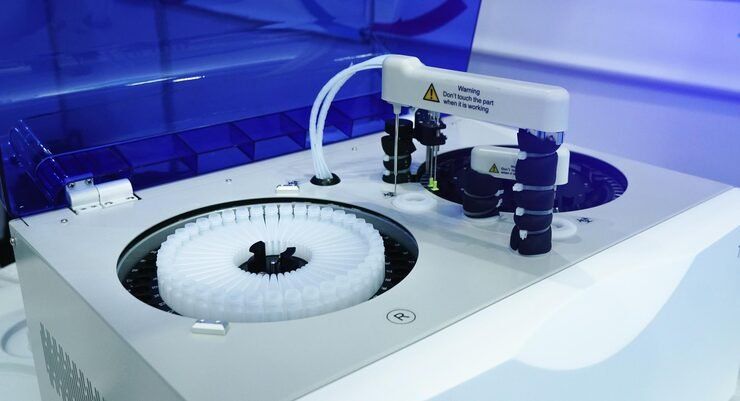
A mass spectrometry system consists of an ion source, a mass analyzer, an ion detector, a vacuum system where required, electronic controls, and data-processing software. Depending on the analytical method, the system may also include a chromatograph or another separation instrument.
The ion source converts sample components into charged particles. The mass analyzer separates those ions according to their mass-to-charge ratios, commonly represented as m/z. The detector records the ions, and the software converts the resulting signals into a mass spectrum.
A mass spectrum typically displays mass-to-charge ratio on the horizontal axis and signal intensity on the vertical axis. Researchers interpret the pattern of peaks to investigate molecular mass, fragmentation behavior, isotope distributions, and chemical composition.
Mass spectrometry is frequently combined with liquid chromatography or gas chromatography. These combinations allow laboratories to separate components of a mixture before analyzing them, improving the identification and quantification of compounds in complex samples.
Major Types of Mass Spectrometry Systems
Mass spectrometry instruments differ according to their ionization methods, mass analyzers, sample requirements, sensitivity, resolution, and intended applications.
1. Quadrupole Mass Spectrometers
Quadrupole analyzers use oscillating electrical fields to filter ions according to their mass-to-charge ratios. They are widely used for routine chemical analysis, environmental monitoring, pharmaceutical testing, and process laboratories. Their practical design supports reliable measurements for many targeted analytical methods.
2. Triple Quadrupole Mass Spectrometers
Triple quadrupole systems contain three quadrupole sections. The first selects precursor ions, the second supports collision-induced fragmentation, and the third filters product ions. This arrangement is particularly useful for targeted quantification and trace-level analysis using multiple reaction monitoring.
3. Time-of-Flight Mass Spectrometers
Time-of-flight (TOF) analyzers separate ions according to the time they take to travel through a flight region. Their rapid acquisition capabilities make them useful for high-throughput analysis, accurate-mass measurements, protein research, and selected imaging applications.
4. Orbitrap Mass Spectrometers
Orbitrap analyzers measure ion oscillation frequencies to determine mass-to-charge ratios. These systems can provide high mass resolution and accurate-mass measurements. They are used in proteomics, metabolomics, pharmaceutical research, and complex mixture analysis.
5. Fourier Transform Ion Cyclotron Resonance Systems
Fourier transform ion cyclotron resonance (FT-ICR) mass spectrometers use ion motion within a strong magnetic field to obtain highly detailed mass measurements. They are used in advanced research involving complex organic mixtures, petroleum-related samples, proteins, and other chemically challenging materials.
6. Magnetic Sector Mass Spectrometers
Magnetic sector analyzers separate ions through magnetic fields. Depending on their configuration, these instruments can provide precise measurements of isotope ratios and elemental or molecular compositions. They are used in isotope research, geochemistry, and specialized analytical laboratories.
7. Inductively Coupled Plasma Mass Spectrometers
Inductively coupled plasma mass spectrometry (ICP-MS) uses a high-temperature plasma to ionize elements in a sample. It is widely applied to trace-element analysis in water, soil, food, metals, geological materials, and biological samples.
8. MALDI Mass Spectrometers
Matrix-assisted laser desorption/ionization (MALDI) systems use a laser and a suitable matrix to generate ions from prepared samples. They are particularly useful for analyzing large biomolecules, microorganisms, polymers, and selected biological materials. MALDI-TOF systems are also widely used for microbial identification in clinical and research laboratories.
Analytical Technologies Used in Mass Spectrometry
Electrospray Ionization (ESI): ESI generates ions from a liquid sample by applying a strong electric field. It is widely used for proteins, peptides, metabolites, pharmaceutical compounds, and other molecules that can be transferred into solution.
Electron Ionization (EI): EI uses energetic electrons to produce ions and characteristic fragments from molecules in the gas phase. It is commonly associated with gas chromatography–mass spectrometry and supports compound identification through fragmentation patterns.
Chemical Ionization (CI): CI uses reagent ions or gas-phase chemical reactions to ionize analytes. It can provide molecular-ion information under conditions that produce less fragmentation than conventional electron ionization.
Tandem Mass Spectrometry (MS/MS): Tandem mass spectrometry isolates selected ions, fragments them, and measures the resulting product ions. This approach improves analytical selectivity and supports structural investigation and targeted quantification.
High-Resolution Mass Spectrometry (HRMS): HRMS distinguishes ions with closely spaced mass-to-charge ratios and supports accurate-mass measurements. It is valuable for identifying unknown compounds and investigating complex mixtures.
Chromatography–Mass Spectrometry: Gas chromatography–mass spectrometry (GC-MS) is suitable for many volatile or thermally stable compounds, while liquid chromatography–mass spectrometry (LC-MS) is widely used for less volatile, polar, or thermally sensitive substances.
Comparison of Mass Spectrometry Systems
| System type | Main analytical characteristic | Common applications |
|---|---|---|
| Quadrupole MS | Ion filtering for routine analysis | Targeted chemical testing |
| Triple quadrupole MS | Selective precursor-to-product ion monitoring | Trace quantification |
| TOF-MS | Rapid ion measurement | High-throughput and accurate-mass analysis |
| Orbitrap MS | High-resolution mass analysis | Proteomics and metabolomics |
| FT-ICR MS | Very high resolving power | Advanced molecular research |
| Magnetic sector MS | Precise ion separation | Isotope ratio analysis |
| ICP-MS | Elemental and trace-metal detection | Environmental and materials testing |
| MALDI-TOF MS | Laser-assisted ion generation | Biomolecule and microbial analysis |
Importance of Mass Spectrometry Systems
Mass spectrometry provides detailed chemical information that supports research, product characterization, and analytical quality assessment. It can identify compounds by combining molecular mass, fragmentation patterns, isotope information, and reference-library comparisons.
In pharmaceutical research, mass spectrometry supports drug metabolism studies, impurity profiling, compound characterization, and the measurement of active substances. In environmental laboratories, it helps detect pesticides, pollutants, industrial chemicals, and other contaminants in suitable samples.
Food laboratories use mass spectrometry to investigate residues, contaminants, additives, and selected nutritional compounds. Clinical and biomedical research laboratories apply specialized methods to study metabolites, proteins, biomarkers, and other biological molecules.
The technique also supports forensic investigations, materials research, petrochemical analysis, and semiconductor-related contamination studies. Its capabilities depend on the ionization method, analyzer design, sample preparation, calibration, and analytical method used. Results may need confirmation through reference standards or complementary analytical techniques.
Manufacturing Processes
Instrument Design and Engineering
Manufacturing begins with defining the system's analytical purpose, required mass range, sensitivity, resolution, sample throughput, ionization method, and operating environment. Engineers then develop the ion source, analyzer, detector, vacuum assembly, electronics, and data-processing architecture.
Systems designed for routine targeted measurements have different engineering requirements from high-resolution research instruments. ICP-MS platforms also require plasma-generation components, while chromatography-coupled systems must integrate with appropriate separation equipment.
Ion Source Production
Ion sources are manufactured from precision components selected for chemical compatibility, electrical performance, thermal stability, and reproducibility. Depending on the instrument, these components may include electrospray assemblies, heated interfaces, electron-impact sources, laser optics, or plasma interfaces.
Manufacturers evaluate ion generation, source stability, contamination resistance, and compatibility with different sample types. Proper source design is important because inconsistent ionization can affect signal intensity and analytical repeatability.
Mass Analyzer Manufacturing
Mass analyzers require precise mechanical dimensions and controlled electrical or magnetic fields. Quadrupole analyzers depend on accurately aligned rods and stable radiofrequency electronics. TOF systems require carefully controlled flight paths and timing electronics.
Orbitrap and FT-ICR instruments require specialized analyzer structures, stable field conditions, and sophisticated signal-processing capabilities. Magnetic sector systems depend on accurately engineered magnetic components. Manufacturing tolerances and field stability directly influence measurement performance.
Vacuum and Detector Integration
Many mass spectrometers operate under vacuum to reduce collisions between ions and gas molecules. Vacuum assemblies may include pumps, chambers, seals, pressure sensors, and automated pressure controls.
Ion detectors convert incoming ions into measurable electrical signals. Depending on the system, detector technologies may include electron multipliers, microchannel plates, or other suitable detection arrangements. Engineers integrate these components with amplifiers and acquisition electronics to capture signals across the intended measurement range.
Software Integration and Calibration
Control software manages ion generation, mass scanning, acquisition settings, vacuum monitoring, and instrument diagnostics. Analytical software supports peak detection, spectral interpretation, compound identification, quantification, and data reporting.
Manufacturers test mass accuracy, resolution, sensitivity, signal stability, calibration behavior, and instrument reproducibility. Systems intended for regulated laboratories may also require documented qualification procedures and support for data integrity requirements.
Global Manufacturers and Suppliers
The mass spectrometry market includes companies producing complete analytical systems, specialized analyzers, ion sources, detectors, and integrated chromatography platforms. Product portfolios differ by analytical technology and application.
Recognized manufacturers include:
Thermo Fisher Scientific: Develops mass spectrometry systems for pharmaceutical research, proteomics, environmental analysis, clinical research, and other laboratory applications.
Agilent Technologies: Provides GC-MS, LC-MS, quadrupole, triple quadrupole, and related analytical systems for chemical, food, environmental, and pharmaceutical laboratories.
Waters Corporation: Develops LC-MS platforms and integrated analytical systems for pharmaceutical research, biomolecular analysis, and laboratory testing.
Bruker: Produces mass spectrometry technologies for proteomics, metabolomics, molecular research, microbial identification, and other specialized applications.
Shimadzu: Manufactures GC-MS, LC-MS, and related analytical instruments for industrial, pharmaceutical, environmental, and academic laboratories.
JEOL: Develops mass spectrometry systems and associated technologies for chemical research and advanced analytical applications.
SCIEX: Specializes in mass spectrometry platforms, particularly LC-MS/MS systems used in quantitative analysis, pharmaceutical research, and life sciences.
PerkinElmer: Provides analytical instrumentation and related technologies for selected laboratory, environmental, food, and life-science applications.
When comparing manufacturers or regional suppliers, laboratories should examine mass range, resolving power, sensitivity, supported ionization methods, chromatography compatibility, software functions, sample throughput, and installation requirements. Other considerations include operator training, calibration documentation, maintenance procedures, availability of consumables, and compatibility with existing laboratory workflows.
Not every manufacturer produces every category of mass spectrometer. Laboratories should verify the current product range and regional availability for the specific analytical method they intend to use.
Laboratory Applications
Pharmaceutical Research and Drug Development
Mass spectrometry supports molecular characterization, impurity investigation, pharmacokinetic studies, drug metabolism research, and measurement of compounds in biological samples. LC-MS/MS is commonly used for targeted quantitative analysis, while high-resolution instruments support broader compound identification and research workflows.
Proteomics and Metabolomics
Proteomics laboratories use mass spectrometry to identify and characterize proteins and peptides. Metabolomics studies use it to examine small molecules associated with biological pathways, cellular responses, and physiological processes. Sample preparation and data analysis are critical to obtaining interpretable results.
Environmental Monitoring
Environmental laboratories use GC-MS and LC-MS methods to analyze selected pesticides, persistent organic compounds, industrial contaminants, and other pollutants. ICP-MS supports trace-element analysis in water, soil, sediments, and related materials.
Food and Agricultural Analysis
Mass spectrometry can detect selected pesticide residues, veterinary drug residues, mycotoxins, food contaminants, and other compounds. It also supports research into food composition, authenticity, and chemical changes during processing.
Clinical and Biomedical Research
Specialized mass spectrometry methods are used in biomarker research, metabolic investigations, therapeutic drug monitoring, and selected clinical laboratory workflows. Clinical implementation requires appropriate validation, quality controls, and compliance with relevant laboratory requirements.
Forensic Science
Forensic laboratories use mass spectrometry to investigate drugs, toxic substances, chemical residues, and other evidence. GC-MS and LC-MS/MS can help identify compounds in complex samples, subject to suitable analytical procedures and confirmation requirements.
Industrial and Materials Analysis
Industrial laboratories apply mass spectrometry to investigate chemical purity, residual solvents, volatile compounds, trace metals, polymers, and material contamination. ICP-MS can measure trace elements in metals and electronic materials, while other configurations address molecular compounds and process-related samples.
Recent Developments
Mass spectrometry continues to advance through improvements in analyzer design, ion transmission, detector performance, automation, and data processing. High-resolution systems are increasingly used to investigate complex mixtures and support the identification of compounds that are difficult to distinguish through simpler analytical approaches.
Developments in ion mobility–mass spectrometry add a separation dimension based on ion movement through a gas under an electric field. When combined with mass analysis, this technique can help distinguish certain compounds with similar mass-to-charge ratios and provide additional information about molecular shape.
Automation and software-assisted interpretation are helping laboratories manage larger datasets, streamline routine workflows, and improve consistency. Machine-learning methods are being investigated for spectral interpretation, compound annotation, and pattern recognition, although results still require suitable validation and expert review.
Miniaturized and portable mass spectrometry systems are also being developed for selected field, industrial, and rapid-screening applications. Their capabilities depend on the sample, instrument configuration, and required analytical performance.
Laws or Policies
Mass spectrometry laboratories may be subject to different requirements depending on their industry, location, sample types, and intended use of results.
Laboratories performing regulated pharmaceutical or clinical analysis may need documented instrument qualification, method validation, calibration, quality control, data integrity, and record-retention procedures. Environmental and food-testing laboratories may need to follow jurisdiction-specific analytical methods and accreditation requirements.
Instrument operation also involves practical safety considerations. High-voltage electronics, vacuum assemblies, heated ion sources, compressed gases, flammable solvents, and plasma systems can present hazards. Laboratories should follow manufacturer instructions, chemical safety procedures, ventilation requirements, and applicable workplace regulations.
For analytical results intended for regulatory decisions, the laboratory should confirm that the selected method meets the relevant performance criteria and that reference standards and quality-control procedures are appropriate.
Tools and Resources
Manufacturer documentation: Instrument manuals, application notes, maintenance instructions, and technical specifications help laboratories understand system capabilities and operating requirements.
Spectral libraries: Reference libraries can support compound identification by comparing experimental fragmentation patterns with known spectra. Library matches should be interpreted with retention information, reference standards, and other relevant evidence.
Chemical databases: Resources such as PubChem provide chemical structures, identifiers, and compound information that can assist analytical research.
Scientific literature: Peer-reviewed studies and technical publications describe ionization methods, mass analyzer performance, sample preparation, quantitative analysis, and emerging applications.
Analytical standards and laboratory procedures: Reference materials, validated methods, calibration procedures, and quality-control samples help laboratories assess measurement reliability.
Complementary analytical techniques: Chromatography, NMR spectroscopy, infrared spectroscopy, and elemental analysis may be combined with mass spectrometry to obtain broader information about sample composition and molecular structure.
FAQs
1. What is a mass spectrometry system used for?
A mass spectrometry system measures the mass-to-charge ratios of ions to help identify compounds, characterize molecules, quantify substances, and investigate chemical composition. Its applications include pharmaceutical research, environmental testing, food analysis, clinical research, and materials science.
2. What is the difference between GC-MS and LC-MS?
GC-MS combines gas chromatography with mass spectrometry and is suitable for many volatile or thermally stable compounds. LC-MS combines liquid chromatography with mass spectrometry and is commonly used for polar, less volatile, or thermally sensitive compounds.
3. What is the difference between a quadrupole and a triple quadrupole mass spectrometer?
A conventional quadrupole analyzer filters ions according to their mass-to-charge ratios. A triple quadrupole system uses three quadrupole sections to select precursor ions, generate fragments, and measure selected product ions, making it particularly useful for targeted quantitative analysis.
4. Can mass spectrometry identify unknown compounds?
Mass spectrometry can support unknown-compound identification by examining molecular mass, accurate mass, isotope patterns, and fragmentation behavior. Reliable identification may also require chromatographic retention data, reference standards, spectral-library comparisons, or complementary analytical methods.
5. What factors should laboratories consider when selecting a mass spectrometer?
Important factors include sample type, ionization method, mass range, sensitivity, resolving power, quantitative requirements, chromatography compatibility, software, sample throughput, installation conditions, and laboratory safety requirements. The instrument should match the intended analytical method.
Conclusion
Mass spectrometry systems are important tools for identifying compounds, measuring chemical substances, and investigating complex samples. Their different analyzer designs and ionization technologies support a wide range of applications, from routine targeted testing to advanced molecular and elemental research.
Understanding instrument types, analytical technologies, manufacturing processes, and laboratory requirements helps researchers select an appropriate system for their work. Continued progress in high-resolution analysis, ion mobility, automation, and computational interpretation is expanding the capabilities of mass spectrometry across scientific and industrial laboratories.