Modern microscopes are scientific instruments designed to observe objects that are too small to be seen with the naked eye. The concept of microscopy dates back to the 17th century, when early optical lenses were first used to magnify tiny structures.
Today, modern microscopes play an important role in both scientific research and industrial processes. They help researchers understand biological systems, allow engineers to inspect materials at a microscopic level, and support quality control in manufacturing. As technology has progressed, microscopes have become more precise, easier to use, and capable of producing highly detailed images.
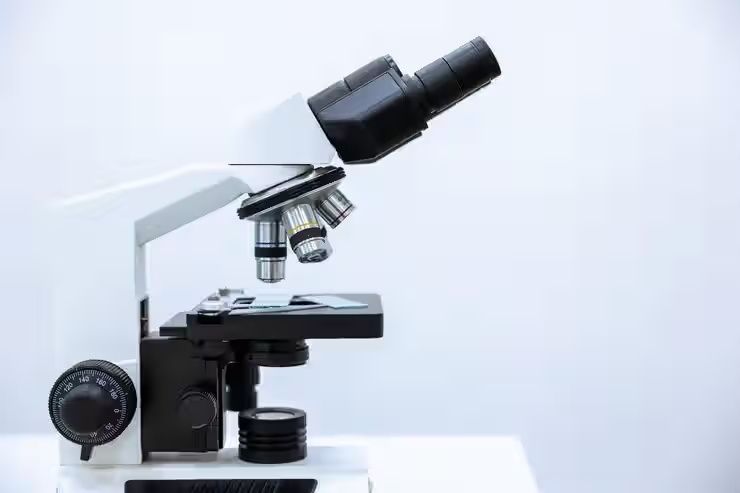
Importance
Modern microscopes are important because they make it possible to study structures that are otherwise invisible. This ability supports discoveries in medicine, environmental science, electronics, and many other fields. For example, in healthcare, microscopes are used to examine blood samples and detect diseases. In industry, they help ensure the accuracy and safety of manufactured products.
The impact of microscopy extends to everyday life. It contributes to the development of medicines, the improvement of food safety, and the creation of advanced materials used in electronics and construction. By enabling detailed observation, modern microscopes help address challenges such as disease diagnosis, material defects, and environmental monitoring.
Key areas where microscopes are widely used include:
- Medical laboratories: analyzing cells, tissues, and microorganisms
- Education: teaching students about biology and chemistry
- Manufacturing: inspecting micro-components and surfaces
- Environmental science: studying water, soil, and air samples
-
Electronics: examining circuits and semiconductor materials
Types of Modern Microscopes
Modern microscopes come in several types, each designed for specific applications. The main difference between them lies in how they generate images and what level of detail they provide.
Optical Microscopes
Optical microscopes, also known as light microscopes, use visible light and lenses to magnify objects. They are commonly found in schools and laboratories due to their simplicity and ease of use.
Within this category, different variations exist, including compound microscopes for viewing thin samples and stereo microscopes for observing larger objects in three dimensions.
Electron Microscopes
Electron microscopes use a beam of electrons instead of light to create images. Because electrons have shorter wavelengths, they can reveal much smaller details compared to optical microscopes.
Two common types are transmission electron microscopes (TEM), which show internal structures, and scanning electron microscopes (SEM), which provide detailed surface images.
Digital Microscopes
Digital microscopes use cameras and software to display images on a screen. They allow users to capture, store, and analyze images easily. These microscopes are often used in education, research, and industrial inspection.
Scanning Probe Microscopes
Scanning probe microscopes, such as atomic force microscopes (AFM), use a physical probe to scan the surface of a sample. This type of microscope can measure extremely small features at the atomic level.
Comparison of Microscope Types
| Microscope Type | Main Technology | Typical Use | Resolution Level |
|---|---|---|---|
| Optical Microscope | Light and lenses | Education, basic labs | Moderate |
| Electron Microscope | Electron beams | Advanced research | Very high |
| Digital Microscope | Camera and software | Inspection, documentation | Moderate to high |
| Scanning Probe Microscope | Physical probe | Nanotechnology research | Extremely high |
Technology Behind Modern Microscopes
The technology used in modern microscopes has advanced significantly. Several key components work together to produce clear and detailed images.
Lenses and optics remain central in optical systems, where multiple lenses are combined to increase magnification and clarity. In electron microscopes, electromagnetic lenses are used to control electron beams.
Digital imaging has become an important feature in many microscopes. High-resolution sensors capture images, which can then be processed using software for measurement and analysis. This integration allows for improved accuracy and easier sharing of results.
Automation is another notable development. Some microscopes now include motorized stages, autofocus systems, and image stitching capabilities. These features help reduce manual effort and improve consistency in observations.
Applications in Science and Industry
Modern microscopes are widely used across different fields, each with specific requirements.
In biological sciences, microscopes help researchers study cells, bacteria, and viruses. This supports advancements in medicine, including the development of treatments and vaccines.
In materials science, microscopes are used to analyze the structure of metals, polymers, and composites. This helps improve the strength and durability of materials used in construction and manufacturing.
In electronics, microscopes are essential for examining microchips and circuit boards. As electronic components become smaller, precise inspection becomes increasingly important.
Industrial applications often involve quality control. For example, microscopes can detect surface defects, measure small components, and ensure that products meet required standards.
Environmental studies also rely on microscopy. Scientists use microscopes to examine water samples, identify pollutants, and monitor ecosystems.
Recent Updates
Between 2024 and 2026, modern microscopes have continued to evolve with improvements in digital integration and automation. One noticeable trend is the increased use of artificial intelligence in image analysis. AI-based software can assist in identifying patterns, counting cells, and detecting abnormalities more efficiently.
Another development is the growth of portable and compact microscopes. These devices are designed for fieldwork, allowing researchers to conduct observations outside traditional laboratory settings.
Cloud connectivity has also become more common. Some systems allow users to store and share images online, making collaboration easier across different locations.
In addition, advancements in resolution and imaging techniques have improved the ability to study nanoscale structures, which is particularly important in nanotechnology and advanced materials research.
Laws or Policies
The use of modern microscopes is influenced by various regulations, especially in healthcare, research, and industrial environments. In India, laboratories and research institutions often follow guidelines set by organizations such as the Bureau of Indian Standards (BIS) and the Indian Council of Medical Research (ICMR).
Safety regulations are important when using certain types of microscopes, particularly electron microscopes that involve high voltages and vacuum systems. Laboratories are required to follow proper safety protocols to protect users and maintain equipment.
In industrial settings, quality control standards may require the use of microscopy for inspection and testing. These standards ensure that products meet safety and performance requirements.
Environmental and research policies may also guide how samples are collected, handled, and analyzed under microscopes. These rules help maintain ethical practices and accurate results.
Tools and Resources
Several tools and resources support the effective use of modern microscopes. These tools help users capture, analyze, and manage microscopic data.
Commonly used resources include:
- Image analysis software: used for measuring dimensions, counting objects, and enhancing images
- Laboratory information systems: help organize and store microscopy data
- Online educational platforms: provide tutorials and guides on microscope usage
- Calibration tools: ensure accuracy in measurements and imaging
- Digital databases: store and share microscopic images for research and learning
These tools improve efficiency and make it easier to interpret complex data obtained through microscopy.
FAQs
What are modern microscopes used for?
Modern microscopes are used to observe and analyze very small objects, including cells, microorganisms, and materials. They are commonly used in science, healthcare, and industry for research and inspection.
What are the main types of modern microscopes?
The main types of modern microscopes include optical microscopes, electron microscopes, digital microscopes, and scanning probe microscopes. Each type uses different technology and serves different purposes.
How do electron microscopes differ from optical microscopes?
Electron microscopes use electron beams instead of light, allowing them to achieve much higher resolution. Optical microscopes rely on visible light and are generally used for less detailed observations.
Where are microscopes used in industry?
Microscopes are used in industry for quality control, material analysis, and inspection of small components. They help detect defects and ensure products meet required standards.
Are digital microscopes part of modern microscopes?
Yes, digital microscopes are an important part of modern microscopes. They use cameras and software to display and analyze images, making them useful for education, research, and industrial applications.
Conclusion
Modern microscopes have evolved from simple optical devices into advanced tools that support a wide range of scientific and industrial activities. They enable detailed observation of structures that are otherwise invisible, contributing to research, healthcare, and manufacturing. With ongoing developments in imaging technology, automation, and digital integration, microscopes continue to expand their role in understanding the microscopic world. Their importance remains closely tied to progress in science and technology.