
Starlink is a satellite-based broadband internet network developed by SpaceX. It uses a large constellation of satellites in low Earth orbit (LEO) to provide internet connectivity to homes, businesses, vehicles, vessels, and other locations, depending on the available equipment and authorized coverage.
Traditional satellite internet systems often use satellites positioned much farther from Earth. Starlink operates many of its satellites at altitudes of roughly 550 kilometers, although orbital altitudes vary across the constellation. The shorter distance can reduce communication delays compared with traditional geostationary satellite connections.
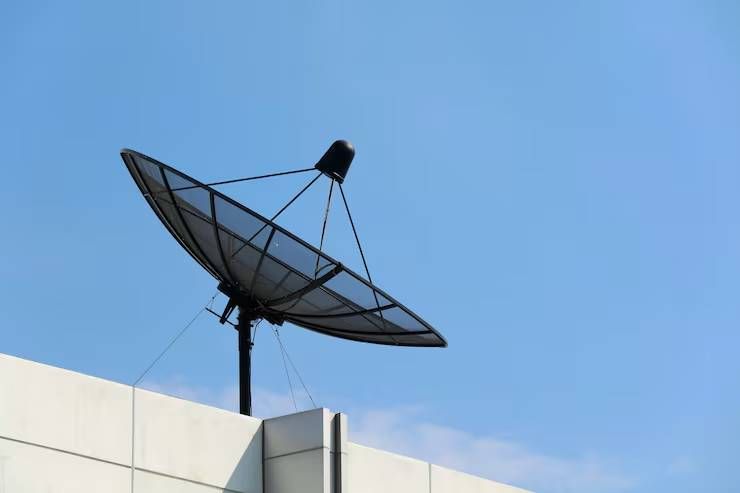
Starlink is designed to extend internet access to places where fiber-optic cables, cable broadband, or mobile networks are unavailable, unreliable, or difficult to deploy. Its technology is particularly relevant to remote communities, rural properties, maritime operations, and organizations working in geographically isolated areas.
How Starlink satellite internet works
Starlink connects user equipment to satellites moving across the sky. Those satellites communicate with ground infrastructure and, where available and appropriate, other satellites through inter-satellite laser links. The network routes internet traffic between the user and the wider internet.
The basic connection process involves several components:
User terminal: An antenna that communicates with Starlink satellites.
Wi-Fi router: Distributes the internet connection to compatible devices within the local network.
Satellite constellation: Provides moving communication links across the coverage area.
Ground infrastructure: Connects satellite traffic to terrestrial internet networks.
Network management systems: Coordinate satellite connections, traffic routing, and overall network operation.
Unlike a conventional fixed satellite dish that points toward a single geostationary satellite, many Starlink terminals electronically track satellites passing overhead. This allows the terminal to maintain connections as satellites move across the sky.
What makes low Earth orbit different?
Low Earth orbit satellites are closer to Earth than geostationary satellites, which orbit at approximately 35,786 kilometers above the equator. The shorter communication path can help reduce latency, making activities such as video calls, online gaming, remote desktop access, and interactive applications more practical.
However, actual performance varies with network congestion, satellite visibility, weather conditions, equipment configuration, and the route taken by internet traffic. Low latency does not automatically mean that every connection will be faster than fiber or other terrestrial broadband options.
Importance
Internet access supports education, communication, business operations, healthcare administration, entertainment, and access to digital information. In areas where terrestrial infrastructure is limited, satellite broadband can provide an alternative connection method.
Starlink's importance comes from its ability to serve locations that may be expensive or technically difficult to connect through conventional networks. Remote farms, mountain communities, research stations, offshore vessels, and temporary work sites are examples of environments where satellite connectivity may be useful.
Main applications of Starlink connectivity
Rural and remote households: Satellite internet can connect homes outside the practical reach of fiber or reliable fixed wireless networks. Availability and performance depend on the location and local network capacity.
Education: Schools and students in underserved areas may use satellite connectivity for online learning, digital libraries, and remote instruction when suitable local infrastructure is absent.
Business operations: Companies operating in remote areas can use satellite broadband for cloud applications, communication, inventory systems, and data exchange.
Maritime connectivity: Specialized equipment and plans can provide internet access on certain vessels. Performance depends on equipment approval, coverage, operating conditions, and the applicable maritime plan.
Travel and mobile operations: Certain Starlink configurations are designed for vehicles and mobile use. Their permitted operation depends on the hardware, plan, country, and applicable regulations.
Emergency response: Satellite connectivity can support communications when terrestrial networks are damaged or unavailable. Actual usefulness depends on whether the terminal has power, an unobstructed view of the sky, and access to an operating network.
Starlink compared with other broadband technologies
Feature | Starlink satellite internet | Fiber broadband | Mobile broadband |
|---|---|---|---|
Connection method | Low Earth orbit satellites | Fiber-optic cables | Cellular radio networks |
Infrastructure at location | Satellite terminal and power | Fiber connection and network equipment | Compatible mobile device or router |
Geographic reach | Potentially broad, subject to coverage | Limited to installed network areas | Depends on cellular coverage |
Typical latency | Lower than many traditional satellite systems | Generally very low | Varies by signal and network load |
Installation | Terminal placement and configuration | Depends on existing fiber infrastructure | Often relatively simple |
Main limitation | Obstructions, capacity, weather effects, and plan restrictions | Availability and installation requirements | Signal coverage and congestion |
These are general comparisons, not guaranteed performance rankings. A well-provisioned terrestrial connection may outperform satellite internet in speed, consistency, or latency.
Recent Updates and Developments
Starlink continues to develop its satellite constellation, ground infrastructure, and equipment. Recent changes have focused on expanding coverage, increasing network capacity, improving satellite-to-phone communication, and supporting additional applications.
New satellite generations and network capacity
Newer satellite designs aim to carry more communication capacity and make more efficient use of launch systems. These developments may allow the network to support more users and greater data demand, although actual performance depends on local capacity and network conditions.
Laser links between satellites also allow some traffic to travel through space between satellites rather than relying exclusively on ground stations along every route. The usefulness of these links depends on network routing, satellite availability, and the location of the communicating endpoints.
Direct-to-cell satellite connectivity
Direct-to-cell technology uses specially equipped satellites to communicate with compatible mobile phones through partnerships with cellular network operators. Unlike conventional Starlink broadband, this approach is designed to extend selected mobile network functions into areas with limited terrestrial coverage.
Initial deployments have focused on messaging and other supported mobile applications, with broader data capabilities under development. Availability depends on the country, mobile operator, supported device, spectrum authorization, and the capabilities deployed in orbit. Direct-to-cell connectivity should not be confused with a standard Starlink home broadband connection, which normally requires a dedicated user terminal.
Developments in India
India has been progressing through the regulatory process for satellite communication networks. Government information published in 2026 confirmed that Starlink Satellite Communications Private Limited had received a Unified Licence authorization for Global Mobile Personal Communication by Satellite (GMPCS) services. However, obtaining a licence does not necessarily mean commercial customer connections are immediately available; additional regulatory and operational requirements may apply.
This distinction is important when evaluating Starlink availability in any country. Licensing, spectrum permissions, security requirements, approved equipment, and commercial launch arrangements can affect when customers can actually subscribe.
Laws, Regulations, and Coverage Policies
Satellite internet depends on international coordination and national telecommunications rules. A satellite network may have technical coverage over a region but still be unable to provide authorized commercial access there.
International satellite regulations
The International Telecommunication Union (ITU) coordinates the international use of radio-frequency spectrum and satellite orbital resources. Its framework helps manage interference between satellite systems and other radio communications networks.
National authorities also regulate the use of radio frequencies, satellite terminals, telecommunications networks, and imported communications equipment. Operators must comply with the requirements that apply in each market where they provide connectivity.
Regulatory requirements in India
In India, satellite communication providers are subject to Department of Telecommunications licensing and other applicable government requirements. Depending on the network and equipment, relevant considerations can include:
Authorization to provide satellite communication services.
Spectrum allocation and usage conditions.
Security and lawful compliance obligations.
Equipment approval and import requirements.
Applicable consumer protection and telecommunications rules.
The exact requirements depend on the approved operating model and current regulations. Users should distinguish between a company's announced plans, a regulatory licence, and confirmed commercial availability.
Data protection and cybersecurity
Satellite internet users remain subject to applicable data protection and cybersecurity rules. Organizations using satellite broadband should consider router security, account protection, software updates, network access controls, and secure handling of sensitive information.
A satellite connection does not automatically make a network secure. Security also depends on the user's devices, local network configuration, applications, and account management practices.
Tools and Resources for Understanding Starlink
Evaluating satellite broadband involves understanding coverage, equipment, connection requirements, and the type of internet use expected. Several tools and technical resources can help users assess these factors without relying solely on advertised performance figures.
Coverage and availability tools
Satellite coverage maps: These tools show the regions where a satellite network is intended to operate. Coverage does not always indicate that new subscriptions are available at every location.
Obstruction assessment tools: These help identify trees, buildings, roof structures, and other objects that may block the terminal's view of the sky. A relatively clear view is important for maintaining a stable connection.
Internet speed tests: Download speed, upload speed, and latency measurements help users evaluate actual connection performance. Results can change with network congestion, test server location, and the number of connected devices.
Network monitoring tools: Routers and network management applications can help identify weak Wi-Fi coverage, excessive local traffic, and device connectivity problems.
Equipment and installation considerations
A typical residential Starlink installation includes a satellite terminal, a mounting arrangement, power equipment, cables, and a Wi-Fi router. The exact configuration varies by hardware generation and intended use.
Before installation, important considerations include:
A location with a sufficiently unobstructed view of the sky.
A suitable mounting position and secure cable routing.
Reliable electrical power and appropriate surge protection.
Adequate Wi-Fi coverage throughout the intended indoor area.
Weather exposure, physical safety, and applicable installation requirements.
Business, maritime, and mobile applications may require different hardware and operating arrangements.
Frequently Asked Questions
How does Starlink satellite internet work?
Starlink connects a user terminal to satellites in low Earth orbit. The satellites route internet traffic through ground infrastructure and, where available, inter-satellite links to connect users with internet networks.
What equipment is required for Starlink?
A typical setup requires a compatible satellite terminal, power supply, suitable mounting equipment, and a router or integrated networking hardware. Exact requirements depend on the equipment model and intended application.
Is Starlink available everywhere in the world?
No. Satellite visibility does not automatically mean commercial access is authorized or available. Coverage, licensing, network capacity, equipment approvals, and subscription availability vary by country and region.
Can Starlink replace fiber-optic broadband?
Starlink can provide an alternative where terrestrial broadband is unavailable or unsuitable. Fiber generally offers very low latency and consistent performance where a well-provisioned network exists, while satellite broadband can reach locations without comparable terrestrial infrastructure.
What is Starlink Direct to Cell?
Starlink Direct to Cell is a satellite-to-mobile technology designed to connect compatible phones through participating cellular network operators. Its supported functions and availability depend on local authorization, operator partnerships, device compatibility, and network deployment.
Conclusion
Starlink uses low Earth orbit satellites to extend broadband connectivity to locations that may have limited terrestrial internet infrastructure. Its equipment, satellite network, and connectivity plans support residential, business, maritime, and selected mobile applications. Actual performance and availability depend on location, network capacity, equipment, and regulatory authorization. Continued developments in satellite capacity and direct-to-cell technology are expanding the potential applications of satellite communications.