Telehandler machines are versatile material handling vehicles designed to lift, move, and place materials in construction, agriculture, industrial facilities, and other demanding environments. Also known as telescopic handlers, these machines combine features of forklifts, cranes, and lifting equipment by using an extendable boom system that allows operators to reach greater heights and distances.
Modern telehandler equipment plays an important role in industries where materials must be moved across uneven terrain or positioned at elevated locations. These machines use hydraulic systems, advanced controls, safety features, and specialized attachments to perform different lifting tasks.
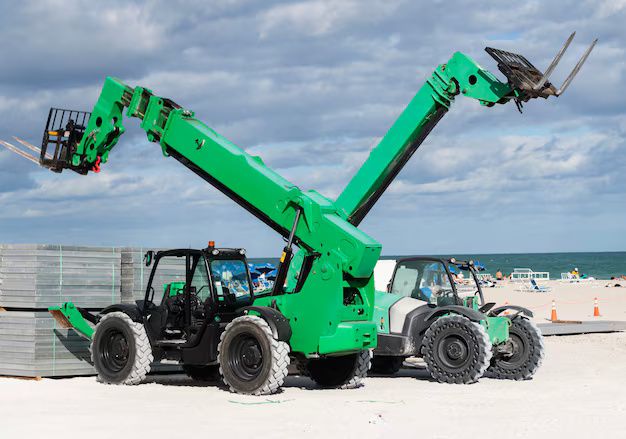
The development of telescopic handlers reflects the broader evolution of construction equipment technology. As industries require more flexible and efficient material movement solutions, telehandlers have become an important category of heavy lifting equipment used across multiple applications.
Context
Understanding Telehandler Machines
A telehandler is a powered lifting machine with a telescopic boom attached to the front. The boom can extend forward and upward, allowing the machine to lift materials beyond the reach of traditional forklifts.
Unlike standard forklifts that mainly lift materials vertically, telehandlers provide greater flexibility because the telescopic boom allows movement in multiple directions.
A typical telehandler includes:
| Component | Function |
|---|---|
| Telescopic boom | Extends outward and upward for lifting |
| Hydraulic system | Controls boom movement and lifting operations |
| Fork attachment | Handles pallets and materials |
| Stabilizers | Improve machine stability during operation |
| Operator cabin | Provides control and visibility |
| Chassis system | Supports movement across different surfaces |
How Telescopic Handlers Work
Telehandler machines operate through hydraulic power systems that control the extension and movement of the boom. Operators use control systems inside the cabin to position loads accurately.
The general operating process includes:
- Selecting an appropriate attachment
- Positioning the machine near the material
- Extending the telescopic boom
- Lifting and moving the load
- Placing materials at the required location
The machine’s stability depends on factors such as load weight, boom position, ground conditions, and operating procedures.
Types of Telehandler Equipment
Different industries use different types of telehandlers depending on their working conditions.
| Telehandler Type | Main Application |
| Rough terrain telehandlers | Construction sites and uneven ground |
| Compact telehandlers | Smaller work areas |
| Heavy-duty telehandlers | Large material handling tasks |
| Rotating telehandlers | Applications requiring wider movement range |
| Agricultural telehandlers | Farming and agricultural operations |
Common Attachments Used With Telehandlers
One reason telehandlers are widely used is their ability to work with different attachments.
Common attachments include:
- Fork attachments for pallet handling
- Buckets for material movement
- Work platforms for elevated tasks
- Clamps for specialized materials
- Lifting hooks for specific applications
Attachment selection depends on the material type and operating requirements.
Importance
Role in Material Handling Operations
Material handling equipment is essential in industries where heavy materials must be transported, lifted, and positioned safely. Telehandlers provide flexibility by combining lifting capability with mobility.
Applications include:
- Construction material movement
- Industrial facility operations
- Agricultural handling
- Infrastructure projects
- Warehouse and storage activities
Construction Applications of Telehandlers
Construction lifting machines are commonly used on building sites because they can operate in challenging environments.
Telehandlers may support tasks such as:
- Moving construction materials
- Positioning building components
- Handling pallets of supplies
- Supporting elevated placement activities
- Transporting materials across uneven surfaces
Their ability to reach elevated areas makes them useful in projects involving multiple construction stages.
Importance of Rough Terrain Capability
Many construction and agricultural environments involve uneven ground, mud, gravel, or changing surfaces. Rough terrain telehandlers are designed for these conditions through features such as:
- Strong chassis designs
- Large tires
- Improved ground clearance
- Enhanced stability systems
These characteristics allow equipment operation in environments where standard forklifts may not be suitable.
Use in Agriculture
Agricultural telehandlers are used in farming environments for handling materials such as:
- Hay bales
- Feed materials
- Agricultural supplies
- Equipment components
Farm operations often require machines that can perform multiple tasks throughout different seasons.
Industrial Material Handling Applications
Industrial facilities use telehandlers for various lifting and transportation activities. Their flexibility allows them to support operations involving:
- Equipment movement
- Storage area management
- Maintenance activities
- Material positioning
Recent Updates
Growth of Advanced Construction Equipment Technology
Between 2024 and 2026, construction equipment technology continued developing through improved automation, digital monitoring, and operator assistance systems.
Modern telehandler equipment may include:
- Digital displays
- Load monitoring systems
- Camera systems
- Machine diagnostics
- Electronic control features
These technologies help operators understand machine conditions and improve operational awareness.
Increased Focus on Safety Systems
Safety technologies have become an important area of development in heavy lifting equipment.
Modern systems may include:
- Load capacity monitoring
- Stability control systems
- Operator visibility improvements
- Warning indicators
- Automatic safety controls
These features support safer machine operation when used according to manufacturer guidelines and workplace procedures.
Development of Electric and Hybrid Models
The construction equipment industry has continued exploring alternative power technologies. Electric and hybrid lifting machines are being developed for applications where reduced emissions and quieter operation are important considerations.
Electric telehandler development focuses on:
- Battery technology
- Energy efficiency
- Indoor operation suitability
- Reduced operational emissions
Integration of Digital Fleet Management
Digital fleet management systems allow organizations to monitor equipment performance and usage information.
These systems may track:
- Machine activity
- Maintenance schedules
- Operating hours
- Equipment location
- Performance information
Improvements in Operator Assistance Technology
Newer lifting systems increasingly include technology designed to support operators during complex tasks.
Examples include:
- Improved visibility systems
- Digital load information
- Control assistance features
- Machine condition monitoring
Laws or Policies
Construction Equipment Safety Regulations
Telehandler machines are subject to workplace safety regulations that vary by country and region. These regulations generally focus on:
- Equipment operation
- Operator training
- Workplace conditions
- Inspection procedures
- Load handling practices
Operator Training Requirements
Because telehandlers involve heavy lifting operations, proper operator training is an important safety consideration.
Training commonly covers:
- Machine controls
- Load handling principles
- Stability awareness
- Workplace safety procedures
- Equipment inspection
Equipment Maintenance Standards
Regular inspection and maintenance help ensure that lifting equipment remains in proper working condition.
Maintenance considerations may include:
- Hydraulic systems
- Tires and wheels
- Safety components
- Mechanical parts
- Control systems
Environmental Regulations
Construction equipment may be affected by environmental requirements related to emissions, noise, and energy efficiency.
Manufacturers and operators continue exploring technologies that align with changing environmental standards.
Tools and Resources
Equipment Selection Guides
Technical equipment guides help users understand different telehandler specifications, including:
- Lifting capacity
- Reach height
- Attachment compatibility
- Terrain capability
- Operating requirements
Load Management Tools
Load management resources help operators understand safe lifting limits based on:
- Load weight
- Boom extension
- Machine position
- Ground conditions
Maintenance Tracking Systems
Digital maintenance tools help organizations organize equipment inspections and maintenance records.
These systems may support:
- Maintenance scheduling
- Equipment history tracking
- Inspection documentation
- Repair records
Construction Planning Software
Construction planning platforms help coordinate equipment use within larger projects.
They may support:
- Site planning
- Equipment scheduling
- Project coordination
- Resource management
Industry Safety Resources
Information about telehandler operation can be found through:
- Government workplace safety organizations
- Construction industry associations
- Equipment training organizations
- Technical publications
FAQs
What are telehandler machines used for?
Telehandler machines are used for lifting, moving, and positioning materials in construction, agriculture, industrial facilities, and other material handling environments.
How are telescopic handlers different from forklifts?
Telescopic handlers use an extendable boom that allows forward and upward reach, while traditional forklifts mainly focus on vertical lifting and short-distance material movement.
What are rough terrain telehandlers?
Rough terrain telehandlers are designed for uneven surfaces such as construction sites, farms, and outdoor environments where standard lifting equipment may have limitations.
What attachments can be used with telehandler equipment?
Telehandlers can use attachments such as forks, buckets, lifting hooks, clamps, and work platforms depending on the application.
Are telehandlers used outside construction?
Yes. Telehandlers are also used in agriculture, industrial facilities, infrastructure projects, and other environments requiring flexible lifting systems.
Conclusion
Telehandler machines are important material handling technologies that combine lifting capability, mobility, and flexible operation. Through telescopic boom technology, hydraulic systems, and advanced safety features, these machines support construction, agriculture, and industrial applications. Developments in digital monitoring, electric technology, and operator assistance systems continue shaping the future of heavy lifting equipment. Understanding telehandlers helps explain their role in modern construction and material movement operations.