Cogeneration equipment enables the simultaneous production of electricity and useful thermal energy from a single fuel or energy source. Also known as combined heat and power (CHP) equipment, these systems are used in manufacturing facilities, commercial buildings, hospitals, district energy networks, wastewater plants, and other facilities with continuous electrical and thermal energy requirements.
A cogeneration system typically combines a prime mover, electrical generator, heat recovery equipment, control systems, and supporting components. Depending on the application, the prime mover may be a gas engine, gas turbine, steam turbine, or another power-generation technology.
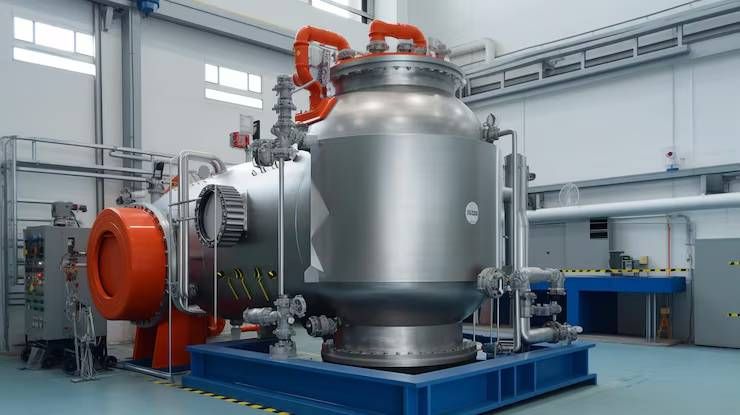
What Is Cogeneration Equipment?
Cogeneration equipment refers to the machinery and supporting systems used to generate electrical power and useful heat within an integrated energy system.
In a conventional power plant, a significant portion of the energy released during electricity generation can leave the system as waste heat. CHP equipment captures a portion of this thermal energy and redirects it toward useful applications such as:
Process heating
Steam generation
Hot-water production
Building heating
Absorption cooling
Industrial drying
Food processing
Chemical processing
The combination of electricity and usable heat can improve overall energy utilization when the thermal output can be consistently used.
How Does a Cogeneration System Work?
A typical CHP system follows several major stages:
1. Fuel Supply
Fuel is delivered to the prime mover through a controlled fuel system. Natural gas is commonly used in gas-engine and gas-turbine CHP systems, while other systems can operate with biogas, landfill gas, biomass-derived fuels, or other suitable fuels.
2. Mechanical Power Generation
The prime mover converts the energy contained in the fuel into mechanical energy.
Common prime movers include:
Reciprocating gas engines
Gas turbines
Steam turbines
Microturbines
3. Electricity Generation
The mechanical output drives an electrical generator. The generator converts rotational mechanical energy into electrical energy for facility loads or electrical distribution systems.
4. Heat Recovery
Heat recovery equipment captures thermal energy from sources such as engine exhaust, cooling circuits, or turbine exhaust.
Heat exchangers and heat-recovery steam generators can then transfer this thermal energy to water, steam, thermal oil, or another working medium.
5. Thermal Energy Distribution
Recovered heat is directed toward useful processes. Depending on system design, thermal energy may support industrial processes, heating systems, absorption chillers, or steam networks.
6. Control and Monitoring
A CHP control system coordinates fuel flow, electrical generation, temperature, pressure, emissions, heat recovery, synchronization, and operating conditions.
Major Types of Cogeneration Equipment
Different cogeneration configurations are selected according to electrical demand, thermal requirements, fuel availability, operating schedule, and facility infrastructure.
Gas Engine Cogeneration Systems
Gas-engine CHP systems use reciprocating internal-combustion engines connected to electrical generators.
Heat can be recovered from:
Engine exhaust
Jacket-water circuits
Lubricating-oil cooling systems
Charge-air cooling systems
Gas engines are frequently used where facilities require a flexible electrical output combined with hot water or steam.
Gas Turbine Cogeneration Systems
Gas turbine CHP systems compress incoming air, mix it with fuel, and combust the mixture to produce high-temperature gases that expand through a turbine.
The turbine drives a generator while the hot exhaust can be routed to heat-recovery equipment.
Gas turbine systems can be particularly suitable for facilities with substantial steam or high-temperature thermal requirements.
Steam Turbine Cogeneration Systems
Steam turbine CHP systems use high-pressure steam to drive a turbine connected to an electrical generator.
Steam can be produced by boilers or heat-recovery steam generators. After passing through the turbine, the remaining steam can be used for industrial processes or heating.
Microturbine Cogeneration Systems
Microturbines are compact turbine-based generation systems designed for smaller electrical loads.
Their applications can include:
Commercial buildings
Small industrial facilities
Distributed energy systems
Wastewater treatment facilities
Remote energy systems
Biomass Cogeneration Systems
Biomass CHP systems use organic materials as fuel. Depending on the technology, biomass can be converted into heat, steam, or combustible gas before power generation.
Potential feedstocks include agricultural residues, forestry residues, and selected organic waste streams.
Biogas Cogeneration Systems
Biogas CHP systems use methane-rich gas produced through anaerobic digestion or other biological processes.
They are commonly associated with:
Wastewater treatment plants
Agricultural operations
Food-processing facilities
Organic waste treatment facilities
Landfill gas recovery systems
Cogeneration Equipment Components
A complete CHP installation includes more than the prime mover and generator.
Prime Mover
The prime mover is the central mechanical energy source. Engines and turbines are among the most common configurations.
Electrical Generator
The generator converts mechanical rotation into electrical energy.
Generator selection depends on:
Rated output
Voltage
Frequency
Power factor
Operating conditions
Grid requirements
Heat Exchanger
Heat exchangers transfer thermal energy between process fluids without necessarily mixing them.
Common configurations include:
Plate heat exchangers
Shell-and-tube heat exchangers
Exhaust gas heat exchangers
Jacket-water heat exchangers
Heat-Recovery Steam Generator
A heat-recovery steam generator, or HRSG, uses hot exhaust gases to produce steam or hot water.
HRSGs are especially important in gas-turbine CHP installations.
Exhaust System
The exhaust system transports combustion gases away from the prime mover and may include emissions-control equipment and heat-recovery components.
Fuel System
The fuel system regulates delivery pressure, flow, filtration, and safety isolation.
Cooling System
Cooling systems control engine or auxiliary equipment temperatures through heat exchangers, radiators, cooling towers, or other thermal-management equipment.
Control System
Modern CHP systems use programmable controllers, sensors, meters, and supervisory software to coordinate system operation.
Electrical Switchgear
Switchgear controls electrical distribution, isolation, protection, and synchronization between the generator and facility electrical network.
Power Generation Technologies Used in CHP
Cogeneration equipment can use several power-generation technologies.
| Technology | Typical CHP Output | Heat Source | Common Applications |
|---|---|---|---|
| Gas Engine | Electricity + hot water/steam | Engine exhaust and cooling circuits | Manufacturing, buildings, utilities |
| Gas Turbine | Electricity + high-temperature heat | Turbine exhaust | Process industries, large facilities |
| Steam Turbine | Electricity + process steam | Steam cycle | Industrial plants, biomass facilities |
| Microturbine | Electricity + usable heat | Turbine exhaust | Commercial and distributed systems |
| Biomass CHP | Electricity + heat/steam | Biomass combustion or conversion | Food, agriculture, industrial plants |
| Biogas CHP | Electricity + heat | Engine exhaust and cooling circuits | Wastewater and waste treatment |
Cogeneration Equipment Manufacturing Process
Manufacturing CHP equipment involves mechanical engineering, electrical engineering, thermal-system design, precision machining, fabrication, assembly, testing, and quality inspection.
Engine and Turbine Manufacturing
Prime movers are manufactured using processes such as:
Precision casting
Forging
CNC machining
Heat treatment
Surface finishing
Dimensional inspection
Dynamic balancing
Critical components must maintain appropriate dimensional tolerances and material properties.
Generator Manufacturing
Generators generally include stators, rotors, windings, insulation systems, bearings, housings, cooling components, and electrical connections.
Manufacturing stages can include:
Core preparation
Stator assembly
Winding installation
Insulation
Rotor assembly
Balancing
Electrical testing
Final assembly
Heat Exchanger Manufacturing
Heat exchangers are manufactured using materials selected according to temperature, pressure, fluid chemistry, corrosion conditions, and thermal requirements.
Typical manufacturing processes include:
Tube fabrication
Plate forming
Welding
Brazing
Pressure testing
Leak testing
Surface treatment
Skid Assembly
Many CHP systems are assembled into modular skids containing interconnected mechanical, electrical, fuel, cooling, and control components.
Factory assembly can simplify site installation and commissioning.
Materials Used in Cogeneration Equipment
Material selection depends on operating temperature, pressure, corrosion exposure, mechanical loads, and fuel characteristics.
Common materials include:
Carbon steel
Stainless steel
Alloy steel
Cast iron
Aluminum alloys
Copper
Nickel-based alloys
Engineering polymers
High-temperature insulation materials
High-temperature turbine components may require specialized alloys capable of maintaining mechanical strength under elevated operating conditions.
Factors Affecting CHP System Performance
The performance of cogeneration equipment depends on both the equipment and the facility's energy profile.
Electrical Efficiency
Electrical efficiency indicates how effectively the system converts fuel energy into electricity.
Thermal Efficiency
Thermal efficiency reflects the useful heat recovered from the system.
Overall CHP Efficiency
Overall system efficiency considers both electrical output and useful thermal output.
However, recovered heat only contributes meaningfully when the facility can use it effectively.
Load Profile
Facilities with stable electrical and thermal loads can often integrate CHP systems differently from facilities with highly variable demand.
Fuel Quality
Fuel composition can influence combustion performance, emissions, maintenance requirements, and engine or turbine operation.
Ambient Conditions
Temperature and elevation can affect turbine and engine performance, particularly for systems using combustion air.
Heat Demand
The thermal load is an important factor in CHP configuration. A system designed around electricity alone may not maximize the usefulness of recovered thermal energy.
Automation and Digital Monitoring
Modern cogeneration equipment increasingly incorporates digital monitoring and automated controls.
Sensors can measure:
Temperature
Pressure
Flow
Vibration
Electrical output
Fuel consumption
Exhaust conditions
Lubricant parameters
Industrial control systems can use this information for operational monitoring and performance management.
Predictive Maintenance
Condition-monitoring systems can identify changes in vibration, temperature, pressure, or other operating parameters that may indicate developing equipment problems.
This can help maintenance teams plan inspections around actual operating conditions.
Remote Monitoring
Remote monitoring platforms can provide operating information to authorized personnel through industrial communication networks.
Industrial Applications of Cogeneration Equipment
CHP systems are used where electrical power and thermal energy are both required.
Chemical Manufacturing
Chemical plants often require electricity together with steam, hot water, or process heat.
Food Processing
Food-processing facilities can use CHP for electrical loads, process heating, steam generation, drying, refrigeration-related systems, and hot-water requirements.
Pharmaceutical Manufacturing
Pharmaceutical facilities may have continuous electrical requirements alongside heating, steam, hot-water, and environmental-control requirements.
Paper and Pulp Manufacturing
Paper mills can require substantial electrical power and process steam, making combined energy systems relevant to their operating structure.
Textile Manufacturing
Textile plants may use thermal energy for dyeing, drying, washing, finishing, and other production stages.
Hospitals
Hospitals have continuous electrical loads and thermal requirements for heating, hot water, sterilization, and other building systems.
District Energy Systems
Large energy networks can use centralized CHP systems to provide electricity alongside heating or cooling services.
Wastewater Treatment
Biogas produced during wastewater treatment can serve as a fuel for CHP engines, allowing facilities to recover energy from organic waste streams.
Global Cogeneration Equipment Manufacturers and Suppliers
The global CHP market includes companies involved in engines, turbines, generators, heat-recovery equipment, controls, and integrated energy systems.
Examples include:
Siemens Energy
GE Vernova
Caterpillar
Rolls-Royce Holdings
Cummins
Mitsubishi Heavy Industries
MAN Energy Solutions
Yanmar
The actual equipment supplier for a project depends on required capacity, prime-mover technology, fuel type, thermal output, emissions requirements, electrical configuration, geographic conditions, and integration requirements.
Cogeneration Equipment Selection Factors
Selecting CHP equipment requires matching the generation system to the facility's actual energy profile.
Important considerations include:
Electrical Demand
Determine the facility's base load, peak demand, operating schedule, and future electrical requirements.
Thermal Demand
Analyze steam, hot-water, process-heating, and cooling requirements.
Fuel Availability
Evaluate available fuels, fuel quality, supply reliability, and fuel-system requirements.
Operating Hours
CHP equipment is generally evaluated according to the number of hours it can operate effectively and the facility's energy demand during those periods.
Emissions Requirements
Combustion equipment must be evaluated against applicable emissions requirements and site-specific environmental conditions.
Maintenance Requirements
Engine and turbine technologies have different inspection, overhaul, lubrication, and component-replacement requirements.
Grid Connection
For grid-connected installations, electrical synchronization, protection, metering, and interconnection requirements must be considered.
Cogeneration Equipment Maintenance
Routine maintenance helps maintain safe and reliable operation.
Typical maintenance activities include:
Lubricant inspection and replacement
Filter replacement
Cooling-system inspection
Spark-plug inspection for applicable engines
Vibration monitoring
Generator inspection
Electrical connection checks
Heat-exchanger inspection
Exhaust-system inspection
Emissions-system inspection
Control-system diagnostics
Maintenance intervals depend on equipment design, operating hours, fuel quality, manufacturer specifications, and operating conditions.
Cogeneration Equipment vs Conventional Power Generation
| Feature | Cogeneration | Conventional Power Generation |
|---|---|---|
| Electricity Generation | Yes | Yes |
| Useful Heat Recovery | Integrated | May be limited or absent |
| Thermal Applications | Process and building loads | Usually separate systems |
| Energy Utilization | Electrical + thermal | Primarily electrical |
| System Complexity | Higher | Varies |
| Suitable Facilities | Facilities with electrical and thermal demand | Primarily electricity-demand applications |
The appropriate configuration depends on the facility's energy requirements rather than electricity generation alone.
Future Trends in Cogeneration Equipment
Several technology developments are influencing CHP systems.
High-Efficiency Gas Engines
Engine manufacturers continue to develop combustion systems, control strategies, and thermal-recovery technologies aimed at improving performance.
Digital CHP Controls
Advanced monitoring systems can integrate operating data, alarms, diagnostics, and performance information.
Renewable Gas Integration
Biogas, biomethane, and other lower-carbon gaseous fuels can be incorporated into selected CHP configurations where equipment compatibility and fuel availability permit.
Hybrid Energy Systems
CHP systems can operate alongside solar photovoltaic systems, battery storage, thermal energy storage, and other distributed energy technologies.
Waste Heat Recovery
Improved heat-recovery equipment can increase the useful thermal output available from high-temperature exhaust streams and other waste-heat sources.
Modular CHP Systems
Packaged and modular systems can simplify engineering, transportation, installation, and expansion for selected applications.
Frequently Asked Questions
What is cogeneration equipment?
Cogeneration equipment is machinery used to simultaneously generate electricity and useful thermal energy from a common fuel or energy source. It is commonly known as combined heat and power equipment.
What are the main types of cogeneration systems?
Major configurations include gas-engine CHP, gas-turbine CHP, steam-turbine CHP, microturbine systems, biomass CHP, and biogas CHP.
What equipment is included in a CHP system?
A typical CHP installation includes a prime mover, electrical generator, heat-recovery equipment, fuel system, cooling system, exhaust system, electrical switchgear, instrumentation, and control equipment.
Where is cogeneration equipment used?
CHP equipment is used in manufacturing plants, chemical facilities, food-processing facilities, pharmaceutical plants, hospitals, wastewater treatment plants, paper mills, textile plants, district energy systems, and other facilities with combined electrical and thermal requirements.
What factors should be considered when selecting CHP equipment?
Important factors include electrical demand, thermal demand, fuel availability, operating hours, emissions requirements, grid connection, maintenance requirements, available space, and future energy needs.
Conclusion
Cogeneration equipment integrates electricity generation and useful thermal-energy recovery into a single energy system. Gas engines, gas turbines, steam turbines, microturbines, biomass systems, and biogas systems provide different approaches for facilities with varying electrical and thermal requirements.
The main components include prime movers, generators, heat exchangers, heat-recovery steam generators, cooling systems, exhaust systems, fuel systems, controls, and electrical protection equipment. Manufacturing involves precision engineering, machining, fabrication, assembly, testing, and quality inspection.
Industrial applications range from chemical and pharmaceutical manufacturing to food processing, paper production, hospitals, wastewater treatment, and district energy. As digital controls, heat recovery, renewable fuels, and hybrid energy systems continue to develop, cogeneration technology is becoming increasingly integrated with broader industrial energy-management strategies.