
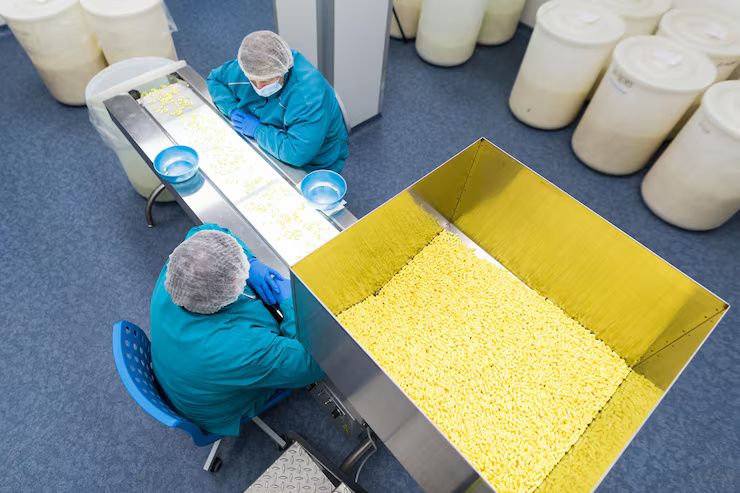
Membrane food processing is a filtration technology used in the food and beverage industry to separate, concentrate, purify, and clarify liquids without significantly altering their nutritional characteristics. Instead of relying solely on heat-based processing, membrane systems use semi-permeable membranes to separate particles according to their size, molecular weight, or other physical properties. These technologies are widely used in dairy processing, beverage production, fruit juice manufacturing, sugar processing, water purification, brewing, edible oil production, and food ingredient manufacturing.
Modern membrane food processing combines advanced filtration technologies, automated manufacturing equipment, Industrial Internet of Things (IIoT), robotics, digital process monitoring, and quality management systems. Global manufacturers and suppliers continue developing membrane processing equipment that supports efficient food production, product consistency, and sustainable manufacturing practices.
Context
What Is Membrane Food Processing?
Membrane food processing is a production method that uses specialized filtration membranes to separate liquids into different components under controlled pressure. Unlike conventional filtration methods, membrane systems can separate microscopic particles, dissolved substances, microorganisms, proteins, minerals, and other food components depending on the membrane type.
Membrane food processing is commonly used for:
- Milk concentration
- Whey protein processing
- Fruit juice clarification
- Beverage filtration
- Drinking water purification
- Sugar processing
- Wine filtration
- Beer clarification
- Edible oil processing
- Food ingredient concentration
The filtration process is selected according to the product, production capacity, and desired separation characteristics.
How Membrane Food Processing Works
Membrane filtration follows a controlled production sequence.
A typical process includes:
- Raw material preparation
- Pre-filtration
- Pumping through membrane modules
- Separation of filtered and concentrated streams
- Product collection
- Cleaning of membrane systems
- Quality inspection
- Packaging or further processing
Automated control systems continuously monitor pressure, temperature, flow rate, and filtration performance.
Types of Membrane Filtration Technologies
Different food products require different membrane technologies.
| Membrane Technology | Primary Function | Typical Food Applications |
|---|---|---|
| Microfiltration (MF) | Removes suspended particles and microorganisms | Milk, beverages |
| Ultrafiltration (UF) | Separates proteins and larger molecules | Dairy processing |
| Nanofiltration (NF) | Removes dissolved compounds | Sugar and beverage processing |
| Reverse Osmosis (RO) | Water removal and concentration | Juice concentration and water purification |
| Electrodialysis | Ion separation | Mineral adjustment and food processing |
| Ceramic Membrane Systems | High-durability filtration | Industrial food manufacturing |
| Polymer Membrane Systems | General liquid filtration | Food and beverage production |
| Spiral-Wound Membranes | Continuous filtration | Large-scale manufacturing |
Each membrane technology supports specific separation requirements.
Manufacturing Processes
Membrane food processing equipment is manufactured using precision engineering and food-grade production methods.
Typical manufacturing stages include:
- Process engineering
- Stainless steel fabrication
- CNC machining
- Pressure vessel manufacturing
- Membrane module assembly
- Pump integration
- Piping installation
- Automation programming
- Electrical assembly
- System testing
- Hygienic inspection
- Quality verification
Manufacturing facilities often use automated welding, robotic assembly, and digital inspection systems to maintain production consistency.
Importance
Why Membrane Food Processing Matters
Modern food production requires efficient processing methods that maintain product quality while supporting large-scale manufacturing. Membrane food processing enables controlled separation without extensive thermal treatment, making it valuable for many liquid food products.
These systems also improve process consistency, resource utilization, and production flexibility.
Supporting Food Manufacturing
Membrane processing contributes to numerous production activities.
Common applications include:
- Liquid concentration
- Product clarification
- Protein separation
- Water purification
- Microbial reduction
- Ingredient recovery
- Product standardization
- Process water recycling
Food manufacturers configure membrane systems according to production requirements and product specifications.
Global Manufacturers and Suppliers
Global manufacturers and suppliers operate engineering centers and production facilities across North America, Europe, Asia-Pacific, the Middle East, Africa, and Latin America. They manufacture membrane filtration systems, pressure vessels, membrane modules, pumps, automated control systems, clean-in-place (CIP) equipment, and digital process monitoring platforms.
Manufacturing activities commonly include:
- Stainless steel fabrication
- Precision machining
- Hygienic welding
- Mechanical assembly
- Automation integration
- Electrical installation
- Functional testing
- Hygienic verification
- Quality inspection
International distribution networks support food and beverage manufacturers worldwide.
Food Industry Applications
Membrane food processing supports many sectors of the food industry.
Dairy Processing: Membrane systems concentrate milk proteins, process whey, standardize dairy ingredients, and separate valuable milk components.
Beverage Manufacturing: Fruit juices, soft drinks, tea, coffee, and other beverages undergo clarification and filtration before packaging.
Water Processing: Food production facilities use membrane filtration to purify process water and maintain consistent water quality.
Sugar Processing: Membrane technologies assist in purification, concentration, and separation during sugar production.
Brewing Industry: Beer and other fermented beverages use membrane filtration for clarification and microbial control.
Edible Oil Processing: Certain membrane technologies support purification and separation during edible oil production.
Advantages of Modern Membrane Food Processing
Modern membrane systems provide several operational advantages.
These include:
- Continuous filtration
- Automated process control
- Digital production monitoring
- Product consistency
- Integration with food manufacturing automation
- Efficient liquid separation
- Process traceability
- Predictive maintenance support
Overall performance depends on membrane selection, operating conditions, cleaning procedures, and production management.
Recent Updates
Artificial Intelligence Integration
Between 2024 and 2026, membrane food processing systems have increasingly incorporated artificial intelligence for filtration optimization, membrane condition monitoring, predictive maintenance, and production analysis.
Artificial intelligence supports manufacturing decisions while food processing professionals continue supervising operations.
Smart Food Manufacturing
Modern membrane processing systems increasingly connect with:
- Industrial Internet of Things (IIoT) platforms
- Manufacturing Execution Systems (MES)
- Enterprise Resource Planning (ERP) systems
- Supervisory Control and Data Acquisition (SCADA) systems
- Digital production dashboards
- Industrial analytics platforms
Connected manufacturing improves production visibility and equipment management.
Advanced Membrane Materials
Manufacturers continue developing membrane materials with improved:
- Filtration efficiency
- Mechanical durability
- Fouling resistance
- Cleaning performance
- Operating stability
These developments contribute to reliable long-term operation.
Automated Cleaning Systems
Food manufacturers increasingly integrate automated clean-in-place systems that manage cleaning cycles while reducing production interruptions.
Sustainability Developments
Manufacturing facilities continue adopting:
- Water recovery systems
- Energy-efficient pumps
- Process optimization software
- Resource monitoring technologies
- Digital environmental management platforms
These developments support efficient food manufacturing.
Laws or Policies
Food Safety Regulations
Food processing facilities generally operate under national food safety regulations covering hygienic equipment design, sanitation, product quality, and manufacturing practices.
Requirements differ by country and product category.
Food Manufacturing Standards
Manufacturers commonly implement internationally recognized food safety and quality management systems covering:
- Hygienic production
- Equipment validation
- Process documentation
- Traceability
- Product inspection
- Continuous improvement
These standards support consistent food manufacturing.
Machinery Safety Regulations
Membrane processing equipment generally operates under machinery safety regulations covering pressure systems, electrical protection, emergency shutdown functions, and workplace safety.
Environmental Regulations
Food manufacturing facilities may follow environmental regulations covering:
- Water management
- Wastewater treatment
- Resource utilization
- Energy management
- Waste handling
Applicable requirements vary according to regional authorities.
Tools and Resources
Manufacturing Execution Systems
MES platforms assist with:
- Production scheduling
- Equipment monitoring
- Product traceability
- Manufacturing documentation
- Operational reporting
- Performance analysis
These systems coordinate food production.
Process Monitoring Software
Digital process platforms monitor:
- Pressure
- Temperature
- Flow rate
- Membrane performance
- Equipment condition
- Production records
These systems improve manufacturing visibility.
Clean-in-Place Management Systems
Cleaning management software assists with:
- Cleaning cycle scheduling
- Equipment documentation
- Process verification
- Maintenance planning
These platforms support hygienic production.
Laboratory Information Systems
Food laboratories use digital systems to organize:
- Product testing
- Sample records
- Quality documentation
- Inspection reports
- Laboratory analysis
These systems improve production documentation.
Educational Resources
People interested in membrane food processing often learn from:
- Food engineering organizations
- Dairy technology associations
- Food science institutions
- Manufacturing engineering organizations
- International food safety authorities
- Technical education platforms
These resources explain membrane filtration technologies, food manufacturing, hygienic processing, and industrial engineering.
FAQs
What is membrane food processing?
Membrane food processing is a filtration method that uses semi-permeable membranes to separate, concentrate, purify, or clarify liquid food products under controlled processing conditions.
Which membrane filtration technologies are commonly used in food manufacturing?
Common technologies include microfiltration, ultrafiltration, nanofiltration, reverse osmosis, electrodialysis, ceramic membrane systems, and polymer membrane systems.
Which industries use membrane food processing?
These technologies are widely used in dairy processing, beverage manufacturing, water purification, sugar processing, brewing, edible oil production, and food ingredient manufacturing.
How do global manufacturers and suppliers produce membrane food processing equipment?
Global manufacturers and suppliers design, fabricate, machine, assemble, integrate, test, and inspect membrane processing systems using hygienic engineering, automation technologies, and quality management procedures.
Why is membrane food processing important for the food industry?
Membrane food processing supports efficient liquid separation, product clarification, concentration, purification, and quality management across a wide range of food manufacturing applications.
Conclusion
Membrane food processing is an important technology that supports modern food manufacturing through advanced filtration, controlled separation, and hygienic production methods. By combining precision engineering, automated manufacturing equipment, digital monitoring, and intelligent process control, membrane systems contribute to consistent product quality across dairy, beverage, water, sugar, and other food industries. As food manufacturing continues adopting smart production technologies, membrane food processing remains an essential part of efficient and sustainable industrial operations.