
Heat exchanger tubes are essential components used to transfer thermal energy between two fluids while keeping them physically separated. They are widely used in power plants, oil and gas facilities, chemical processing, refineries, HVAC systems, refrigeration equipment and industrial cooling installations.
These tubes are manufactured from different materials, including carbon steel, stainless steel, copper alloys, nickel alloys and titanium. Their design and material selection depend on operating temperature, pressure, fluid chemistry, corrosion conditions and heat-transfer requirements.
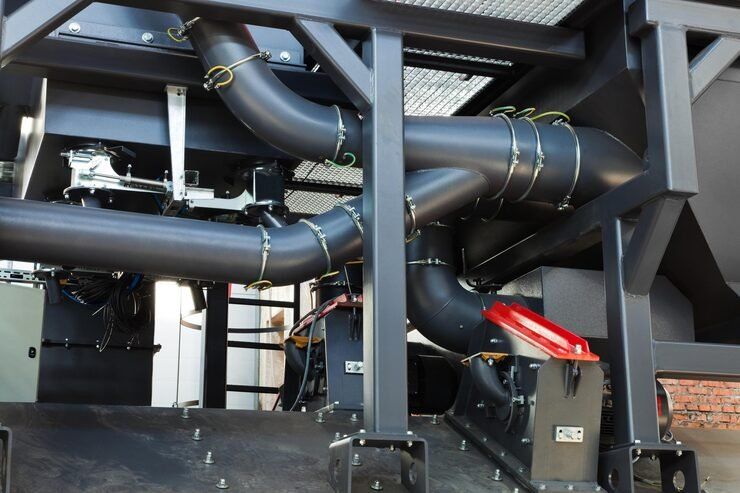
Heat exchanger tubes are available in seamless, welded, straight, U-bend and finned configurations. This guide explains their types, materials, manufacturing processes, industrial applications, manufacturers and important selection considerations.
What Are Heat Exchanger Tubes?
Heat exchanger tubes are hollow cylindrical components that form the heat-transfer surface inside equipment such as shell-and-tube heat exchangers, condensers, boilers and evaporators.
In a typical shell-and-tube heat exchanger, one fluid flows through the tubes while another fluid flows around them inside the shell. Heat passes through the tube wall without requiring the fluids to mix.
The performance of a heat exchanger tube depends on several factors:
Thermal conductivity of the material.
Tube diameter and wall thickness.
Internal and external pressure.
Operating temperature.
Corrosion and erosion resistance.
Fluid velocity and fouling characteristics.
Surface condition and manufacturing quality.
Heat exchanger tubes are often produced to specific engineering standards and equipment design requirements.
Types of Heat Exchanger Tubes
Heat exchanger tubes are classified according to manufacturing method, shape, surface design and intended application.
1. Seamless Heat Exchanger Tubes
Seamless tubes are manufactured without a longitudinal welded joint. They are produced through processes such as extrusion, piercing and cold drawing.
They are used in applications where the specified design requires seamless construction, controlled wall thickness and suitable mechanical properties.
Common applications include boilers, power generation equipment, petrochemical plants and industrial heat exchangers.
2. Welded Heat Exchanger Tubes
Welded tubes are produced by forming metal strip into a cylindrical shape and joining its edges through a welding process.
Common welding methods include TIG welding and other qualified resistance or fusion-welding processes, depending on the product specification.
Welded heat exchanger tubes are used in condensers, cooling equipment, industrial exchangers and other applications where the selected standard permits their use.
3. U-Bend Heat Exchanger Tubes
U-bend tubes are straight tubes bent into a U-shaped configuration. They are commonly used in U-tube heat exchangers and feedwater heaters.
Their design allows thermal expansion while reducing the number of tube-to-tubesheet connections required at one end of the exchanger.
Important manufacturing considerations include bend radius, wall thinning, ovality, surface condition and post-bending heat treatment where specified.
4. Straight Heat Exchanger Tubes
Straight tubes are supplied in standard or project-specific lengths. They are commonly installed in shell-and-tube heat exchangers, condensers, boilers and coolers.
Their dimensions are selected according to tube bundle design, heat-transfer requirements and installation conditions.
5. Finned Heat Exchanger Tubes
Finned tubes have extended surfaces attached to or formed from the tube wall. The fins increase the external heat-transfer area, particularly when one fluid has a relatively low heat-transfer coefficient.
Common fin designs include:
L-footed fins
Embedded fins
Extruded fins
Welded fins
Integral fins
Low-finned tubes
They are widely used in air-cooled heat exchangers, industrial heaters, boilers and HVAC equipment.
6. Enhanced-Surface Heat Exchanger Tubes
Enhanced tubes have specially designed internal or external surfaces intended to improve heat-transfer performance.
Examples include internally grooved tubes, micro-finned tubes and other structured surfaces. Their suitability depends on the fluid, operating conditions, pressure drop and cleaning requirements.
Materials and Common Grades Used in Heat Exchanger Tubes
Material selection is one of the most important decisions in heat exchanger design. The selected alloy must withstand the operating environment while providing suitable mechanical and thermal properties.
1. Carbon Steel
Carbon steel is commonly used in heat exchangers where operating conditions and fluid chemistry allow its use.
Typical specifications include ASTM A179, ASTM A192 and ASTM A210 for relevant tube applications.
Characteristics:
Good mechanical strength.
Established manufacturing and fabrication processes.
Suitable for many general heat-transfer applications.
Requires corrosion management where exposed to corrosive fluids.
Applications: Boilers, condensers, feedwater heaters and industrial cooling equipment.
2. Stainless Steel
Stainless steel is selected for its corrosion resistance, strength and temperature capability.
Common grades include:
304 and 304L
316 and 316L
321
347 and 347H
904L
Grade 316L contains molybdenum and is often considered for environments where improved resistance to certain chloride-related corrosion conditions is needed compared with 304L. Actual suitability depends on chloride concentration, temperature and other operating conditions.
Applications: Chemical processing, refineries, condensers, food processing and industrial cooling systems.
3. Duplex and Super Duplex Stainless Steel
Duplex stainless steels combine austenitic and ferritic microstructures. They offer relatively high strength and good resistance to several forms of corrosion.
Common grades include:
Duplex 2205 (UNS S32205)
Super Duplex 2507 (UNS S32750)
Super Duplex S32760
These materials are considered for seawater cooling, offshore equipment, desalination plants and corrosive industrial environments.
4. Copper and Copper-Nickel Alloys
Copper alloys provide good thermal conductivity and are used in condensers and heat exchangers.
Common materials include:
Copper-nickel 90/10 (C70600)
Copper-nickel 70/30 (C71500)
Admiralty brass (C44300)
Aluminium brass (C68700)
Copper-nickel tubes are used in marine cooling systems, shipbuilding, seawater condensers and selected power-generation equipment.
5. Nickel Alloys
Nickel-based alloys are used in demanding environments involving elevated temperatures, aggressive chemicals or specialised corrosion conditions.
Examples include:
Alloy 400 (Monel 400)
Alloy 600
Alloy 625
Alloy 825
Alloy C-276
Incoloy 800H and 800HT
These materials are used in chemical plants, petrochemical processing, specialised condensers and high-temperature equipment.
6. Titanium
Titanium tubes are valued for their corrosion resistance in many seawater and chloride-containing environments.
Common grades include Grade 2, Grade 7 and Grade 12.
Applications: Desalination plants, seawater condensers, marine heat exchangers and selected chemical-processing equipment.
Material Comparison
Material | General characteristics | Common applications |
|---|---|---|
Carbon steel | Strength and general industrial use | Boilers and condensers |
Stainless steel 304/316 | Corrosion resistance and fabrication flexibility | Process heat exchangers |
Duplex 2205 | Strength and corrosion resistance | Offshore and seawater systems |
Copper-nickel | Thermal conductivity and marine suitability | Marine condensers |
Nickel alloys | Specialised corrosion and temperature performance | Chemical processing |
Titanium | Corrosion resistance in suitable seawater conditions | Desalination and condensers |
Material suitability must be confirmed through engineering evaluation of fluid chemistry, temperature, pressure, corrosion allowance and applicable design requirements.
Heat Exchanger Tube Manufacturing Processes
Heat exchanger tube manufacturing involves several operations to achieve the required diameter, wall thickness, length, surface condition and mechanical properties.
1. Raw Material Selection
Manufacturers select metal billets, bars, plates or strips according to the required tube material and production method.
Chemical composition is checked to confirm that the raw material meets the specified alloy grade.
2. Tube Forming and Piercing
For seamless tubes, a solid billet is heated and pierced to create a hollow shell. The shell is then processed to achieve the required dimensions.
For welded tubes, metal strip is formed into a cylindrical shape before its edges are joined through a qualified welding process.
3. Hot Rolling and Extrusion
Hot rolling and extrusion are used in selected manufacturing routes to reduce dimensions and develop the required tube geometry.
These processes help produce intermediate tube sections for further processing.
4. Cold Drawing and Cold Pilgering
Cold drawing reduces the outside diameter and wall thickness by pulling the tube through a die, often with a mandrel controlling its internal dimensions.
Cold pilgering uses a specialised rolling process to reduce tube diameter and wall thickness. Both methods can improve dimensional accuracy and surface finish.
They are widely used in the production of precision heat exchanger tubes.
5. Welding and Weld Inspection
For welded tubes, the edges of the formed strip are joined using the specified welding process.
The weld is inspected according to the applicable product standard and purchase specification. Inspection methods may include eddy current testing, ultrasonic testing and other non-destructive examination techniques.
6. Heat Treatment
Heat treatment is used to achieve the required material condition and mechanical properties.
Depending on the alloy, operations may include annealing, solution treatment, normalising or other controlled thermal processes.
7. U-Bending and Finned Tube Processing
Straight tubes may undergo precision bending to produce U-shaped configurations. Finned tubes are manufactured by attaching, forming or machining extended surfaces on the tube exterior.
During these operations, manufacturers control dimensions, bend geometry, fin attachment and surface condition.
8. Surface Finishing
Finishing processes depend on the material and application. Common operations include:
Pickling and passivation
Bright annealing
Mechanical polishing
Cleaning and degreasing
Descaling
Protective packaging
These treatments help achieve the specified surface condition and prepare tubes for installation.
9. Quality Testing and Inspection
Finished tubes undergo inspection to verify their dimensional, mechanical and material properties.
Common tests include:
Hydrostatic pressure testing
Eddy current testing
Ultrasonic testing
Tensile testing
Flattening and flaring tests
Hardness testing
Positive material identification (PMI)
Dimensional and visual inspection
Testing requirements depend on the material standard, design code and project specification.
Major Industrial Applications of Heat Exchanger Tubes
Heat exchanger tubes are used in industries that require controlled heating, cooling, condensation, evaporation and thermal energy recovery.
1. Power Generation
Power plants use heat exchanger tubes in condensers, boilers, feedwater heaters and cooling systems.
These tubes support steam condensation, water heating and thermal energy transfer. Material selection depends on steam conditions, cooling-water chemistry and operating pressure.
2. Oil and Gas Industry
Oil refineries and gas-processing facilities use heat exchanger tubes in process heaters, coolers, condensers and reboilers.
Applications include crude oil preheating, gas cooling, process-fluid temperature control and heat recovery.
Carbon steel, stainless steel, duplex stainless steel and nickel alloys may be selected depending on the process environment.
3. Chemical and Petrochemical Processing
Chemical plants use heat exchanger tubes to control temperatures during chemical reactions, distillation, evaporation and product cooling.
Corrosion-resistant materials are particularly important where tubes come into contact with acids, solvents, salts or other aggressive process fluids.
4. HVAC and Refrigeration
Heating, ventilation, air-conditioning and refrigeration equipment use heat exchanger tubes in evaporators, condensers and cooling coils.
Copper, aluminium and stainless steel are used in different equipment designs depending on thermal performance, operating pressure and refrigerant compatibility.
5. Marine and Shipbuilding
Marine systems use heat exchanger tubes in seawater cooling, engine cooling, condensers and auxiliary machinery.
Copper-nickel, titanium and suitable duplex alloys are considered for applications exposed to seawater and chloride-containing environments.
6. Food and Beverage Processing
Heat exchanger tubes are used in pasteurisation systems, product cooling equipment, heating installations and sanitary processing systems.
Stainless steel grades such as 304L and 316L are commonly considered because of their corrosion resistance, cleanability and suitability for hygienic equipment designs.
7. Pharmaceutical and Biotechnology Industries
Pharmaceutical manufacturing uses heat exchangers for process heating, cooling, water systems and temperature control.
Material selection and surface-finish requirements depend on the product-contact conditions, cleaning procedures and applicable hygienic design requirements.
8. Desalination and Water Treatment
Desalination plants use heat exchanger tubes in evaporators, condensers and thermal water-treatment equipment.
Titanium, copper-nickel and selected corrosion-resistant alloys are used according to seawater chemistry, temperature and plant design.
Global Heat Exchanger Tube Manufacturers and Suppliers
The market includes specialised tube manufacturers, stainless steel producers, alloy manufacturers, metal processors and industrial distributors.
The following companies are examples of organisations associated with tube manufacturing or heat exchanger tube supply. Product availability, manufacturing locations and material capabilities should be confirmed for each specific requirement.
1. CENTRAVIS
CENTRAVIS manufactures seamless stainless steel tubes and offers heat exchanger tube products in a range of austenitic, duplex, super duplex and selected high-alloy grades. Its product range includes straight and U-bend tube configurations.
2. Mangalam Worldwide
Mangalam is associated with seamless stainless steel tube manufacturing, including heat exchanger and U-bend tube products. Its stated product range includes austenitic, ferritic, duplex and super duplex materials.
3. Nippon Steel
Nippon Steel is a major steel producer with products and materials used in energy, infrastructure, industrial equipment and engineering applications. Its relevant tube and steel product specifications should be checked for the intended heat exchanger duty.
4. Vallourec
Vallourec manufactures seamless steel tubes for energy and industrial markets. Its tube engineering capabilities are relevant to applications involving demanding pressure and temperature conditions.
5. Tenaris
Tenaris produces steel tubular products for energy and industrial applications. Buyers should verify the exact heat exchanger tube standards and product grades available for a specific project.
6. Sandvik
Sandvik has a long history in advanced stainless steel and alloy materials, including specialised tube products. Its materials are relevant to demanding industrial and process environments.
7. Plymouth Tube Company
Plymouth Tube manufactures specialty tubing in different metal and alloy categories for industrial, energy and engineering applications. Buyers should verify the applicable product range and heat exchanger specifications.
8. Steelage Alloys
Steelage Alloys supplies stainless steel heat exchanger tubes in seamless and welded configurations, including straight and U-bend products. Its listed product range includes several stainless steel and duplex grades.
9. Champak Steel & Engineering
Champak Steel supplies boiler, condenser and heat exchanger tubes in carbon steel, stainless steel, duplex, nickel alloys, titanium and copper-nickel materials.
10. CERA PURE
CERA PURE lists stainless steel heat exchanger tubes in seamless and welded forms, with options across austenitic, duplex and super duplex grades.
Manufacturers Versus Suppliers
Industrial buyers should distinguish between a tube manufacturer and a stockist or distributor.
Manufacturers produce tubes through melting, forming, rolling, drawing, welding and finishing operations.
Stockists maintain inventory of standard tube sizes and grades.
Distributors source materials from mills and supply them to industrial buyers.
Specialist processors may provide U-bending, finning, cutting, polishing and inspection.
A supplier's product listing does not necessarily mean that it manufactures every material or tube type in-house. Buyers should confirm the manufacturing source, material origin and certification.
Factors to Consider When Selecting Heat Exchanger Tubes
Selecting the correct heat exchanger tube requires evaluating operating conditions, material characteristics, equipment design and inspection requirements.
Selection factor | What to evaluate |
|---|---|
Material grade | Carbon steel, stainless steel, duplex, copper-nickel, titanium or nickel alloy |
Tube construction | Seamless or welded |
Outside diameter | Required tube diameter and dimensional tolerance |
Wall thickness | Pressure requirements, corrosion allowance and mechanical strength |
Tube length | Standard straight length or customised length |
Tube configuration | Straight, U-bend or finned |
Operating temperature | Minimum and maximum service temperatures |
Operating pressure | Internal and external pressure conditions |
Corrosion resistance | Process fluid, seawater, chemicals and chloride exposure |
Surface finish | Pickled, annealed, polished or bright annealed |
Inspection | Hydrostatic, eddy current, ultrasonic and material testing |
Documentation | Material test certificates and traceability |
Understanding Heat Exchanger Tube Specifications
A technical enquiry or purchase specification should include:
Material grade and applicable standard.
Outside diameter and wall thickness.
Required tube length.
Seamless or welded construction.
Straight or U-bend configuration.
Minimum or average wall-thickness requirements.
Operating pressure and temperature.
Surface finish and heat-treatment condition.
Inspection and testing requirements.
Quantity and packaging specifications.
For U-bend tubes, the specification should also identify the bend radius, straight-leg lengths, bending tolerances and post-bending heat-treatment requirements where applicable.
Quality Standards for Heat Exchanger Tubes
Heat exchanger tubes are manufactured according to material and product standards that define chemical composition, dimensions, mechanical properties and testing requirements.
Important standards include:
Standard | General application |
|---|---|
ASTM A179 | Seamless cold-drawn low-carbon steel heat exchanger and condenser tubes |
ASTM A192 | Seamless carbon steel boiler tubes for high-pressure service |
ASTM A213 | Seamless alloy-steel and stainless-steel boiler, superheater and heat exchanger tubes |
ASTM A249 | Welded austenitic steel boiler, superheater, heat exchanger and condenser tubes |
ASTM A269 | Seamless and welded stainless steel tubing for general service |
ASTM A789 | Seamless and welded duplex stainless steel tubing |
ASTM B111 | Copper and copper-alloy seamless condenser and heat exchanger tubes |
ASTM B338 | Titanium and titanium-alloy seamless and welded tubes for condensers and heat exchangers |
ASTM B163 | Nickel and nickel-alloy seamless tubes for condensers and heat exchangers |
Other relevant engineering references include ASME Boiler and Pressure Vessel Code requirements and TEMA standards for tubular heat exchanger design and construction.
The applicable standard should be selected according to the equipment design, material, operating conditions and project specification.
Recent Developments in Heat Exchanger Tube Technology
Heat exchanger tube technology continues to develop through improvements in materials, surface engineering, manufacturing precision and inspection systems.
1. Advanced Corrosion-Resistant Materials
Duplex stainless steel, super duplex alloys, nickel alloys and titanium are increasingly important for applications involving aggressive fluids, seawater and demanding operating conditions.
2. Enhanced Heat Transfer Surfaces
Internally grooved, micro-finned and other enhanced-surface tubes are used in selected applications to increase heat-transfer area and improve thermal performance.
3. Precision Tube Manufacturing
Modern cold-drawing, pilgering and automated dimensional-control systems support consistent tube wall thickness, diameter and surface finish.
4. Advanced Non-Destructive Testing
Eddy current and ultrasonic inspection systems help identify certain material defects without damaging the finished tube. Automated inspection can improve production monitoring and documentation.
5. Energy-Efficient Heat Exchanger Design
Industrial equipment designers continue to evaluate improved tube arrangements, enhanced surfaces and suitable materials to improve heat-transfer performance and reduce energy consumption.
6. Digital Manufacturing and Monitoring
Digital production systems help manufacturers monitor process parameters, material traceability, inspection results and production consistency throughout the manufacturing process.
Frequently Asked Questions About Heat Exchanger Tubes
1. What are heat exchanger tubes used for?
Heat exchanger tubes transfer thermal energy between fluids while keeping them separated. They are used in boilers, condensers, evaporators, industrial coolers, HVAC equipment, refineries and chemical processing plants.
2. Which materials are commonly used for heat exchanger tubes?
Common materials include carbon steel, stainless steel, duplex stainless steel, copper-nickel, nickel alloys and titanium. The selection depends on temperature, pressure, fluid chemistry, corrosion resistance and thermal requirements.
3. What is the difference between seamless and welded heat exchanger tubes?
Seamless tubes are manufactured without a longitudinal welded joint, while welded tubes are produced by forming metal strip and joining its edges. Both are used in industrial heat exchangers when permitted by the applicable specification and design requirements.
4. What are U-bend heat exchanger tubes?
U-bend tubes are straight tubes bent into a U-shaped configuration. They are commonly used in U-tube heat exchangers and feedwater heaters to accommodate thermal expansion within the tube bundle.
5. Which stainless steel grades are commonly used in heat exchanger tubes?
Common stainless steel grades include 304, 304L, 316, 316L, 321, 347 and 904L. Duplex grades such as 2205 and super duplex 2507 are considered for applications requiring higher strength and improved corrosion resistance.
6. What tests are performed on heat exchanger tubes?
Common tests include hydrostatic testing, eddy current testing, ultrasonic testing, tensile testing, hardness testing, flattening, flaring, dimensional inspection and positive material identification. The required tests depend on the applicable standard and purchase specification.
Conclusion
Heat exchanger tubes are essential components in industrial thermal systems, supporting heat transfer in power generation, oil and gas, chemical processing, HVAC, marine equipment, desalination and manufacturing facilities.
Their performance depends on material selection, tube construction, dimensions, surface characteristics and manufacturing quality. Carbon steel, stainless steel, duplex alloys, copper-nickel, nickel alloys and titanium each provide different characteristics for specific operating environments.
When evaluating global heat exchanger tube manufacturers and suppliers, industrial buyers should examine manufacturing capabilities, alloy availability, dimensional tolerances, inspection procedures, material certificates and traceability. Matching the tube specification to the equipment design and operating conditions is essential for reliable heat exchanger performance.