
Aluminium strip coils are flat-rolled aluminium products supplied in continuous wound rolls. They are widely used in manufacturing industries that require lightweight materials, corrosion resistance, good formability and consistent dimensional accuracy.
These products are manufactured in different alloy grades, thicknesses, widths, tempers and surface finishes. They are processed into components through slitting, stamping, bending, roll forming, cutting and other industrial operations.
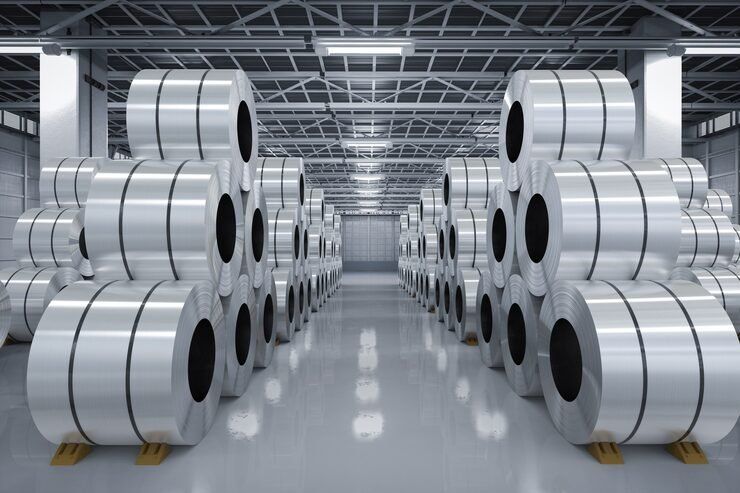
Aluminium strip coils are important raw materials for electrical equipment, automotive components, construction materials, packaging, heat exchangers and household appliances. Their performance depends on alloy composition, temper, manufacturing technology and application requirements.
This guide explains aluminium strip coil types, common alloy grades, production processes, global manufacturers, suppliers and major industrial applications.
What Are Aluminium Strip Coils?
Aluminium strip coils are narrow or wide continuous lengths of flat-rolled aluminium wound into cylindrical rolls. They are generally produced by rolling aluminium slabs or cast stock to the required thickness, followed by slitting or other finishing operations.
Unlike individual aluminium sheets, coil products can be continuously fed into automated production equipment. This makes them suitable for high-volume manufacturing processes.
Common specifications include:
Alloy grade and temper
Strip thickness and width
Coil inner and outer diameter
Coil weight
Surface finish
Edge condition
Flatness and dimensional tolerances
Mechanical properties
Aluminium strip coils offer several useful characteristics:
Low density and lightweight construction.
Good corrosion resistance in many environments.
High thermal and electrical conductivity, depending on alloy.
Good formability for bending, stamping and drawing.
Recyclability and compatibility with established metal recovery processes.
Availability in different thicknesses and surface conditions.
Types of Aluminium Strip Coils
Aluminium strip coils are classified according to their manufacturing condition, surface treatment, alloy composition and intended application.
1. Cold-Rolled Aluminium Strip Coils
Cold-rolled aluminium strip coils are produced by reducing material thickness through rolling at or near room temperature.
The process provides close dimensional control and a relatively smooth surface finish. Cold-rolled strips are widely used in electrical components, precision stamping, appliance manufacturing and industrial fabrication.
Typical applications include:
Electrical terminals
Automotive components
Heat exchanger parts
Decorative panels
Precision-formed components
2. Hot-Rolled Aluminium Coils
Hot rolling reduces the thickness of aluminium at elevated temperatures. It is generally used in earlier stages of flat-rolled production and can produce material for further cold rolling.
Hot-rolled material is used in applications requiring substantial thickness reduction or as feedstock for downstream processing.
3. Slit Aluminium Strip Coils
Slit coils are produced by cutting wider aluminium coils into narrower strips using specialised slitting equipment.
They are supplied in specified widths for automated manufacturing lines.
Common applications include:
Transformer winding
Cable wrapping
Electrical connectors
Automotive components
Industrial stamping
Metal profiles
4. Pre-Painted Aluminium Strip Coils
Pre-painted aluminium coils are coated with a protective or decorative paint system before being supplied to manufacturers.
Coating systems may include polyester (PE), polyurethane-based systems and polyvinylidene fluoride (PVDF), depending on the intended use.
Applications include roofing accessories, building panels, decorative components, signage and architectural products.
5. Embossed Aluminium Strip Coils
Embossed aluminium strip coils have patterned surfaces produced through specialised rolling operations.
Common surface patterns include stucco, textured and other decorative finishes.
They are used in insulation systems, appliance panels, architectural components and decorative applications.
6. Mill-Finish Aluminium Strip Coils
Mill-finish coils retain the surface condition produced during rolling without an additional decorative coating.
They are widely used as raw materials for fabrication, stamping, machining, coating and other industrial processes.
7. Anodised Aluminium Strip Coils
Anodised aluminium has an electrochemically formed oxide layer that improves surface characteristics and provides additional protection under suitable conditions.
Anodised strip products are used in decorative components, electrical applications and selected architectural products. Availability in continuous coil form depends on the processing specification.
Common Aluminium Alloy Grades
Aluminium strip coils are available in different alloy series. Each series offers a particular balance of strength, corrosion resistance, conductivity, formability and processing characteristics.
1. 1000 Series Aluminium Alloys
The 1000 series contains commercially pure aluminium with relatively high aluminium content.
Common grades include:
1050
1060
1070
1100
1200
These alloys offer good electrical and thermal conductivity, corrosion resistance and formability.
Applications: Electrical components, transformer winding, heat-transfer products, chemical equipment and general fabrication.
2. 3000 Series Aluminium Alloys
The 3000 series primarily uses manganese as an alloying element.
Common grades include:
3003
3004
3005
3105
These alloys generally provide good formability and corrosion resistance, with higher strength than commercially pure aluminium grades.
Applications: Heat exchanger fins, roofing materials, cladding, appliance components and general industrial fabrication.
3. 5000 Series Aluminium Alloys
The 5000 series uses magnesium as its primary alloying element.
Common grades include:
5005
5052
5754
5083
5086
These alloys are known for their corrosion resistance and useful strength characteristics. They are widely used in transport, marine and industrial applications.
Applications: Automotive panels, marine components, enclosures, industrial equipment and formed structural parts.
4. 6000 Series Aluminium Alloys
The 6000 series primarily contains magnesium and silicon. These alloys can be heat treated to achieve different mechanical properties.
Common grades include:
6061
6063
6082
They are widely used in engineering and structural applications, although their suitability for thin strip coil production depends on the product specification and mill capability.
Applications: Engineered components, structural parts, transport equipment and selected fabricated products.
5. 8000 Series Aluminium Alloys
The 8000 series includes alloys developed for specialised applications. Grades such as 8011 and 8079 are used in certain foil, packaging and other thin-gauge products.
Applications: Packaging materials, foil products, insulation-related products and specialised industrial materials.
Aluminium Alloy Comparison Table
Alloy grade | General characteristics | Typical applications |
|---|---|---|
1050 | High purity, good conductivity and formability | Electrical and heat-transfer products |
1060 | High aluminium content and good corrosion resistance | Electrical components and industrial fabrication |
1100 | Good workability and corrosion resistance | General sheet-metal products |
3003 | Good formability and moderate strength | Heat exchanger fins and panels |
3004 | Formability and strength for selected drawn products | Packaging and formed components |
3105 | Good forming characteristics | Building and coated products |
5052 | Good strength and corrosion resistance | Enclosures and transport components |
5754 | Magnesium alloy with good corrosion resistance | Automotive and marine components |
5083 | Relatively high strength and marine suitability | Marine and transport applications |
6061 | Heat-treatable alloy with good strength | Specialised engineering products |
8011 | Commonly used in thin-gauge applications | Packaging and foil-related products |
Important: Alloy grade alone does not define the final mechanical properties. Temper designations such as O, H14, H24, H32 and T6 also matter. The appropriate grade and temper must be selected together.
Aluminium Strip Coil Manufacturing Processes
Manufacturing aluminium strip coils involves several stages, from alloy preparation to rolling, slitting, finishing and packaging. Production methods vary according to the required thickness, alloy, temper and surface quality.
1. Aluminium Melting and Alloy Preparation
Primary aluminium or approved recycled aluminium is melted in industrial furnaces. Alloying elements such as magnesium, manganese, silicon and copper may be added according to the required grade.
The molten metal is chemically analysed to verify that its composition meets the intended specification.
2. Casting
Molten aluminium is converted into slabs, billets or cast strips through suitable casting methods.
Common methods include:
Direct-chill casting
Continuous casting
Twin-roll casting
The selected method depends on the production route, alloy composition and required product characteristics.
3. Homogenisation and Preheating
Cast slabs may undergo homogenisation heat treatment to reduce chemical segregation and improve material consistency.
Preheating also prepares the material for subsequent hot rolling operations.
4. Hot Rolling
The aluminium slab is passed through heavy rolling mills at elevated temperatures. Repeated rolling reduces its thickness and produces intermediate coil stock.
Temperature, rolling pressure and material speed are controlled to achieve the required material condition.
5. Cold Rolling
Cold rolling further reduces the thickness and improves dimensional accuracy and surface finish.
Multiple rolling passes may be required depending on the starting thickness and final specification.
Cold rolling also changes the material's mechanical properties through work hardening.
6. Annealing and Temper Control
Annealing involves controlled heating and cooling to modify the mechanical properties of aluminium.
It may be used to improve ductility, reduce internal stresses or achieve a specified temper.
Different tempers are used depending on the intended application:
O: Annealed condition.
H12: Strain-hardened and partially annealed.
H14: Strain-hardened to a quarter-hard condition.
H16: Strain-hardened to a three-quarter-hard condition.
H18: Fully strain-hardened condition.
H24: Strain-hardened and partially annealed.
H32: Strain-hardened and stabilised.
T6: Solution heat-treated and artificially aged, applicable to suitable heat-treatable alloys.
7. Slitting and Edge Trimming
Wide aluminium coils are processed through slitting machines to produce narrower strips.
The slitting system uses circular knives to divide the parent coil into specified widths. Edge trimming may also be carried out to remove unwanted material and improve edge quality.
Important production parameters include:
Slitting width
Knife clearance
Burr height
Edge condition
Strip tension
Coil winding consistency
8. Surface Treatment and Finishing
Depending on the intended application, aluminium strip coils may undergo:
Degreasing and cleaning
Chemical conversion treatment
Anodising
Painting or coating
Embossing
Protective film application
Surface polishing
Not all finishing methods are suitable for every alloy, temper or coil-processing line.
9. Inspection and Packaging
Finished coils are inspected before dispatch.
Quality checks may include thickness measurement, width measurement, tensile testing, hardness testing, surface inspection, flatness assessment and edge-quality evaluation.
Packaging may include protective paper, plastic wrapping, moisture barriers, metal straps and wooden pallets. Packaging requirements depend on coil weight, transport conditions and storage environment.
Major Industrial Applications of Aluminium Strip Coils
Aluminium strip coils are used in industries that require continuous metal feedstock, consistent dimensions and suitable forming properties.
1. Electrical and Power Equipment
Aluminium strip coils are used in electrical manufacturing because aluminium offers good electrical conductivity at relatively low weight.
Applications include:
Transformer winding conductors
Electrical busbar components
Cable wrapping
Electrical terminals
Power distribution equipment
Capacitor-related components
The alloy and temper must be selected according to electrical resistance, mechanical strength, joining method and operating temperature.
2. Automotive Industry
Automotive manufacturers use aluminium strip coils to produce lightweight components and support vehicle weight-reduction programmes.
Common applications include:
Heat exchanger components
Automotive body panels
Battery enclosure parts
Radiator fins
Interior and exterior trim
Stamped structural components
Automotive applications may require strict control over formability, surface quality, mechanical properties and material traceability.
3. HVAC and Heat Exchanger Manufacturing
Aluminium strip is commonly used in heat exchanger production because of its thermal conductivity, low weight and formability.
Typical products include:
Evaporator fins
Condenser fins
Heat exchanger tubes and related components
Air-conditioning components
Refrigeration equipment parts
Alloy 3003 and other suitable aluminium grades are used in various heat-transfer applications.
4. Construction and Building Materials
The construction sector uses aluminium strip coils in roofing, cladding, architectural panels, rainwater systems and building accessories.
Pre-painted and coated aluminium coils are especially relevant where appearance and surface protection are required.
5. Packaging Industry
Aluminium strip and related thin-gauge flat-rolled products are used in packaging applications.
Examples include:
Flexible packaging structures
Container and closure components
Pharmaceutical packaging materials
Food packaging-related products
Foil-based materials
The exact alloy and thickness depend on forming, barrier, sealing and product-safety requirements.
6. Household Appliances
Aluminium strip coils are used in refrigerators, air conditioners, washing machines, cooking equipment and other household appliances.
Applications include heat exchanger fins, decorative panels, internal components and formed metal parts.
7. Industrial Machinery and Equipment
Industrial manufacturers use aluminium strips for enclosures, machine covers, formed brackets, equipment panels and other fabricated components.
Their suitability depends on the required strength, stiffness, corrosion resistance and operating environment.
8. Transportation and Marine Industries
Selected aluminium alloys are used in transport equipment, trailers, vehicle bodies, marine components and fabricated structures.
Alloys from the 5000 series are frequently considered for applications requiring a combination of strength, formability and corrosion resistance.
Global Aluminium Strip Coil Manufacturers and Suppliers
The global aluminium flat-rolled products industry includes integrated aluminium producers, rolling mills, specialist strip manufacturers and metal distributors.
The following companies are established participants in aluminium production or rolled-product manufacturing. Their exact strip-coil grades, dimensions and regional availability should be confirmed for each requirement.
1. Hindalco Industries
Hindalco Industries is an Indian metals producer with aluminium operations and downstream rolled-product manufacturing. Its aluminium portfolio supports applications across packaging, transportation, building materials and industrial manufacturing.
2. Novelis
Novelis is a major producer of aluminium rolled products and recycled aluminium. Its products support automotive, beverage packaging, speciality and other industrial markets.
3. Constellium
Constellium manufactures aluminium products for aerospace, automotive, packaging and other industrial applications. Its activities include specialised rolled aluminium products.
4. AMAG Austria Metall
AMAG produces aluminium rolled products and cast products for applications across transportation, aerospace, packaging and industrial markets.
5. Gränges
Gränges focuses on rolled aluminium products, including materials used in heat exchangers, HVAC, automotive and other industrial applications.
6. UACJ Corporation
UACJ manufactures aluminium rolled products for automotive, packaging, transportation, electronics and industrial applications.
7. JW Aluminum
JW Aluminum manufactures speciality flat-rolled aluminium products used in building products, HVAC, packaging and industrial markets.
8. Norsk Hydro
Norsk Hydro operates across aluminium production, recycling and downstream processing. Its aluminium business supports construction, transportation, packaging and industrial markets.
9. NALCO
National Aluminium Company Limited (NALCO) is an Indian integrated aluminium producer. Its aluminium operations include cast products and other material categories relevant to downstream manufacturing.
10. Yieh Corporation
Yieh Corporation is involved in metals production and distribution, including aluminium and other metal product categories. Aluminium strip and coil materials are part of its product portfolio.
Aluminium Strip Coil Suppliers and Distributors
In addition to primary manufacturers, buyers can source aluminium strip coils through:
Aluminium stockholders
Metal service centres
Slitting and coil-processing companies
Industrial raw-material distributors
Specialised alloy suppliers
Exporters and regional metal traders
A supplier may provide standard coils, custom slit widths, cut-to-length material or coated products. Buyers should confirm whether the supplier manufactures the material or distributes products from another mill.
Factors to Consider When Selecting Aluminium Strip Coils
Choosing the correct aluminium strip coil requires evaluating the technical requirements of the finished component and the capabilities of the processing equipment.
Selection factor | What to evaluate |
|---|---|
Alloy grade | Chemical composition and intended application |
Temper | Hardness, ductility and forming characteristics |
Thickness | Required gauge and thickness tolerance |
Width | Full-width or slit-width requirements |
Coil dimensions | Inner diameter, outer diameter and maximum coil weight |
Surface finish | Mill finish, coated, embossed or anodised |
Edge quality | Burr height, edge cracks and trimming consistency |
Mechanical properties | Tensile strength, yield strength and elongation |
Formability | Bending, stamping, drawing and roll-forming requirements |
Corrosion resistance | Exposure to moisture, chemicals and outdoor conditions |
Documentation | Material test certificates and batch traceability |
Understanding Aluminium Coil Specifications
A typical aluminium strip coil specification should identify:
Alloy and temper, such as 1050-H14 or 5052-H32.
Thickness and width in millimetres.
Thickness and width tolerances.
Coil inner diameter and maximum outer diameter.
Coil weight and packaging requirements.
Surface condition and protective film requirements.
Mechanical properties and applicable material standards.
For example, two coils made from alloy 3003 can have different forming characteristics if one is supplied in an annealed temper and the other in a strain-hardened temper.
Aluminium Strip Coil Quality Testing
Quality inspection helps confirm that the material meets the purchase specification.
Common inspection methods include:
Chemical composition analysis: Confirms alloy composition.
Thickness measurement: Checks gauge consistency across the strip.
Width measurement: Verifies slit dimensions.
Tensile testing: Evaluates strength and elongation.
Hardness testing: Checks the material's hardness condition.
Surface inspection: Identifies scratches, stains, dents and other defects.
Flatness testing: Evaluates shape consistency and material distortion.
Edge inspection: Checks burrs, cracks and irregular slitting.
Standards and Specifications for Aluminium Strip Coils
Aluminium strip coils are manufactured according to material and product standards that define chemical composition, mechanical properties, dimensions and tolerances.
Commonly referenced standards include:
ASTM B209/B209M: Covers aluminium and aluminium-alloy sheet and plate, including products within its specified scope.
EN 485 series: Covers aluminium and aluminium-alloy sheet, strip and plate, including mechanical properties and dimensional tolerances.
EN 573 series: Covers the chemical composition and designation of wrought aluminium alloys.
EN 515: Defines temper designations for wrought aluminium and aluminium alloys.
EN 1396: Covers continuously organic-coated aluminium and aluminium-alloy strip and sheet for general applications.
GB/T 3880: Chinese standard series covering aluminium and aluminium-alloy plates, sheets and strips.
The applicable standard depends on the product dimensions, alloy, temper and intended use. Purchase specifications should identify the required standard and edition rather than relying on a general statement of compliance.
Recent Developments in Aluminium Strip Coil Manufacturing
Aluminium rolling and strip-processing operations continue to adopt technologies that improve production consistency, material efficiency and product performance.
1. Advanced Rolling Mill Automation
Modern rolling mills use automated control systems to monitor rolling force, strip tension, temperature and thickness. These systems help maintain consistent product dimensions during production.
2. Precision Slitting Technology
Advanced slitting lines use controlled knife positioning, tension management and automated coil handling to produce narrow strips with consistent widths and edge quality.
3. Lightweight Automotive Materials
Automotive manufacturers continue to evaluate aluminium materials for vehicle structures, heat exchangers, battery-related components and other applications where weight reduction is important.
4. Recycled Aluminium Production
Recycling is an important part of aluminium manufacturing. Improved scrap sorting, alloy identification and melt treatment help manufacturers recover aluminium for suitable downstream products.
Recycled material must still meet the chemical composition and performance requirements of the specified alloy.
5. Improved Coil Coating Technologies
Coil coating systems allow aluminium strip to receive continuous surface treatments and decorative finishes. Coating selection depends on adhesion, weather exposure, appearance and the intended service environment.
6. Digital Quality Monitoring
Digital inspection systems and production data analysis help manufacturers monitor thickness variation, surface defects, process stability and material traceability.
Frequently Asked Questions About Aluminium Strip Coils
1. What are aluminium strip coils used for?
Aluminium strip coils are used in electrical equipment, automotive components, heat exchangers, construction materials, packaging, household appliances and industrial machinery. They are particularly useful in automated manufacturing processes requiring continuous metal feedstock.
2. Which aluminium alloy is commonly used for strip coils?
Common grades include 1050, 1060, 1100, 3003, 3004, 3105, 5052 and 5754. The appropriate grade depends on the required strength, conductivity, corrosion resistance, formability and manufacturing process.
3. What is the difference between aluminium strip and aluminium coil?
Aluminium coil refers to flat-rolled aluminium supplied in a wound roll. Aluminium strip generally describes a narrower flat-rolled product, often produced by slitting a wider coil into specified widths. The terms may overlap in industrial supply specifications.
4. What is the difference between hot-rolled and cold-rolled aluminium coils?
Hot rolling reduces aluminium thickness at elevated temperatures and is commonly used in initial material processing. Cold rolling further reduces thickness at lower temperatures, improving dimensional control and surface finish while changing mechanical properties.
5. Which industries purchase aluminium strip coils?
Major purchasing industries include electrical equipment, automotive manufacturing, HVAC, construction, packaging, consumer appliances, transportation and industrial machinery.
6. What information should buyers provide when requesting aluminium strip coils?
Buyers should specify alloy grade, temper, thickness, width, coil weight, inner diameter, surface finish, edge requirements, mechanical properties and applicable material standards. They should also identify packaging and material certification requirements.
Conclusion
Aluminium strip coils are important semi-finished materials used in modern industrial manufacturing. Their lightweight structure, corrosion resistance, formability and availability in different alloy grades make them suitable for applications ranging from electrical equipment and automotive components to heat exchangers, construction materials and packaging.
Understanding the differences between alloy series, tempers, rolling methods, surface finishes and slitting processes helps manufacturers select materials that meet specific production requirements.
When evaluating global aluminium strip coil manufacturers and suppliers, industrial buyers should consider product specifications, manufacturing capabilities, dimensional tolerances, quality inspection, material certification and supply consistency. Selecting the correct combination of alloy, temper and processing condition is essential for achieving reliable performance in the finished product.