Laser cladding equipment is used to deposit a controlled layer of material onto the surface of a component using a concentrated laser heat source. The process can restore worn surfaces, improve wear resistance, enhance corrosion resistance, or create engineered surface properties on industrial components.
Modern laser cladding systems can combine high-power lasers, powder or wire delivery, motion-control equipment, optical systems, sensors, cooling systems, and process-control software. These systems are used across industries such as aerospace, energy, automotive, mining, oil and gas, tooling, and heavy equipment manufacturing.
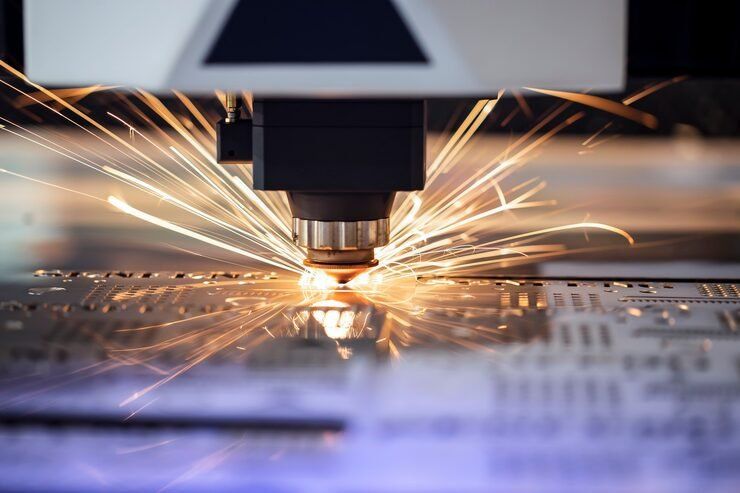
What Is Laser Cladding Equipment?
Laser cladding equipment consists of machines and supporting systems used to deposit a metallic material onto a substrate through controlled laser heating.
During the process, a laser creates a localized melt pool on the component surface while a cladding material is introduced into the heated region. The deposited material solidifies and forms a metallurgically bonded layer.
A typical system can include:
- High-power laser source
- Cladding head
- Powder or wire feeder
- Optical delivery system
- Motion-control platform
- Robotic arm or CNC system
- Shielding-gas supply
- Process sensors
- Cooling system
- Control software
- Workholding equipment
The configuration depends on the component geometry, deposition material, required layer thickness, production volume, and application.
Why Laser Cladding Matters
Industrial components can experience wear, corrosion, erosion, friction, thermal damage, and other surface degradation during operation.
Laser cladding can address selected surface-engineering requirements by depositing material only where it is needed.
Potential advantages include:
- Localized material deposition
- Metallurgical bonding
- Controlled heat input
- Reduced thermal impact compared with some conventional processes
- Surface restoration
- Wear-resistant coatings
- Corrosion-resistant surfaces
- Repair of high-value components
- Compatibility with complex geometries
The actual results depend on laser parameters, substrate material, cladding material, deposition strategy, and process control.
Major Laser Cladding Technologies
Different laser cladding approaches are available for industrial applications.
Powder-Based Laser Cladding
Powder is delivered into the laser-generated melt pool through a nozzle.
Powder-based systems provide flexibility in material selection and can support controlled deposition on complex surfaces.
Common materials include:
- Nickel-based alloys
- Cobalt-based alloys
- Iron-based alloys
- Stainless steels
- Carbide-reinforced materials
- Specialized wear-resistant alloys
Wire-Based Laser Cladding
Wire is fed into the laser interaction zone instead of powder.
Wire-based deposition can provide high material utilization and can be useful for larger components and applications requiring relatively high deposition rates.
Laser Metal Deposition
Laser metal deposition, often abbreviated LMD, is a broader additive manufacturing and surface-engineering approach in which material is deposited using a focused energy source.
Laser cladding is frequently considered a surface-oriented application of laser metal deposition.
High-Power Laser Cladding
High-power laser systems can support higher deposition rates and larger processing areas.
The appropriate laser power depends on material, deposition geometry, component size, layer thickness, and production requirements.
Types of Laser Cladding Machines
Laser cladding systems can be configured in several ways.
| Machine Type | Typical Application | Main Characteristics |
|---|---|---|
| CNC Laser Cladding Machine | Precision component repair | Programmed multi-axis movement |
| Robotic Laser Cladding System | Complex components | Flexible motion and geometry access |
| Powder-Fed Cladding Machine | Surface coating and repair | Controlled powder delivery |
| Wire-Fed Cladding System | Larger components | High material utilization |
| Laser Cladding Cell | Industrial production | Integrated automation |
| Portable Laser Cladding System | Field repair | Mobility and localized processing |
| Hybrid Laser Cladding System | Advanced manufacturing | Laser deposition with another machining process |
The machine architecture should be selected according to component size, geometry, deposition requirements, automation, and production environment.
How Laser Cladding Equipment Works
A typical laser cladding process follows several stages.
1. Component Preparation
The component surface is cleaned and prepared before processing. Existing coatings, corrosion, contamination, or damaged material may need to be removed.
2. Laser Setup
The laser source and optical system are configured according to the required processing parameters.
3. Material Feeding
Powder or wire is introduced into the laser interaction zone at a controlled rate.
4. Melt Pool Formation
The laser generates localized heat that melts the substrate surface and incoming cladding material.
5. Material Deposition
The motion system moves the cladding head along the programmed path while material is continuously deposited.
6. Layer Formation
Multiple passes can be applied to achieve the required coating thickness or rebuild a damaged component.
7. Cooling
The deposited material cools and solidifies, forming a bonded layer on the substrate.
8. Inspection and Finishing
The finished component can be inspected for dimensions, surface condition, defects, hardness, and other specified properties. Machining or polishing may follow when a precise final geometry is required.
Laser Cladding Equipment Manufacturing Process
Manufacturing a laser cladding machine involves integration of optical, mechanical, electrical, and software systems.
System Design
Engineers determine laser power, working envelope, motion axes, material-delivery configuration, cooling requirements, shielding-gas requirements, and automation architecture.
Laser Integration
The selected laser source is integrated with beam-delivery optics and the cladding head.
Motion-System Assembly
CNC axes, robotic systems, rotary tables, linear stages, or other motion equipment are integrated according to the required component geometry.
Powder or Wire Delivery
Feeders and delivery nozzles are installed and calibrated to provide consistent material flow.
Control-System Integration
Controllers and software coordinate laser output, material feed, motion, shielding gas, monitoring systems, and process parameters.
Testing
Manufacturers can conduct deposition trials and system testing to evaluate motion accuracy, material delivery, laser operation, cooling, and process repeatability.
Key Laser Cladding Equipment Specifications
Several specifications should be compared before selecting a system.
Laser Power
Laser power affects the available processing range, melt-pool characteristics, deposition rate, and material compatibility.
Deposition Rate
Deposition rate indicates how quickly material can be applied under specified process conditions.
Working Envelope
The working envelope determines the maximum component dimensions that can be processed.
Number of Motion Axes
Multi-axis systems can provide greater flexibility for complex component geometries.
Material Feed System
Powder and wire delivery systems have different characteristics and should be selected according to the material and application.
Laser Spot Size
Spot size influences energy density, bead width, and process resolution.
Process Monitoring
Cameras, temperature sensors, melt-pool monitoring, and other sensors can provide information about deposition conditions.
Automation
Robotic motion, automatic parameter control, scanning systems, and process monitoring can reduce manual intervention and improve repeatability.
Global Laser Cladding Equipment Manufacturers and Suppliers
The laser cladding market includes companies involved in laser systems, additive manufacturing equipment, surface engineering, robotics, and industrial material deposition.
Examples of companies active in laser processing and related technologies include:
- TRUMPF
- Coherent
- IPG Photonics
- EOS
- Oerlikon
- Meltio
- LENS
- Prima Power
Different manufacturers specialize in different aspects of the technology. Some focus on industrial laser sources, while others provide complete additive manufacturing, deposition, cladding, or integrated robotic systems.
When comparing manufacturers and suppliers, evaluate laser technology, material-delivery configuration, machine envelope, motion capability, automation, process monitoring, application experience, technical support, and integration requirements.
Laser Cladding Equipment Cost Factors
Laser cladding equipment costs vary substantially because systems can range from compact processing units to fully automated industrial cells.
Important factors include:
- Laser power
- Laser source
- Machine size
- Motion axes
- Robotic integration
- Powder or wire delivery
- Process-monitoring systems
- Automation
- Cooling equipment
- Safety enclosure
- Software
- Custom tooling
- Installation and integration requirements
A laboratory development system and a production-scale robotic cladding cell can have very different configurations.
Therefore, equipment comparisons should consider the complete system specification and expected production requirements rather than focusing on the laser source alone.
Industrial Applications
Laser cladding equipment is used across many industries.
Aerospace
Laser cladding can be used for repair and surface modification of selected aerospace components where controlled deposition and material compatibility are important.
Oil and Gas
Valves, shafts, drilling components, and other equipment exposed to wear or corrosion can be candidates for laser-based surface treatment.
Power Generation
Turbine components, valve parts, and other high-value equipment can use cladding technologies for selected repair and surface-protection applications.
Mining
Mining equipment often operates under abrasive conditions. Laser cladding can restore or modify selected high-wear components.
Automotive
Laser cladding can be used for tooling, molds, engine components, and selected high-wear parts.
Tool and Die Manufacturing
Dies, molds, cutting tools, and forming components can be repaired or surface-engineered using laser deposition.
Heavy Equipment
Large industrial components can be rebuilt or protected using robotic or CNC laser cladding systems.
How to Select Laser Cladding Equipment
Selecting equipment starts with the component and application requirements.
- Identify the substrate material and its condition.
- Define the cladding material required for the application.
- Determine the component dimensions and geometry.
- Establish the required coating or rebuild thickness.
- Choose powder or wire deposition based on the process.
- Determine required laser power and spot size.
- Evaluate the required number of motion axes.
- Consider automation and production volume.
- Review process-monitoring requirements.
- Evaluate post-processing and machining requirements.
Material compatibility is especially important because the substrate and deposited material must be evaluated for metallurgical behavior, thermal effects, and application requirements.
Frequently Asked Questions
What is laser cladding equipment?
Laser cladding equipment is a system that uses a focused laser and a supplied material, such as metal powder or wire, to deposit a bonded layer onto a component surface.
What materials are used for laser cladding?
Common materials include nickel-based, cobalt-based, iron-based, stainless-steel, and carbide-containing alloys. The appropriate material depends on the substrate and required surface properties.
What is the difference between laser cladding and laser metal deposition?
Laser metal deposition is a broader material-deposition technology. Laser cladding generally emphasizes surface coating, repair, or enhancement, while LMD can also be used for additive manufacturing and larger deposited structures.
What affects laser cladding machine cost?
Laser power, machine configuration, motion axes, powder or wire delivery, automation, process monitoring, safety systems, software, and integration requirements can all influence equipment costs.
Where is laser cladding equipment used?
It is used in aerospace, oil and gas, power generation, mining, automotive, tooling, heavy equipment, and other industries requiring surface repair, wear protection, or material deposition.
Conclusion
Laser cladding equipment combines laser technology, material delivery, precision motion, process monitoring, and automation to deposit engineered material layers onto industrial components.
Powder-fed systems, wire-fed systems, CNC machines, robotic cells, and hybrid platforms each address different manufacturing and repair requirements. The appropriate configuration depends on component geometry, substrate material, cladding material, deposition rate, layer thickness, production volume, and required process control.
When selecting equipment, manufacturers should evaluate laser power, deposition method, working envelope, motion capability, material compatibility, monitoring systems, automation, and post-processing requirements.
A clearly defined application and process specification provides the foundation for choosing a laser cladding system that fits the intended industrial workflow.