Solar panel manufacturing is the industrial process of producing photovoltaic (PV) modules that convert sunlight into electricity. These panels are built using semiconductor materials—primarily silicon—that generate electrical current when exposed to solar radiation.
As global energy demand rises and carbon reduction goals become more prominent, solar energy systems have expanded rapidly across residential, commercial, and utility-scale applications. Solar panel manufacturing exists to produce reliable, efficient, and scalable photovoltaic modules that support renewable energy infrastructure.
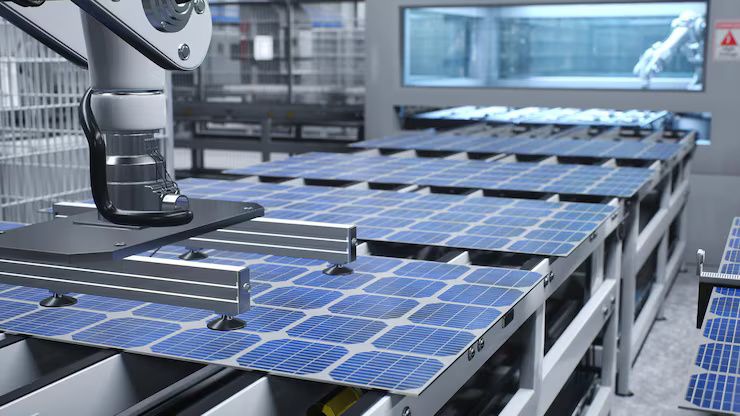
Modern production facilities use automated solar module assembly lines, precision cell processing equipment, lamination systems, and electrical testing stations to ensure performance consistency and long-term durability.
Importance: Why Solar Panel Manufacturing Matters
Solar energy plays a central role in clean energy transitions worldwide. Efficient manufacturing ensures panels meet performance standards and environmental requirements.
1. Renewable Energy Expansion
Supports large-scale deployment of solar power plants.
2. Carbon Emission Reduction
Contributes to lowering greenhouse gas emissions.
3. Energy Security
Reduces reliance on fossil fuel-based electricity generation.
4. Technological Innovation
Encourages advancements in photovoltaic efficiency.
5. Industrial Growth
Creates infrastructure for sustainable energy systems.
Solar panel production equipment is critical for delivering consistent energy output and supporting long-term climate strategies.
Solar Panel Manufacturing Process
Solar panel production involves multiple coordinated stages, from raw silicon processing to final module testing.
1. Silicon Ingot Production
High-purity silicon is melted and formed into cylindrical or rectangular ingots.
2. Wafer Slicing
Ingots are sliced into thin wafers using precision wire saws.
3. Cell Doping and Diffusion
Wafers undergo chemical treatment to create positive and negative layers.
4. Anti-Reflective Coating Application
Reduces sunlight reflection to improve efficiency.
5. Metallization
Conductive contacts are printed onto the cell surface.
6. Cell Testing and Sorting
Cells are evaluated for electrical performance.
7. Module Assembly
Cells are interconnected and arranged into panel layouts.
8. Lamination
Panels are sealed between glass and protective backsheet materials.
9. Framing and Junction Box Installation
Aluminum frames and electrical junction boxes are attached.
10. Final Inspection and Performance Testing
Finished panels undergo power output and durability testing.
Main Types of Solar Panel Manufacturing Equipment
Each production stage requires specialized photovoltaic manufacturing machinery.
1. Ingot Casting Furnaces
Produce high-purity silicon blocks.
2. Wafer Cutting Machines
Slice ingots into thin wafers.
3. Diffusion Furnaces
Create electrical layers within silicon wafers.
4. Screen Printing Machines
Apply metallic conductive patterns.
5. Cell Stringing Machines
Connect multiple solar cells together.
6. Lamination Machines
Seal panel components using heat and pressure.
7. Framing Systems
Attach protective aluminum borders.
8. Electroluminescence Testing Equipment
Detect micro-cracks and cell defects.
9. Flash Testers
Measure power output under simulated sunlight.
10. Automated Material Handling Systems
Transport panels across production lines.
Industrial Applications of Solar Panel Manufacturing
Solar panel production supports various energy sectors.
1. Utility-Scale Solar Farms
Large installations supplying grid electricity.
2. Commercial Rooftop Systems
Solar arrays installed on industrial facilities.
3. Residential Solar Installations
Home-based renewable energy solutions.
4. Off-Grid Power Systems
Used in remote and rural electrification.
5. Industrial Energy Storage Integration
Combined with battery systems for energy management.
Solar Panel Manufacturing Equipment and Applications
| Equipment Type | Primary Function | Application Stage |
|---|---|---|
| Diffusion Furnace | Semiconductor layer formation | Cell processing |
| Screen Printer | Metal contact application | Cell finishing |
| Stringing Machine | Cell interconnection | Module assembly |
| Laminator | Panel sealing | Structural protection |
| Flash Tester | Power output verification | Quality control |
Materials Used in Solar Panel Manufacturing
Material quality determines efficiency and longevity.
1. Monocrystalline or Polycrystalline Silicon
Core semiconductor material.
2. Tempered Glass
Provides mechanical protection and transparency.
3. EVA (Ethylene Vinyl Acetate)
Encapsulates and protects solar cells.
4. Aluminum Frames
Provide structural rigidity.
5. Backsheet Polymers
Protect internal components from moisture.
Benefits of Solar Panel Manufacturing Systems
Advanced equipment improves production precision and output quality.
1. High Conversion Efficiency
Improves solar energy output.
2. Automation Integration
Reduces production variability.
3. Long-Term Durability
Ensures panels withstand environmental conditions.
4. Scalability
Supports mass production for global energy markets.
5. Quality Control Accuracy
Detects micro-defects during manufacturing.
Challenges & Considerations
Solar panel production requires strict quality standards and process control.
1. High Initial Infrastructure Investment
Production facilities require advanced machinery.
2. Energy-Intensive Silicon Processing
Ingot formation requires significant power.
3. Precision Manufacturing Requirements
Minor defects can reduce efficiency.
4. Rapid Technology Evolution
New cell technologies require adaptable production lines.
5. Global Certification Standards
Modules must meet international safety and performance standards.
Maintenance & Best Practices
Regular monitoring ensures equipment reliability.
1. Calibration of Diffusion Furnaces
Maintains uniform semiconductor properties.
2. Cleaning of Printing Screens
Ensures accurate conductive patterns.
3. Inspection of Lamination Systems
Prevents moisture ingress.
4. Testing Equipment Verification
Maintains accurate performance readings.
5. Preventive Maintenance Scheduling
Reduces operational interruptions.
Frequently Asked Questions
What is solar panel manufacturing?
It is the industrial production of photovoltaic modules that convert sunlight into electricity.
What materials are commonly used in solar panels?
Silicon wafers, tempered glass, aluminum frames, and protective encapsulation materials.
How are solar panels tested?
Panels undergo flash testing, insulation checks, and electroluminescence inspections.
Are solar panel production lines automated?
Modern facilities use highly automated systems for cell processing and module assembly.
How long do manufacturing systems operate efficiently?
With proper maintenance, production equipment can operate effectively for 15–25 years.
Conclusion
Solar panel manufacturing is a critical component of global renewable energy infrastructure. Through precision semiconductor processing, automated module assembly, and rigorous performance testing, modern photovoltaic production lines deliver reliable and efficient energy solutions.
As clean energy adoption accelerates worldwide, advancements in solar panel manufacturing technology will continue to enhance efficiency, durability, and large-scale deployment capabilities.