
Industrial thermal systems are technologies used to generate, transfer, distribute and control heat for manufacturing and processing operations. They are essential in industries such as chemicals, pharmaceuticals, food processing, metal production, plastics, cement, textiles and power generation.
These systems include industrial boilers, furnaces, ovens, heat exchangers, thermal oil heaters, steam generators, industrial dryers, chillers and temperature-control equipment. Their design depends on the required operating temperature, heat-transfer method, production capacity, energy source and process conditions.
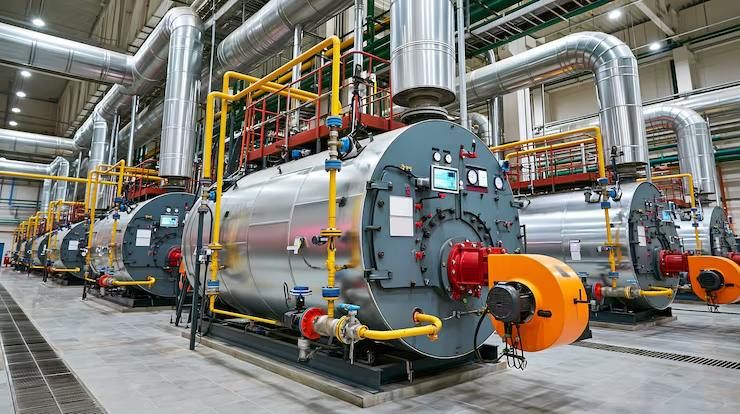
What Are Industrial Thermal Systems?
Industrial thermal systems are integrated arrangements of equipment that supply or remove heat to maintain specific process conditions. They may use electricity, fuel combustion, steam, hot water, thermal oil or recovered waste heat.
Some systems heat materials directly, while others transfer heat through an intermediate medium. Industrial thermal systems can also remove heat from equipment or products when cooling is required.
Typical applications include:
Heating liquids and gases for chemical processing.
Melting and heat-treating metals.
Drying materials, coatings and finished products.
Maintaining temperatures in storage tanks and pipelines.
Generating steam for industrial production.
Heating and cooling food and pharmaceutical products.
Recovering heat from exhaust gases and industrial processes.
Maintaining stable temperatures in automated manufacturing lines.
A complete thermal system may include a heat source, heat-transfer equipment, circulating pumps, piping, insulation, temperature sensors, safety devices and automated controls.
How Industrial Thermal Systems Work
Industrial thermal systems operate by converting energy into heat and transferring that heat to a material, fluid or process. The exact sequence depends on the equipment and application.
1. Energy Input
The system receives energy from a selected source, such as natural gas, electricity, biomass, fuel oil or recovered heat.
Fuel-fired equipment generates heat through combustion. Electric systems use resistance elements, induction, infrared radiation or other electrical heating methods.
2. Heat Generation
The energy source produces thermal energy in equipment such as a boiler, furnace, heater or electric heating unit.
The required heat output depends on the mass of material being processed, its initial and target temperatures, the production rate and the heat lost to the surrounding environment.
3. Heat Transfer
Heat moves from a hotter region to a cooler region through three principal mechanisms:
Conduction: Heat travels through a material or between contacting surfaces.
Convection: Heat transfers between a surface and a moving liquid or gas.
Radiation: Thermal energy transfers through electromagnetic waves without requiring direct contact.
Industrial equipment may use one or several of these mechanisms simultaneously.
4. Temperature Regulation
Sensors measure temperatures, pressures and flow rates. Controllers adjust burners, electrical heating elements, valves, pumps or fans to maintain the required operating conditions.
Accurate temperature control is particularly important in chemical reactions, metal heat treatment, food processing and pharmaceutical production.
5. Heat Recovery and Exhaust Management
Some systems recover heat from exhaust gases, hot products or process fluids and transfer it to incoming air, water or other materials.
Heat recovery can reduce energy demand when the recovered heat is compatible with the temperature and timing requirements of another process.
Major Types of Industrial Thermal Systems
Industrial thermal technologies can be grouped by their purpose, heat source and heat-transfer method.
1. Industrial Boiler Systems
Industrial boilers generate steam or hot water for heating and manufacturing processes. They transfer energy from a fuel source or electrical heating elements to water.
Common boiler types include:
Fire-tube boilers
Water-tube boilers
Electric boilers
Biomass-fired boilers
Waste-heat boilers
High-pressure steam boilers
Hot-water boilers
Boilers are used in chemical processing, food production, textile manufacturing, pharmaceutical facilities, paper mills and power plants.
Important design factors include steam pressure, thermal output, fuel characteristics, water quality, efficiency and emissions requirements.
2. Industrial Furnaces
Industrial furnaces heat materials to elevated temperatures for processes such as melting, smelting, calcining, forging and heat treatment.
Common types include electric arc furnaces, induction furnaces, rotary furnaces, reverberatory furnaces and continuous heat-treatment furnaces.
Furnaces are widely used in steel production, foundries, aluminium processing, glass manufacturing, ceramics and cement production.
Furnace design depends on the material being processed, the required temperature profile, heating uniformity, production capacity and atmosphere inside the chamber.
3. Industrial Ovens and Drying Systems
Industrial ovens provide controlled heating for curing, baking, drying, sterilisation and thermal treatment.
Drying systems remove moisture or solvents from products and materials. They can use heated air, infrared radiation, steam, vacuum conditions or other specialised methods.
Common equipment includes batch ovens, conveyor ovens, tunnel ovens, rotary dryers, spray dryers, fluidised-bed dryers and vacuum drying systems.
Applications include powder coating, paint curing, food processing, pharmaceutical production, ceramics and plastics manufacturing.
4. Heat Exchangers
Heat exchangers transfer thermal energy between fluids without necessarily mixing them. They are widely used for heating, cooling, condensation and heat recovery.
Major types include:
Shell-and-tube heat exchangers
Plate heat exchangers
Air-cooled heat exchangers
Double-pipe heat exchangers
Spiral heat exchangers
Finned-tube heat exchangers
These systems are used in refineries, chemical plants, power stations, refrigeration systems and food-processing facilities.
Selection depends on heat-transfer capacity, pressure, temperature, fluid compatibility, fouling tendency and maintenance requirements.
5. Thermal Oil Heating Systems
Thermal oil systems use a heat-transfer fluid to deliver heat to industrial processes. The fluid circulates through a heater and transfers thermal energy to process equipment.
These systems can be useful where indirect heating and controlled temperatures are required without using high-pressure steam for the same duty.
Typical components include a thermal fluid heater, circulation pumps, expansion tank, piping, filtration equipment, temperature sensors and safety controls.
Applications include chemical production, textile processing, wood-panel manufacturing, asphalt processing and industrial drying.
6. Industrial Steam Systems
Steam systems distribute thermal energy from boilers or other steam sources to manufacturing equipment.
They commonly include steam headers, distribution piping, control valves, pressure-reducing stations, steam traps, condensate-return lines and heat exchangers.
Steam is used for heating, sterilisation, humidification, drying, evaporation and selected chemical processes.
Efficient operation requires appropriate pipe insulation, condensate recovery, leak control and steam-trap maintenance.
7. Industrial Electric Heating Systems
Electric heating systems convert electrical energy into heat. They are used when precise temperature regulation, localised heating or integration with automated production equipment is required.
Common technologies include:
Resistance heating
Induction heating
Infrared heating
Electric arc heating
Microwave heating
Electric immersion heaters
Electric boilers
Induction heating is frequently used for metal heating and heat treatment. Infrared systems support surface heating and curing, while resistance heaters are used in ovens, tanks, air heaters and process equipment.
The suitability of electric heating depends on power availability, process temperature, heating rate, material properties and electricity supply characteristics.
8. Industrial Cooling and Chiller Systems
Although cooling systems remove heat rather than generate it, they are an important part of industrial thermal management.
Industrial chillers, cooling towers, refrigeration systems and heat exchangers maintain required temperatures in production equipment and process fluids.
Applications include plastics moulding, food processing, pharmaceutical production, chemical manufacturing and precision machinery.
Cooling-system design considers heat load, cooling-medium temperature, water availability, ambient conditions and process stability.
9. Waste-Heat Recovery Systems
Waste-heat recovery equipment captures thermal energy that would otherwise leave a process unused.
Common technologies include economisers, recuperators, regenerators, waste-heat boilers, heat-recovery ventilators and industrial heat pumps.
Recovered heat may preheat combustion air, boiler feedwater, process fluids or incoming raw materials.
The practical value of heat recovery depends on the temperature and quantity of available waste heat, its operating schedule and the demand for heat elsewhere in the facility.
Comparison of Industrial Thermal Equipment
Equipment type | Primary function | Common heat source | Industrial applications |
|---|---|---|---|
Industrial boiler | Produces steam or hot water | Fuel or electricity | Chemicals, textiles, food processing |
Industrial furnace | High-temperature material processing | Fuel or electricity | Steel, foundries, ceramics |
Industrial oven | Controlled heating and curing | Electricity or fuel | Coatings, food, pharmaceuticals |
Industrial dryer | Removes moisture or solvents | Heated air, steam or electricity | Food, chemicals, minerals |
Heat exchanger | Transfers heat between fluids | Hot process fluid or steam | Refineries, process plants |
Thermal oil heater | Circulates heated thermal fluid | Fuel or electricity | Chemical and materials processing |
Steam distribution system | Delivers thermal energy | Steam source | Manufacturing and sterilisation |
Industrial chiller | Removes heat from processes | Electrical or other powered refrigeration | Plastics, pharmaceuticals, food |
Waste-heat recovery unit | Reuses available process heat | Exhaust gases or hot fluids | Power, metals, cement, chemicals |
The correct equipment depends on the process temperature, thermal load, heat-transfer medium, operating schedule and required control accuracy.
Main Components of Industrial Thermal Systems
Burners and Heating Elements
Burners mix fuel and air to produce controlled combustion. Electric heating elements generate heat through electrical resistance or other heating mechanisms.
Their capacity, response time and operating range must match the thermal requirements of the process.
Pumps and Circulation Systems
Pumps move water, thermal oil, refrigerants and other process fluids through the system.
Correct pump selection requires consideration of flow rate, pressure, fluid temperature, viscosity and material compatibility.
Piping and Insulation
Piping distributes steam, hot water, thermal oil and other heat-transfer fluids. Insulation limits unwanted heat loss or heat gain and helps maintain process temperatures.
Materials and insulation thickness are selected according to temperature, pressure, chemical exposure and applicable safety requirements.
Temperature and Pressure Instruments
Sensors and instruments measure operating conditions and provide information to control systems.
Common devices include thermocouples, resistance temperature detectors, pressure transmitters, flow meters, level sensors and temperature controllers.
Valves and Safety Devices
Control valves regulate fluid flow and temperature. Safety valves, pressure-relief devices, high-temperature cut-outs and flow-protection systems help protect equipment from abnormal conditions.
Control Panels and Automation
Industrial thermal systems may use programmable logic controllers, distributed control systems and specialised temperature controllers.
Automation can coordinate burners, pumps, fans, valves and alarms. More advanced systems can record energy consumption, identify abnormal operating conditions and support predictive maintenance.
Manufacturing Processes for Industrial Thermal Equipment
Manufacturing thermal equipment requires engineering design, material selection, fabrication, assembly and testing. The precise process varies according to the equipment type and operating conditions.
1. Engineering Design
Engineers define the thermal capacity, operating temperature, pressure, heat-transfer medium and required control accuracy.
Design calculations may include heat-transfer analysis, fluid-flow assessment, pressure-vessel calculations, thermal expansion and structural analysis.
2. Material Selection
Materials are selected based on temperature, pressure, corrosion exposure, thermal cycling and mechanical loading.
Common materials include carbon steel, stainless steel, aluminium alloys, copper alloys, refractory materials and specialised high-temperature alloys.
Furnaces and kilns may also use refractory bricks, ceramic fibres and insulating castables to withstand elevated temperatures.
3. Cutting and Fabrication
Metal components are manufactured through cutting, forming, rolling, welding, drilling and machining.
Boiler shells, tanks, heat-exchanger bodies, heater housings, furnace structures and piping assemblies are fabricated according to engineering specifications.
4. Heat-Transfer Component Production
Heat exchangers require tubes, plates, fins, headers or other surfaces that facilitate thermal transfer.
Boilers may incorporate pressure tubes, steam drums, headers and heat-recovery sections. Furnaces and ovens require heating chambers, insulation, burners or electrical elements.
5. Welding and Surface Treatment
Welding joins structural and pressure-containing components. Inspection procedures depend on the equipment design, materials and applicable codes.
Protective coatings, corrosion-resistant linings and thermal insulation are applied where required to protect equipment and maintain thermal performance.
6. Electrical and Control Integration
Manufacturers install heating elements, motors, sensors, controllers, wiring and safety devices.
Control logic is configured to regulate temperatures, monitor operating conditions and initiate protective responses when specified limits are exceeded.
7. Testing and Quality Assurance
Testing may include pressure testing, leak detection, electrical insulation checks, temperature-uniformity testing, burner verification and instrument calibration.
Final inspection confirms that the equipment meets the relevant engineering specifications and applicable safety requirements.
8. Installation and Commissioning
The equipment is installed, connected to utilities and integrated with process piping and control systems.
Commissioning checks operating sequences, temperature response, pressure conditions, safety interlocks and system performance under representative operating conditions.
Global Industrial Thermal System Manufacturers and Suppliers
The industrial thermal equipment sector includes boiler manufacturers, furnace producers, heat-exchanger specialists, heating-element suppliers, burner manufacturers and industrial temperature-control companies.
The following are examples of established companies operating in relevant thermal equipment and industrial process technology sectors.
Company | Country of origin | Relevant equipment categories |
|---|---|---|
Bosch Industriekessel | Germany | Industrial boilers and steam systems |
Babcock & Wilcox | United States | Boilers and thermal energy systems |
Thermax | India | Industrial boilers, heating and energy systems |
Alfa Laval | Sweden | Heat exchangers and thermal separation equipment |
SPX FLOW | United States | Heat exchangers and process equipment |
Danfoss | Denmark | Industrial temperature control, valves and heat-transfer components |
Watlow | United States | Electric heating and thermal control systems |
Chromalox | United States | Industrial electric heating equipment |
ANDRITZ | Austria | Industrial process equipment and thermal applications |
Dürr | Germany | Industrial ovens, drying and process technologies |
Tenova | Italy | Industrial furnaces and metallurgical technologies |
Nabertherm | Germany | Industrial furnaces and thermal processing equipment |
Mitsubishi Heavy Industries | Japan | Industrial machinery and energy systems |
Fulton | United States | Boilers and thermal fluid heating systems |
These companies specialise in different product categories, and their current equipment ranges may vary by region and application. Technical evaluation should consider the required capacity, temperature range, process conditions, applicable standards and integration needs.
Industrial Applications of Thermal Systems
Chemical and Petrochemical Manufacturing
Chemical plants use thermal systems for reaction heating, distillation, evaporation, fluid temperature control and heat recovery.
Equipment may include reactors with heating jackets, steam boilers, thermal oil heaters, condensers and heat exchangers.
Precise temperature regulation can be important for product quality, reaction control and process safety.
Food and Beverage Processing
Food production uses heating systems for cooking, pasteurisation, sterilisation, baking, drying and cleaning.
Industrial boilers, steam systems, ovens, heat exchangers and refrigeration equipment are common in processing facilities.
Equipment design must account for hygiene, cleaning procedures, product characteristics and applicable food-safety requirements.
Pharmaceutical Manufacturing
Pharmaceutical plants use thermal equipment for sterilisation, drying, heating, purified-water preparation and temperature-sensitive production processes.
Typical systems include clean steam generators, industrial ovens, heat exchangers and controlled-temperature equipment.
Validation, accurate instrumentation and documented operating procedures are important in regulated production environments.
Metal and Steel Manufacturing
Metal processing relies on furnaces for melting, forging, annealing, tempering and other heat-treatment operations.
Induction heaters, electric arc furnaces, reheating furnaces and controlled-atmosphere furnaces support different production stages.
Temperature uniformity and heating-cycle control affect material properties and manufacturing consistency.
Plastics and Rubber Manufacturing
Plastics and rubber processing require controlled heating for extrusion, moulding, curing and drying.
Thermal systems may include barrel heaters, hot-oil units, industrial chillers, mould-temperature controllers and drying equipment.
Heating and cooling must be coordinated to maintain product dimensions, material properties and cycle times.
Textile Manufacturing
Textile facilities use steam and thermal equipment for dyeing, drying, finishing and fabric treatment.
Boilers, stenters, hot-air dryers and heat exchangers support these processes. Humidity and temperature control can influence fabric quality and production conditions.
Cement, Glass and Ceramics
Cement kilns, glass furnaces and ceramic kilns operate at elevated temperatures to transform raw materials into finished products.
These systems require suitable refractory materials, combustion controls, insulation, exhaust handling and temperature monitoring.
Power Generation
Power plants use boilers, steam generators, heat exchangers, condensers and waste-heat recovery equipment to generate electricity and support auxiliary processes.
Thermal equipment also plays a role in cogeneration, where electricity and useful heat are produced from the same energy source.
Benefits of Industrial Thermal Systems
Industrial thermal systems support manufacturing quality, process stability and energy management.
Controlled processing: Maintains the temperatures required for heating, drying, melting, curing and chemical reactions.
Consistent product quality: Helps control thermal cycles and reduce variation between production batches.
Process integration: Supplies heat or cooling to multiple stages of a production line.
Heat recovery: Can reuse energy from exhaust gases and hot process streams.
Automation: Enables temperature regulation, monitoring and protective shutdowns.
Equipment protection: Appropriate controls help prevent overheating, excessive pressure and other abnormal operating conditions.
Actual performance depends on system design, process requirements, maintenance and operating practices.
Challenges and Limitations
Energy Consumption
Industrial heating can require substantial energy, especially in high-temperature processes. Poor insulation, excessive exhaust losses and inefficient operating practices can increase energy demand.
Temperature Uniformity
Uneven heating may cause inconsistent material properties, product defects or processing delays. Proper equipment design, airflow distribution and temperature monitoring are important.
Corrosion and Material Degradation
High temperatures, corrosive fluids and thermal cycling can damage equipment over time. Material selection and inspection should reflect the operating environment.
Maintenance Requirements
Burners, heating elements, pumps, valves, sensors and heat-transfer surfaces require periodic inspection and maintenance.
Safety Risks
Thermal systems can involve hot surfaces, combustion, pressurised fluids, electrical hazards and hazardous process materials. Appropriate guarding, pressure protection, ventilation and emergency controls are essential.
Waste Heat and Environmental Impact
Combustion-based heating can generate emissions and unused exhaust heat. Emissions-control equipment and heat recovery may reduce some impacts, depending on the process.
Factors to Consider When Selecting Industrial Thermal Equipment
Selecting a suitable thermal system requires a complete understanding of the process.
Required temperature: Establish the target temperature and acceptable operating range.
Thermal capacity: Determine how much heat is needed and how quickly it must be delivered.
Energy source: Assess electricity, gas, biomass, steam and other available sources.
Heat-transfer medium: Select direct heating, steam, hot water, thermal oil or another appropriate medium.
Material compatibility: Check corrosion, pressure and temperature requirements.
Control accuracy: Define temperature uniformity, response time and process monitoring requirements.
Production pattern: Determine whether the process operates continuously or in batches.
Energy recovery: Assess whether waste heat can be reused effectively.
Safety requirements: Consider pressure protection, combustion safety, ventilation and emergency shutdown systems.
Maintenance access: Plan for inspection, cleaning, calibration and component replacement.
The selection should account for the complete thermal process, including generation, distribution, heat transfer, controls and exhaust management.
Maintenance and Energy Efficiency
Routine maintenance helps thermal equipment operate safely and consistently.
Common activities include inspecting burners, cleaning heat-transfer surfaces, checking insulation, testing safety valves, calibrating sensors and examining pumps and circulation systems.
For steam systems, inspection of steam traps, condensate-return lines and insulation can help identify energy losses. In furnaces and ovens, monitoring combustion, exhaust temperatures and temperature uniformity can reveal performance problems.
Energy-management measures may include:
Repairing damaged insulation.
Recovering heat from suitable exhaust streams.
Improving combustion-air control.
Reducing unnecessary heating during idle periods.
Using variable-speed drives for suitable pumps and fans.
Maintaining heat exchangers to limit fouling.
Monitoring energy use against production output.
Evaluating electric heating or industrial heat pumps where technically suitable.
Electrification and advanced heat-recovery technologies may reduce fuel use or emissions in selected applications, but suitability depends on the required temperature, energy supply and process design.
Frequently Asked Questions
What are industrial thermal systems?
Industrial thermal systems are equipment arrangements used to generate, transfer, regulate or remove heat in manufacturing and industrial processes.
What equipment is included in industrial thermal systems?
Common equipment includes boilers, furnaces, ovens, dryers, heat exchangers, thermal oil heaters, steam distribution systems, electric heaters, chillers and waste-heat recovery units.
What is the difference between a boiler and a thermal oil heater?
A boiler typically generates steam or hot water, while a thermal oil heater heats a circulating heat-transfer fluid. The appropriate system depends on the required temperature, pressure and process conditions.
Which industries use industrial thermal systems?
Major users include chemical processing, pharmaceuticals, food and beverage production, metal manufacturing, textiles, plastics, cement, glass and power generation.
How can industrial thermal efficiency be improved?
Efficiency can be improved through insulation, heat recovery, combustion control, appropriate equipment sizing, preventive maintenance and monitoring of energy use.
What is waste-heat recovery?
Waste-heat recovery captures thermal energy from exhaust gases, hot fluids or other process streams and reuses it for heating, steam generation or another suitable purpose.
What is the role of automation in thermal systems?
Automation regulates temperature, pressure, flow and heating cycles. It can also monitor equipment conditions, record operating data and activate protective controls when abnormal conditions occur.
How are industrial thermal systems manufactured?
Manufacturing commonly involves engineering design, material selection, fabrication, welding, machining, installation of heat-transfer components, control-system integration and quality testing.
Conclusion
Industrial thermal systems are essential to manufacturing processes that require controlled heating, cooling, drying, melting, curing and heat transfer. Technologies such as industrial boilers, furnaces, ovens, heat exchangers, thermal oil heaters and waste-heat recovery equipment serve a wide range of industrial applications.
Selecting appropriate equipment requires attention to temperature, thermal capacity, energy source, process conditions, safety and control accuracy. Effective engineering, reliable instrumentation, regular maintenance and suitable energy-management practices help industrial thermal systems deliver consistent process performance.